












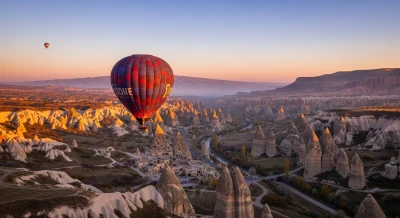
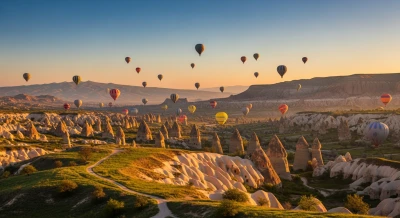
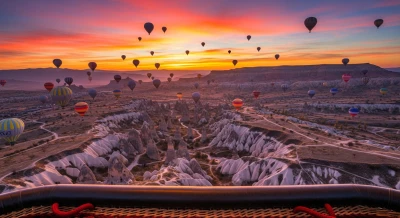
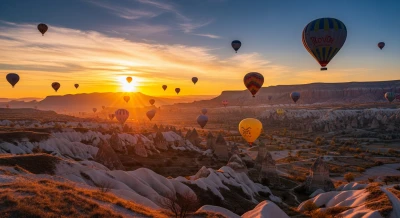
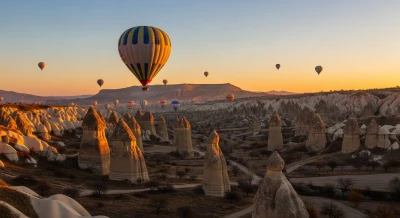
The 90-minute Deluxe flight provides genuinely transformational experience rather than just incremental improvement over Standard (45-60 minutes) or Comfort (55-70 minutes) options, though understanding specifically what this additional airtime enables helps you assess whether the premium justifies your particular priorities and budget.
The mathematical reality creates meaningful difference: Ninety minutes represents 50-100% more flight time than Standard's 45-60 minute range and 30-40% more than Comfort's 55-70 minutes—this isn't marginal extension but substantial increase fundamentally changing what your pilot can accomplish during the flight. To put this in perspective: if Standard flights cover perhaps 15-20 kilometers of territory, the 90-minute Deluxe can explore 30-40 kilometers, literally doubling your aerial coverage of Cappadocia's landscape. You're not just seeing the same valleys for slightly longer—you're accessing completely different geographical areas that shorter flights cannot reach within their time constraints.
The valley exploration breadth becomes the defining advantage: Standard flights focus on Cappadocia's greatest hits—Göreme Valley, Love Valley, Red Valley—efficiently covering iconic locations but lacking time for detours beyond these heavily-touristed areas. Comfort adds perhaps Rose Valley or brief glimpses of less-visited areas. Deluxe pilots can comprehensively explore Sword Valley (tall blade-shaped formations in narrow canyon hosting just 2-3 balloons versus Göreme's 30+), Meskendir Valley (the hidden gem with taller isolated fairy chimneys requiring specific wind patterns to reach), complete Pigeon Valley traverses showing thousands of historic carved pigeon houses rather than just edge-glimpsing, and deeper Rose Valley sections revealing pristine landscapes tourists viewing from roads never experience. These aren't just "additional valleys" but genuinely different geological formations and cultural features creating diverse visual experience versus the repetitive fairy chimney landscapes shorter flights cycle through.
The pacing transforms from efficient to luxurious: Shorter flights create subtle pressure—pilots must keep moving maintaining schedule, reaching key viewpoints, and positioning for landing approaches within tight timeframes. You're experiencing spectacular views but always progressing toward next waypoint rather than truly lingering. The 90-minute duration allows genuine leisure—your pilot can spend 8-10 minutes at particularly beautiful formations allowing you to photograph from multiple angles as lighting evolves, circle back to areas if conditions weren't optimal on first pass, or simply float peacefully without constant burner adjustments rushing you along. The psychological difference between "we need to keep moving" versus "take your time, we have plenty of flight remaining" fundamentally affects how relaxed and immersed you feel throughout the experience.
The altitude variation opportunities multiply dramatically: With 90 minutes, pilots execute 4-6 major altitude changes cycling between high panoramic perspectives (1,500-1,800 feet showing 50+ kilometer views), medium balanced altitudes (500-800 feet for classic Cappadocia perspectives), low intimate passes (100-200 feet where you hear village sounds and smell breakfast cooking), and ultra-low thrilling moments (30-50 feet skimming treetops creating adrenaline rushes). Standard flights might manage 2-3 altitude shifts, Comfort perhaps 3-4, but Deluxe's extended duration allows these variations to repeat multiple times throughout the flight providing constantly changing perspectives preventing any sense of visual monotony or boredom despite the long duration.
However, honest limitations and trade-offs require acknowledgment: The 90 minutes physically demands more from passengers—standing continuously for hour-and-a-half challenges people with arthritis, knee problems, or generally poor fitness more than 45-60 minute commitments. The extended time also means earlier hotel pickup (3:45-4:10 AM versus Standard's 4:30-5:00 AM) to accommodate longer flight plus pre-flight breakfast, making the already brutal wake-up even more challenging. The premium pricing (typically €340-380 versus Comfort's €280-320 or Standard's €180-220) represents €100-160 additional investment per person—for couples that's €200-320 extra, for families potentially €400-640 more than Standard alternatives. This substantial cost difference means you must honestly assess whether 30-45 additional airborne minutes deliver value equivalent to alternative uses for that money.
The fatigue factor affects different travelers unequally: Adventure-oriented travelers and aviation enthusiasts report that 90 minutes "flew by quickly" (pardon the pun) because they remained completely engaged throughout—the constantly changing valleys, altitude variations, and pilot's educational commentary sustained their interest without any boredom. However, some passengers particularly older adults or those with lower baseline enthusiasm about balloon flight itself report that 60-70 minutes feels optimal and additional time beyond that point creates fatigue rather than enhanced enjoyment—standing becomes uncomfortable, morning cold and early wake-up catch up with them, and they're actually relieved when landing approaches rather than wishing for more time. Your honest self-assessment about sustained attention span and physical stamina matters more than theoretical "more is better" assumptions.
The photography implications extend beyond just more photo time: The extended duration allows waiting for optimal conditions rather than accepting whatever lighting or positioning first-pass provides. Perhaps clouds initially obscure interesting formations but shift 15 minutes later creating perfect conditions—Standard flights have likely moved on by then while Deluxe pilots can circle back. The access to less-visited valleys provides unique images distinguishing your photography from thousands of identical Göreme Valley shots other tourists post—if you want genuinely different perspectives rather than beautifully-executed versions of standard Cappadocia imagery, the Deluxe valley access matters tremendously. However, smartphone photographers capturing memories rather than creating portfolio pieces may find diminishing returns—after 60 minutes you've photographed spectacular valleys and dramatic formations; the additional valleys photograph similarly even if technically different locations.
The per-minute cost calculation helps value assessment: If Deluxe costs €360 for 90 minutes, you're paying €4.00 per airborne minute. Standard at €200 for 50 minutes averages €4.00/minute, while Comfort at €300 for 62 minutes costs €4.84/minute. Surprisingly, Deluxe's per-minute cost proves quite competitive—you're not paying dramatic premium for additional time but rather benefiting from economies of scale where fixed operational costs (crew, equipment, permits) spread across longer duration. The value proposition becomes: do you want maximum time airborne at roughly same per-minute cost, or do you prefer shorter experience getting you back to hotel earlier and saving absolute dollars even if per-minute rates are similar?
The breakfast inclusion creates additional value beyond flight time: Unlike Standard's coffee and cookies or Comfort's light refreshments, Deluxe provides genuine Turkish breakfast spread (cheese, olives, tomatoes, cucumbers, egg dishes, fresh bread, pastries, fruits, preserves, tea, coffee, juice) served during 30-40 minute pre-flight period. For travelers who struggle with 4:00 AM wake-ups and feel genuinely hungry or weak from missing proper breakfast, this meal creates meaningful comfort and energy supporting enjoyment of subsequent long flight. However, travelers who naturally skip breakfast or feel nauseous eating early morning gain zero value from this inclusion—it's nice amenity they won't utilize, potentially representing wasted premium since they'd be equally happy with Comfort's minimal refreshments.
The honest recommendation for different traveler profiles: Book Deluxe if you're serious photographer wanting maximum coverage and shooting opportunities (the unique valley access alone justifies premium), aviation enthusiast who genuinely loves flying and wants to maximize airborne time for its own sake, first-time visitor wanting comprehensive Cappadocia aerial coverage in single flight, celebrating special occasion where "best available option" matters regardless of cost optimization, or physically capable of standing 90 minutes without significant discomfort. Choose shorter options if you're budget-conscious where €100-160 per person represents meaningful expense better allocated elsewhere, uncertain about sustained interest for extended flight duration, have physical limitations making 90-minute standing challenging, or primarily want to experience balloon flight without requiring absolute maximum coverage—Standard or Comfort provide complete satisfying experiences at substantially lower investment.
The 90-minute extended duration enables comprehensive territorial coverage accessing areas fundamentally impossible within Standard or Comfort timeframes, though understanding the specific geographical advantages versus marketing exaggeration helps set accurate expectations.
The Sword Valley access represents the clearest unique opportunity: This narrow canyon features tall blade-shaped rock formations reaching 50+ meters creating dramatic vertical landscapes completely different from Göreme's mushroom-shaped fairy chimneys. The valley requires specific wind conditions to navigate safely given the tight confines and tall walls, meaning pilots need both the time to reach it (perhaps 30-40 minutes from typical launch sites) and favorable winds allowing safe passage. Standard flights launching from similar locations simply cannot invest 30 minutes reaching Sword Valley when their total flight is just 45-60 minutes—they'd arrive with insufficient time to explore before needing to return toward landing zones. Deluxe pilots can spend 15-20 minutes actually in Sword Valley (not just glimpsing from distance) photographing the distinctive formations and experiencing the canyon's intimate atmosphere where just 2-3 other balloons typically appear versus Göreme's dozens creating crowded skies.
Meskendir Valley represents the "hidden gem" few tourists experience: Located further from standard launch areas, this valley features taller more isolated fairy chimneys (some reaching 30-40 meters) standing individually or in small clusters rather than Göreme's dense formations. The landscape feels more pristine and wilderness-like versus Göreme's developed tourism infrastructure visible below. The valley requires specific wind patterns to reach since it doesn't lie on standard routing between launch sites and typical landing zones—pilots must catch particular wind currents at certain altitudes steering you toward this area. Standard flights hoping to reach Meskendir face the reality that if winds don't cooperate, they lack time to adjust routing and must abandon the attempt. Deluxe's 90 minutes provides flexibility attempting multiple approaches or taking alternate routes when primary path doesn't work, dramatically increasing actual Meskendir access probability versus shorter flights' hopeful but often disappointed intentions.
The complete Pigeon Valley traverse versus brief glimpses: Pigeon Valley's thousands of carved pigeon houses creating distinctive cliff-face patterns require extended time to fully appreciate since the valley stretches several kilometers and the formations appear throughout rather than concentrated in single viewing area. Standard flights might show you Pigeon Valley from distance or skim one edge briefly before moving on—you see it exists and photograph the general scene without genuine understanding of the agricultural system's ingenious design or the valley's full scope. Deluxe pilots can follow the valley's length for 10-15 minutes at low altitude (200-300 feet) where you observe individual pigeon house details, understand how farmers accessed these structures climbing cliff faces, and appreciate the centuries of labor creating thousands of these architectural curiosities. The extended exploration transforms Pigeon Valley from "something we saw briefly" into properly understood cultural-historical experience with context and detail.
The deeper Rose Valley sections reveal pristine landscapes: Rose Valley's easily-accessible portions near roads attract hikers and standard balloon traffic creating somewhat developed feel even from air. The valley's interior sections kilometers from road access remain genuinely remote showing what Cappadocia looked like before tourism development—pristine pink-hued formations, complete absence of human structures or trails, wildlife including birds of prey riding thermals. Standard flights show you Rose Valley's "postcard section" near valley entrance where everyone goes, while Deluxe penetration into deeper areas requires 40-50 minutes total flight time reaching and exploring interior sections before returning toward landing areas. The visual difference matters more than you'd expect—the developed-feeling sections versus pristine wilderness sections create completely different aesthetic experiences even though technically both are "Rose Valley."
However, the routing reality requires honest expectations: Wind conditions ultimately determine where pilots can actually navigate—the balloon cannot be steered directly like airplane, relying entirely on wind currents at different altitudes providing natural directional options. If winds on your particular morning don't favor Sword Valley access, even Deluxe's 90 minutes cannot override physics. Pilots make best efforts routing toward less-visited valleys when conditions permit, but some days everyone regardless of flight duration ends up seeing similar primary valleys (Göreme, Love, Red) because winds simply don't support alternate routing. The extended time increases probability of unique valley access but doesn't guarantee it—don't book Deluxe expecting absolutely certain Meskendir or Sword Valley visits then feel cheated if your morning's wind patterns prevented those specific destinations.
The territorial coverage quantification helps concrete understanding: Standard flights covering roughly 15-20 kilometers of ground territory during 45-60 minutes at average 18-25 km/h speeds might show you 3-4 major valleys (Göreme, Love, Red, possibly Rose) spending 8-12 minutes each before transitioning between areas. Deluxe flights covering 30-40 kilometers during 90 minutes can potentially visit 5-7 distinct valleys or spend double the time (15-20 minutes each) in 3-4 valleys experiencing them more thoroughly rather than rush-passing. The mathematical doubling of coverage creates qualitatively different experience versus just "somewhat more" of the same standard routing. You're either seeing twice as many distinct areas or understanding fewer areas twice as deeply—either way, substantially different from shorter alternatives.
The altitude variation enabling this coverage deserves explanation: Pilots use wind currents at different altitudes flowing different directions to navigate—perhaps winds at 200 feet blow southeast toward Meskendir while winds at 1,000 feet blow northwest toward Sword Valley. By ascending or descending, pilots "steer" indirectly changing direction even though the balloon itself cannot turn. This technique requires time to execute—climbing 800 vertical feet takes 3-5 minutes, during which you're ascending rather than horizontally exploring. The 90-minute duration provides sufficient time for multiple altitude adjustments positioning for optimal valley access, while shorter flights must minimize altitude changes staying at roughly constant height to maximize limited territorial coverage. The Deluxe routing becomes more dynamic and three-dimensional versus Standard's more linear path maintenance.
The practical photography implications of unique valley access: If you want images distinguishing your Cappadocia photography from thousands of identical tourist shots flooding Instagram daily, the unique valley access provides competitive advantage. Everyone photographs Göreme Valley—it's spectacular but ubiquitous. Sword Valley and Meskendir images are genuinely uncommon, providing visual novelty that makes your photography stand out. However, casual tourists sharing photos with family/friends won't receive recognition for these distinctions—your aunt viewing images won't know or care whether you're photographing Göreme or Meskendir, just that you're showing impressive Cappadocia landscapes. The unique valley value matters primarily to serious photographers building portfolios or travel influencers needing differentiated content, less so for typical vacation documentation.
The honest recommendation synthesis: The extended valley coverage and unique area access justify Deluxe premium if you're aviation enthusiast wanting to "see everything" from air during single Cappadocia visit, serious photographer seeking uncommon perspectives and locations, return visitor who previously took Standard or Comfort flights and want different experience this time, or completist personality wanting comprehensive rather than representative sampling. The unique valleys don't fundamentally justify premium if you're first-time visitor satisfied with seeing Cappadocia's highlights without requiring exhaustive coverage, budget-conscious where the territorial coverage doesn't matter enough to justify €100-160 additional investment, or primarily wanting balloon flight experience rather than comprehensive geographical education. Standard and Comfort show you spectacular representative Cappadocia; Deluxe provides encyclopedic coverage—choose based on whether encyclopedia versus highlights suits your tourism philosophy.
The Deluxe Flight typically costs €340-380 per person depending on season, representing €60-100 more than Comfort (€280-320) and €160-200 more than Standard (€180-220), creating meaningful investment requiring honest cost-benefit analysis before committing.
The absolute pricing positions Deluxe as premium tier: At €340-380 per person, you're investing as much in single morning activity as many travelers spend on full day of touring including transportation, guides, entrance fees, and meals combined. For couples the €680-760 total, for families of four €1,360-1,520—these represent substantial portions of overall Turkey vacation budgets demanding justification beyond just "more is better." The pricing reflects operational reality (longer flight requires more fuel, crew time, and Civil Aviation Authority fees since slots are hour-based) but also premium positioning targeting travelers willing to pay for ultimate rather than merely excellent experience.
The cost-per-minute analysis reveals interesting value proposition: Deluxe at €360 for 90 minutes costs €4.00 per airborne minute. Standard at €200 for 50 minutes averages €4.00/minute. Comfort at €300 for 62 minutes runs €4.84/minute. Surprisingly, Deluxe offers best per-minute value among all categories—you're paying roughly same rate as Standard while getting substantially longer experience and better rate than Comfort's premium. This mathematical reality suggests the premium isn't pricing-gouging but rather economies of scale where fixed costs spread across longer duration create efficiency. However, this per-minute framing benefits Deluxe marketing—most consumers think in absolute terms (€360 feels expensive regardless of per-minute calculation) rather than efficiency ratios.
The incremental value from Comfort to Deluxe requires scrutiny: The €60-100 additional investment buys you approximately 20-30 extra minutes airborne (62-minute Comfort average versus 90-minute Deluxe), the Turkish breakfast (worth perhaps €10-15), and access to less-visited valleys. Is 20-30 additional minutes worth €60-100? That €2.50-4.00 per additional minute calculation feels less compelling than the overall per-minute value framing. Many travelers conclude Comfort hits optimal balance—substantially better than Standard while avoiding Deluxe's diminishing-returns premium where you're paying disproportionately for marginal improvements.
The breakfast value depends entirely on personal relevance: If you genuinely want/need traditional Turkish breakfast at 4:30 AM and would pay €10-15 for equivalent meal at restaurant, the breakfast essentially costs nothing (included in premium you're already paying for extended flight). If you don't eat early breakfast or would be satisfied with coffee and cookies, you're paying €10-15 for unwanted service effectively making the flight-time premium €70-110 rather than advertised €60-100. The breakfast substantially benefits breakfast-eating travelers while representing wasted value for breakfast-skipping personalities.
The opportunity cost framing clarifies real implications: The €60-100 Deluxe premium over Comfort alternatively funds: excellent dinner for two at top-rated Cappadocia restaurant (€70-90), full-day private tour with dedicated guide and vehicle (€150-200 though you'd need to pool with another couple), one night at upscale Cappadocia boutique hotel (€80-120), multiple site entrance fees and experiences throughout Turkey, or simply reduces overall trip cost making vacation more financially comfortable. The decision becomes: does 20-30 minutes more balloon time deliver value exceeding the best alternative use for that €60-100? This reframing forces explicit priority ranking rather than abstract "is it worth it?" judgment.
The special occasion justification versus regular tourism: Travelers celebrating honeymoons, milestone anniversaries, or significant birthdays often don't require value justification—they want "best available" experience regardless of cost optimization, and Deluxe's "longest flight in Cappadocia" positioning naturally attracts celebration-focused bookings. The €60-100 premium feels negligible within overall special-occasion spending where you're already splurging on trip itself. Conversely, regular tourism visits without special occasion celebration make value-optimization more relevant—you're comparing experiences rationally rather than emotionally, and Comfort's superior value-for-money proposition often wins unless you specifically prioritize maximum airtime.
The budget reality check for different income levels: For affluent travelers where €360 per person represents tiny fraction of total Turkey budget and household income comfortably absorbs this expense, the Deluxe premium represents rounding error rather than meaningful decision point—book Deluxe without stress since you prefer maximum experience and cost barely registers. For middle-income travelers managing vacation budgets carefully, €360 per person feels significant requiring trade-off analysis and conscious prioritization. For budget travelers where €360 approaches or exceeds daily per-person total budget, Deluxe is simply unaffordable regardless of theoretical value—Standard at €180 stretches budget, Deluxe at €360 is completely unrealistic.
The group size implications multiply rapidly: Solo traveler paying €100 premium makes individual decision affecting only themselves. Couple pays €200 extra requiring joint agreement. Family of four faces €400 premium transforming personal preference into major budget decision—that €400 alternatively books multiple nights accommodation, funds several days of activities, or covers most of family's meal expenses for week. The larger the group, the harder it becomes to justify premium unless everyone highly values extended flight time or budget comfortably absorbs increase.
The seasonal pricing variation affects calculations: Peak season (April-May, September-October) sees maximum pricing across all categories with smallest percentage differentials—perhaps Standard €220, Comfort €320, Deluxe €380 creating just €60 Comfort-to-Deluxe gap. Off-season (November-March) brings discounting where Standard might drop to €160, Comfort to €260, but Deluxe maintains higher floor around €320 since operational costs remain relatively fixed—suddenly creating €60 gap that represents larger percentage premium (23% versus peak's 19%). The value proposition shifts seasonally—Deluxe feels relatively better value during peak pricing, worse during off-season discounting.
The honest recommendation for different priorities: Book Deluxe if you're celebration-focused (honeymoon, special occasion) where "best" matters over "best value," serious aviation enthusiast who specifically wants maximum airtime for its own sake, photographer requiring extended time and unique valley access, physically capable of 90-minute standing without suffering (otherwise the discomfort negates any value), or affluent enough that €60-100 differential barely registers in your vacation budget. Choose Comfort if you want premium experience without diminishing returns—it delivers 80-85% of Deluxe experience at 75-80% of cost creating optimal value balance. Choose Standard if you're budget-conscious, primarily want balloon flight experience without requiring maximum coverage, or uncertain about extended duration interest preferring shorter commitment testing whether you even enjoy balloon flight before committing to 90-minute investment.
The "you only do this once" philosophy requires examination: Many travelers justify Deluxe through "I'll probably never return to Cappadocia, so I should do the longest flight available." This reasoning has merit—you're traveling significant distance and expense to reach Cappadocia, and maximizing the signature activity makes sense. However, the counter-argument notes that Standard or Comfort still deliver complete satisfying experiences that 95% of participants rate 4.5+ stars—you're not missing essential elements or having incomplete experience by choosing shorter flights. The "do it right" mentality sometimes drives overspending on marginally-better options when excellent suffices perfectly well. Balance FOMO (fear of missing out) against rational value assessment rather than letting marketing-driven "longest flight available" positioning override thoughtful decision-making.
Weather impacts all flight categories identically regarding fundamental cancellation decisions since Turkish Civil Aviation Authority applies uniform safety regulations, though the extended 90-minute duration creates specific considerations affecting optimal seasonal timing and experience quality differently than shorter flights.
The cancellation probability remains statistically identical: Deluxe faces the same 35-40% winter cancellation rates, 10-15% spring/autumn rates, and 5-8% summer rates as Standard or Comfort since Civil Aviation Authority grounds all balloons when wind speeds, visibility, temperature inversions, or precipitation exceed safe parameters. The longer flight duration doesn't increase cancellation likelihood—if conditions permit any flights that morning, they permit all flights regardless of planned duration. Some travelers mistakenly assume 90-minute flights need "better" weather than 45-minute flights, but this isn't accurate—the threshold weather conditions either allow safe balloon operations or don't, irrespective of how long individual flights plan to stay airborne.
However, the extended duration amplifies weather evolution risks mid-flight: A 45-minute flight experiencing stable conditions throughout is quite common since weather patterns shift gradually over hours rather than minutes—what's safe at 5:00 AM launch remains safe at 5:45 AM landing. A 90-minute flight spans wider time window (5:00 AM launch, 6:30 AM landing) increasing probability that conditions might deteriorate during flight requiring pilots to adjust routing or land earlier than planned. Perhaps winds are calm at launch but thermal activity begins as sun heats ground by 6:15-6:30 AM, forcing early landing around 80 minutes rather than planned 90 minutes. This scenario affects Deluxe more frequently than shorter flights simply due to time exposure—your pilot might announce "we need to land five minutes early due to increasing winds" which feels disappointing given you specifically paid for 90-minute guarantee.
The seasonal sweet spots differ slightly from general balloon timing: While spring (April-May) and autumn (September-October) represent optimal seasons for all balloon categories, late April and late September prove especially ideal for 90-minute flights since these periods offer: stable morning weather patterns with minimal wind but adequate daylight hours (earlier April or later October have shorter daylight potentially compressing usable morning window), moderate temperatures keeping you comfortable during extended standing time (earlier May or earlier October can be quite hot making 90 minutes physically taxing), and tourist-but-not-overwhelmed atmosphere creating decent availability without empty off-season feel. The 2-3 week windows during late April and late September represent absolute premium booking targets for Deluxe flights specifically.
Summer's heat affects extended duration disproportionately: While 45-60 minute flights during summer mornings (June-August) remain quite comfortable since you're flying during coolest hours, the 90-minute Deluxe extending toward 6:30-7:00 AM means you're still airborne when temperatures begin climbing and sun's intensity increases substantially. The first 60 minutes feel perfect, but final 30 minutes can become quite warm particularly if you've removed layers responding to burner heat—now the combination of burner overhead and rising ambient temperature creates genuine warmth making you wish for landing. Additionally, the earlier pickup (3:45-4:10 AM) means you're awake during peak heat later that morning/afternoon rather than sleeping in slightly and having fresher energy for hot-day touring. Summer Deluxe works fine but consider whether the heat implications affect your comfort tolerance.
Winter's cold makes 90 minutes genuinely challenging: Standard flights during winter (November-March) require perhaps 60 minutes total cold exposure (pickup to landing), with 45-50 minutes actually airborne—uncomfortable but manageable with proper clothing. Deluxe extends this to 110-120 minutes total exposure (earlier pickup plus longer flight) with 90 minutes airborne—this represents serious cold endurance test requiring excellent cold-weather gear and honest assessment whether you handle extended cold well. The burner provides warmth when firing but the intervals between burner blasts leave you exposed to freezing temperatures (potentially -5 to 5°C / 23-41°F) for extended periods. Many winter Deluxe passengers report that while the experience was spectacular, the cold genuinely affected their enjoyment particularly in final 20-30 minutes when cumulative cold exposure outweighed the view excitement. If you're cold-sensitive, winter Deluxe might create miserable suffering rather than enhanced pleasure despite the dramatic snow-covered landscapes.
The morning light evolution over 90 minutes creates photographic considerations: The optimal sunrise photography window spans approximately 15-20 minutes when sky transitions through dramatic colors before settling into daylight blues. Standard flights lasting 45-60 minutes position you at peak altitude during perhaps 8-12 minutes of this window—enough for excellent photos but feeling rushed. Comfort at 60-70 minutes captures essentially complete transition. Deluxe at 90 minutes actually exceeds optimal light window—you'll experience full sunrise color transition during first 20-30 minutes, then continue flying for an hour after the dramatic lighting has ended. The extended time provides other value (territorial coverage, unique valleys, multiple altitude variations) but doesn't deliver 90 minutes of optimal photography lighting—more accurately, you get the same 15-20 minutes of premium light as everyone else, plus an additional hour of good-but-not-magical lighting. This matters if you're primarily photography-motivated versus wanting maximum flight time for its own sake.
The thermal activity development affects routing options: As sun rises and begins heating ground, thermal air currents develop creating rising warm air columns and variable wind patterns that complicate balloon navigation. Early launches (5:00-5:15 AM first wave) occur before significant thermal development, allowing pilots maximum routing freedom accessing various valleys and areas. By 6:00-6:30 AM (when Deluxe flights are still airborne), thermals might be developing limiting routing options—pilots must avoid certain areas or altitudes where turbulent thermal activity creates uncomfortable ride or navigation difficulties. This occasionally constrains the unique valley access Deluxe promises, since the additional flight time coincides with thermal development restricting where pilots can safely navigate. The impact varies by season (stronger in summer, minimal in winter) and daily conditions, but represents occasional limitation that shorter flights launching and landing before thermal development avoid entirely.
The honest seasonal recommendation for Deluxe specifically: Late April through mid-May represents optimal window combining stable weather, comfortable temperatures for extended standing, optimal sunrise timing, minimal thermal activity throughout 90-minute window, and strong availability before absolute peak-peak season. Late September through mid-October offers similar advantages with arguably even better photography light (autumn's lower sun angle creates warm golden tones throughout morning rather than just at sunrise). Early-mid June or early September work well for shoulder timing providing good weather without peak crowds or pricing. July-August only if you handle heat well and don't mind that final 30 minutes can feel quite warm. November-March only if you're exceptionally cold-tolerant and understand that 90-minute cold exposure represents genuine endurance test requiring excellent gear and mental fortitude—the experience can be spectacular but demands significant physical comfort sacrifice versus shorter flights or warmer seasons.
The weather monitoring strategy differs for expensive Deluxe bookings: Given the substantial investment (€340-380 per person), monitor forecasts carefully in days leading to your flight, and don't hesitate to request date changes within 72-hour free cancellation window if weather looks questionable. Perhaps you booked for Wednesday, but Tuesday forecast shows marginal conditions Wednesday morning and excellent conditions Thursday—contact operator Tuesday afternoon requesting shift to Thursday while you're still within cancellation window. This proactive weather monitoring protects your investment better than just hoping conditions work out, particularly during winter or transitional spring months when weather varies substantially day-to-day. The limited Deluxe availability makes date changes sometimes impossible, but attempting changes proves better than passively accepting questionable conditions then facing cancellation disappointment.
Choosing between Deluxe and private basket charter requires understanding fundamental differences in exclusivity, flexibility, and cost structure rather than assuming more expensive automatically equals better experience.
The core distinction: semi-private versus completely exclusive: Deluxe provides ultra-small group experience (8-12 passengers maximum) with strangers who independently booked the same flight—you're sharing the basket with others though in very intimate setting. Private charter delivers complete basket exclusivity (your party only, whether 2 people or up to 16 filling capacity) with zero strangers—you're essentially renting entire balloon operation for your exclusive use. The exclusivity difference mirrors the distinction between first-class airline cabin (premium but shared with other first-class passengers) versus chartering private jet (completely exclusive to your party).
The financial mathematics create interesting break-even points: Private basket charter costs approximately €1,600-2,000 total (not per person) depending on season, accommodating up to 12-16 passengers with cost remaining constant regardless of actual party size. Deluxe costs €340-380 per person. The break-even calculation becomes: 2 people choosing between Deluxe (€680-760 total for couple) versus private charter (€1,600-2,000 total) means private costs 2.4-2.6× more—probably not justifiable for most couples unless they're extremely privacy-focused or celebrating milestone occasions. 4 people: Deluxe €1,360-1,520 versus private €1,600-2,000 creates much closer competition—just 18-32% premium for complete exclusivity might feel worthwhile. 8+ people: Deluxe €2,720-3,040 versus private €1,600-2,000 means private actually costs 35-50% less per group while delivering enhanced exclusivity—this becomes obviously superior value for larger groups.
The exclusivity benefits of private charter: You're controlling basket atmosphere completely—no risk of incompatible strangers, intrusive conversation from others disrupting your peaceful experience, or sharing photo opportunities with people intruding into your frames. Families with children appreciate private charter since kids can be enthusiastically noisy or occasionally fussy without bothering other passengers. Couples celebrating romantic occasions (honeymoons, proposals, anniversaries) often prefer privacy rather than sharing intimate moments with strangers observing. Corporate groups wanting team-building focused entirely on their employees without external participants. Photographers needing complete freedom to position themselves throughout basket without negotiating around others. Privacy-oriented individuals simply uncomfortable sharing close quarters with strangers for 90 minutes—the intimacy that makes Deluxe appealing to social travelers feels claustrophobic to privacy-seekers.
However, the social element represents valid preference: Many travelers specifically want small-group experience meeting interesting people from around world, hearing different perspectives and travel stories, and sharing the adventure communally rather than exclusively within their known party. The Deluxe small group creates natural social dynamics facilitating conversations and connections that private charter eliminates entirely. Solo travelers or couples enjoying social interaction often prefer Deluxe's group setting versus private charter's isolation (which wouldn't even be available to them given the party size requirements). The shared experience with compatible strangers can enhance rather than diminish the adventure—you're all experiencing awe together, and that communal wonder creates bonds private charter cannot replicate.
The flexibility and customization in private charters: Private bookings sometimes allow modest schedule adjustments (perhaps 10-15 minute earlier or later pickup if that meaningfully helps your group), special celebration arrangements (proposal coordination, anniversary or birthday recognition), customized routing emphasis (if your group particularly wants to prioritize specific valleys, pilots might accommodate when conditions permit), or extended photography time post-flight if your group specifically requests it. These customizations represent "nice-to-have" enhancements rather than dramatic game-changers—you're still subject to Turkish Civil Aviation Authority regulations, wind patterns dictating routing regardless of preferences, and operational realities limiting what pilots can modify. The flexibility helps around edges but doesn't fundamentally transform the experience beyond the exclusivity itself.
The minimum group size considerations create practical limitations: Most operators require minimum 8-10 people for private charter making financial sense—they're dedicating entire balloon operation to your group, and charging less than 8-10× individual Deluxe pricing would make charters economically irrational when they could sell spots individually generating more revenue. This threshold means couples, families of 3-4, or small friend groups of 4-6 cannot access private charter at reasonable rates even if willing to pay premium—you'd need to recruit additional participants reaching minimum threshold or accept paying for full charter even though just using half capacity (€1,600-2,000 for 4 people = €400-500 per person, which approaches completely unreasonable pricing). The sweet spot is groups of 8-12 where charter pricing makes sense and you've genuinely filled capacity.
The booking timeline for private charters extends substantially: Coordinate 8-12 weeks ahead for peak seasons (April-May, September-October) since you're reserving entire balloon and operators need extended notice managing their capacity allocation—they're declining multiple individual bookings to hold equipment for your charter, requiring advance commitment justifying that opportunity cost. Off-season (November-March) shortens to 4-6 weeks given decreased demand. Last-minute private charters (under 4 weeks) almost never succeed during high season given the capacity sacrifice required, though occasionally work during winter when operators are eager filling empty slots even through private arrangements.
The honest assessment for different group situations: Couples and groups of 2-4 should almost always choose Deluxe over attempting private charter—the 2-3× cost premium for privacy rarely justifies expense for small parties, and Deluxe's ultra-small group (8-12 total) already feels reasonably intimate without complete exclusivity. Groups of 5-7 face middle ground—private charter costs perhaps 40-60% more than Deluxe per group, which might or might not feel worthwhile depending on budget and how much your group values exclusivity. Groups of 8-12 should seriously consider private charter since the economics actually favor it (you're paying same or less than Deluxe would cost while gaining exclusivity), unless your group specifically wants to meet other travelers and prefers shared experience. Groups of 13-16 make private charter obvious choice—you're filling capacity anyway, so exclusivity costs nothing extra versus Deluxe.
The special occasion lens changes calculations: Honeymoon couples or milestone anniversary celebrations sometimes choose private charter despite the 2.4-2.6× cost premium because complete privacy matters tremendously for intimate romantic experience—you're not sharing proposal moment or anniversary celebration with seven strangers applauding awkwardly. Corporate team-building events want exclusive focus on their employees without external parties diluting the team dynamic. Family reunions celebrating special birthdays or generations gathering want private family-only atmosphere. In these contexts, the substantial private premium feels emotionally justified even if mathematically inefficient—you're buying something intangible (exclusivity during meaningful moment) that has value beyond rational cost-benefit analysis.
The compromise middle path: booking entire Deluxe flight: If your group is 8-12 people and you want something between shared Deluxe and expensive private charter, inquire about booking all spots on scheduled Deluxe departure—you're paying regular per-person Deluxe rates (€340-380 × 8-12 = €2,720-4,560 total) but achieving de facto private charter since you've bought all available spots. This costs substantially more than true private charter (€1,600-2,000) but might work if: you booked Deluxe initially then friends/family wanted to join expanding your party, you prefer simplicity of per-person pricing versus negotiating charter terms, or operator doesn't offer true private charters but will "sell out" a Deluxe departure to your group. Not all operators accommodate this arrangement, but asking costs nothing if it interests your group.
The recommendation synthesis: Choose Deluxe if you're small group (2-7 people), comfortable with small shared-group experience, value reasonable pricing optimizing cost-per-experience ratio, or specifically enjoy social element of meeting fellow travelers. Choose private charter if you're larger group (8-16 people) where economics favor charter, celebrating extremely special occasion justifying privacy premium regardless of cost, have specific customization needs requiring dedicated balloon, strongly privacy-oriented uncomfortable sharing close quarters with strangers, or traveling with young children whose behavior might disturb others in shared setting. Neither choice is universally "better"—the optimal selection depends on your specific party size, budget reality, privacy preferences, and whether you view the social element as enhancing or detracting from the experience.
The Deluxe breakfast represents genuine traditional Turkish morning meal rather than token refreshments, served in climate-controlled facility during 30-40 minute pre-flight preparation period while crews inflate balloons and conduct final checks. Understanding what this entails helps you assess whether the meal justifies partial motivation for choosing Deluxe over other categories.
The complete spread mirrors authentic Turkish breakfast culture: You'll encounter fresh cheeses including beyaz peynir (white sheep's milk cheese similar to feta but creamier), kaşar (semi-hard aged cheese with nutty flavor), and possibly tulum (aged in goatskin creating distinctive taste)—not individually wrapped processed cheese slices but proper artisanal varieties. Abundant olives (black and green varieties, some marinated with herbs and olive oil, others plain brine-cured) provide the salty-savory element central to Turkish breakfast tradition. Fresh vegetables creating morning salad—tomatoes, cucumbers, bell peppers arranged for you to compose your own combination rather than pre-made salad losing freshness. Egg dishes prepared fresh including boiled eggs, perhaps menemen (Turkish scrambled eggs with tomatoes, peppers, and herbs creating moist flavorful preparation unlike dry Western scrambled eggs), or simple fried eggs—protein foundation sustaining energy during long flight.
The bread and pastry selection provides carbohydrate foundation: Simit (sesame-encrusted circular bread, Turkey's answer to bagels but with distinctive texture and flavor), börek (flaky phyllo pastry filled with cheese, spinach, or potato—these arrive warm from local bakery creating superior fresh-baked experience), poğaça (soft savory pastries similar to biscuits but richer), and fresh bread (crusty white bread you tear by hand Turkish-style rather than slicing). These aren't factory-produced items but authentic Turkish baked goods showcasing what locals actually eat rather than tourist-oriented approximations.
The sweet elements balance the savory focus: Seasonal fruits (perhaps oranges, apples, melons, or pomegranates depending on season—always fresh never canned), honey and preserves (local honey providing natural sweetness, various fruit preserves including rose petal jam if you're adventurous), and possibly tahini-pekmez (sesame paste and grape molasses creating traditional Turkish sweet combination unfamiliar to Western palates but worth trying). The Turkish tea (çay served in small tulip-shaped glasses, strong black tea Turks consume constantly throughout day) flows unlimited, alongside Turkish coffee (thick strong unfiltered brew—an acquired taste but culturally important), fresh orange juice, and possibly pomegranate juice (tangy sweet refreshing alternative).
The practical logistics enhance the experience: You're seated comfortably at tables in heated indoor facility with 30-40 minutes to eat at leisure while watching balloon inflation through panoramic windows—no rushing, no eating while walking, proper civilized meal at tables with real plates and silverware rather than paper plates and plastic utensils suggesting token gesture. The timing allows genuine hunger satisfaction after 3:45-4:10 AM pickup when most travelers haven't eaten since dinner previous evening—you're potentially 10-12 hours without food before breakfast begins, creating genuine appetite rather than forced eating out of obligation.
However, the value assessment depends heavily on personal breakfast habits: Travelers who naturally eat substantial breakfasts and feel genuinely hungry early mornings find this meal essential and highly valuable—they'd struggle through 90-minute flight feeling weak or distracted by hunger without proper food, making the breakfast directly enhance their flight enjoyment. These passengers often specifically cite the breakfast as key factor choosing Deluxe over Comfort. Conversely, travelers who typically skip breakfast, feel nauseous eating before 8:00-9:00 AM, or simply aren't hungry at 4:30 AM gain zero meaningful benefit from this elaborate spread—they might nibble out of politeness but aren't genuinely eating the food, essentially wasting a premium inclusion they didn't want. Understanding your own morning eating patterns matters more than objective breakfast quality assessment.
The dietary restriction accommodation varies: The traditional Turkish breakfast naturally accommodates vegetarians perfectly since it's built around dairy, eggs, vegetables, and grains with minimal meat (perhaps some sucuk—spicy dried sausage—but easily avoided). Vegans face more challenges given the dairy and egg centrality, though olives, vegetables, fruit, and bread provide adequate options if you communicate needs during booking. Gluten-free diets struggle since bread and börek represent major breakfast elements, though eggs, cheese, vegetables, and fruit create workable meal. Lactose intolerance can be managed by focusing on eggs, vegetables, olives, and bread while avoiding cheese and yogurt. Always communicate significant dietary restrictions during booking rather than discovering on breakfast morning that nothing accommodates your needs.
The time efficiency trade-off affects schedule-conscious travelers: The 30-40 minute breakfast period means earlier hotel pickup (3:45-4:10 AM for Deluxe versus 4:00-4:30 AM for Comfort, 4:30-5:00 AM for Standard) to accommodate the meal while still launching first wave around 5:00-5:15 AM. For travelers already struggling with early wake-ups, losing that additional 15-45 minutes of potential sleep might outweigh any breakfast value—they'd prefer sleeping until 4:15 AM and skipping elaborate meal in exchange for slightly less brutal morning. The breakfast also extends total experience duration from hotel departure to return—you're out approximately 3.5-4 hours total for Deluxe versus 3-3.5 hours for Comfort, perhaps feeling rushed to get back for other scheduled activities or simply wanting to return to bed after the flight.
The cultural immersion element matters for food-oriented travelers: For tourists genuinely interested in Turkish cuisine and culture, this breakfast provides authentic cultural experience showcasing how Turks actually eat rather than tourist-approximation meals at hotel buffets. You're learning about Turkish food traditions, perhaps trying items you've never encountered (tahini-pekmez, various cheese types, proper Turkish tea service), and gaining appreciation for Turkish breakfast culture that differs substantially from Western continental or American breakfast patterns. Food enthusiasts and cultural travelers find this element enriching beyond mere nutrition—it's educational component adding cultural depth to what's otherwise purely adventure tourism. However, travelers primarily focused on balloon flight itself viewing the breakfast as logistical necessity rather than cultural attraction derive minimal benefit from the authenticity—they'd be equally satisfied with simple coffee and pastries.
The comparison to Comfort's refreshments clarifies the difference: Comfort provides coffee/tea and light pastries (perhaps cookies, simple börek, basic fruit) in the lounge—adequate for caffeine and blood sugar stabilization but not constituting actual meal. Deluxe delivers sit-down breakfast meal where you're genuinely eating full breakfast rather than just snacking. The distinction matters if you're hungry, becomes irrelevant if you're not. Standard's outdoor wait with minimal refreshments leaves many passengers uncomfortable and hungry, Comfort's light refreshments address basic needs, Deluxe's full breakfast provides complete morning meal satisfaction. Assess which level matches your morning food requirements rather than assuming more elaborate automatically equals better for your specific situation.
The honest value calculation: The Deluxe premium over Comfort (typically €40-60 per person) partially pays for this breakfast—perhaps €10-15 of that differential represents meal cost while the remaining €30-45 funds the 20-30 minute extended flight time. If you'd pay €10-15 for equivalent Turkish breakfast at café, the meal essentially costs you nothing while the flight extension becomes the true premium. However, if you wouldn't choose to eat elaborate breakfast at 4:30 AM regardless of availability or quality, you're paying €10-15 for unwanted service making the actual flight-time premium feel higher. The breakfast adds genuine value for breakfast-eating travelers while representing wasted premium for breakfast-skipping personalities—know yourself and choose accordingly.
The 90-minute continuous standing requirement creates genuine physical challenge that shorter flights' 45-70 minute durations don't impose to the same degree, requiring honest self-assessment about your physical capabilities and comfort with extended static positioning before booking.
The standing reality means exactly that—standing: The wicker basket provides no seating, leaning posts, or rest positions allowing you to truly offload leg and back strain. You're weight-bearing on your feet continuously throughout the 90 minutes with the basket's padded leather edge providing modest leaning support but fundamentally remaining standing position rather than meaningful relief. While you can shift weight between feet, adjust posture, or lean lightly on basket edge, these modifications provide marginal comfort rather than genuine rest—you're still primarily supporting your bodyweight through your legs and core musculature for the duration.
The physical demands vary by individual fitness and health status: Young healthy adults (20s-40s with normal fitness, no orthopedic issues) typically handle 90 minutes easily—you might feel mild foot or leg fatigue by the end but nothing approaching genuine discomfort or pain. Many report barely noticing the time passing given constant visual stimulation. Middle-aged adults (40s-60s) with reasonable fitness generally manage well though might feel more noticeable leg tiredness, lower back stiffness, or foot discomfort in final 20-30 minutes, particularly if you're sedentary professionally spending workdays sitting. Older adults (65+) face more significant challenges—even healthy active seniors often struggle with 90-minute standing creating genuine discomfort overshadowing the experience's enjoyment. Anyone with existing conditions (arthritis, knee or hip problems, chronic back pain, poor circulation, varicose veins, plantar fasciitis, neuropathy) will find extended standing exacerbates these issues potentially creating genuinely painful experience rather than just uncomfortable.
The cumulative fatigue differs from shorter flights: At 45 minutes (Standard), most people feel fresh and comfortable throughout—the duration falls well within normal standing tolerance for average health adults. At 60-70 minutes (Comfort), you're approaching typical standing limits where healthy adults might feel mild discomfort but still manage comfortably while those with health issues begin struggling. At 90 minutes (Deluxe), you're pushing into territory where even healthy individuals acknowledge fatigue and discomfort, while people with any physical limitations genuinely suffer. The difference between 60 and 90 minutes matters more than the difference between 45 and 60 minutes—those final 20-30 minutes feel disproportionately longer than the mathematical time suggests since cumulative fatigue affects you.
The early morning timing compounds physical challenges: The 3:45-4:10 AM pickup means you're operating on limited sleep (even if you slept 10:00 PM-3:30 AM, that's just 5.5 hours which falls below optimal 7-8 hours for most adults) plus disrupted circadian rhythm since you're functioning at hour when body naturally wants to sleep. The fatigue from sleep deprivation makes physical demands feel more challenging than identical standing at your normal waking hours. Additionally, joints and muscles are stiff from overnight rest requiring time to loosen and warm up—you're asking your body to stand 90 minutes immediately after waking when everything feels tight and resistant rather than after morning movement gradually preparing you for activity.
The cold morning temperatures affect standing comfort: Cappadocia mornings range 6-18°C depending on season (winter well below freezing, summer merely cool but still chilly) creating cold exposure that stiffens muscles, reduces circulation making feet and legs feel colder and more uncomfortable, and generally makes standing feel less pleasant than identical duration in warm conditions. Your feet particularly feel cold standing in basket as heat conducts through footwear into cold wicker floor. While the burner overhead provides warmth in immediate vicinity, your lower body remains quite cold throughout flight affecting comfort significantly.
The comparison to everyday standing provides useful reference points: Can you comfortably stand in line waiting 45-60 minutes (airport security during busy periods, popular restaurant waits, theme park queues) without serious discomfort requiring sitting or leaving? If yes, you'll likely handle 90-minute flight acceptably though it's more challenging than casual standing since basket's confined space limits movement more than open waiting areas. Can you stand throughout 90-minute museum exhibition or gallery opening remaining attentive and comfortable? If yes, Deluxe duration should prove manageable. Do you struggle standing 30-45 minutes grocery shopping or cooking needing to sit periodically? If yes, 90 minutes will genuinely challenge you potentially creating miserable experience overshadowing the spectacular views.
The movement limitations in basket affect fatigue management: In normal standing situations, you naturally shift positions, walk a few steps, bend to adjust something, or execute various movements unconsciously distributing strain and preventing static muscle fatigue. The basket's confined quarters and safety considerations severely limit movement—you can shift weight between feet and adjust posture slightly, but cannot take steps walking around, cannot sit or crouch for extended relief, and must avoid movements that might jostle other passengers or destabilize the basket. This static positioning creates more rapid fatigue than equivalent duration of light walking or varied standing would generate.
The strategies for managing extended standing: Wear extremely comfortable shoes with excellent cushioning and support—this isn't time for fashion footwear but rather most comfortable sneakers or light hiking boots you own. Stretch thoroughly before boarding—basic leg stretches, ankle rotations, and back stretches help prepare muscles for extended static position. Shift weight frequently between feet rather than standing fixed on both feet equally—alternate every few minutes distributing strain. Engage core muscles providing back support and reducing lower back strain from prolonged standing. Lean lightly on basket edge (without applying heavy weight that damages basket) giving legs modest relief periodically. Distract yourself through active photography, conversation, or focused observation rather than fixating on discomfort—mental engagement helps time pass faster.
The honest self-assessment questions before booking: Can you stand 45 minutes continuously right now without serious discomfort (try this at home as test—stand in one place without sitting or walking around, see how you feel at 45 minutes)? If you struggle at 45 minutes, doubling to 90 minutes will be genuinely difficult potentially ruining the experience. Do you have known orthopedic issues (arthritis, previous joint injuries, chronic back pain) that would be aggravated by extended standing? Medical conditions don't automatically disqualify you, but require honest conversation with your physician about whether 90-minute standing falls within your comfortable capability. Are you generally sedentary sitting most of the day for work and leisure? Extended sitting reduces standing stamina—if you're office worker sitting 8+ hours daily, your standing endurance likely falls below what active individuals manage.
The age-specific considerations matter: Younger passengers (under 50) with normal health rarely struggle with 90-minute standing—it's within normal physical capability range even if you feel tired afterward. Passengers over 60-65 should honestly assess their physical reality—even if you're healthy and active, age-related changes in joint function, circulation, and stamina affect standing tolerance. Many fit healthy seniors handle it successfully, but some struggle creating experience that's more physical endurance test than enjoyable adventure. Passengers over 70 should seriously question whether Deluxe is appropriate—unless you're exceptionally fit and accustomed to extended standing, choosing shorter Comfort or Standard options probably serves you better allowing maximum enjoyment without physical suffering.
The recommendation synthesis: Book Deluxe if you're under 55-60 years old with good health and normal fitness, comfortable standing 45-60 minutes currently without significant discomfort, lacking orthopedic conditions (arthritis, joint problems, chronic back pain) that extended standing would exacerbate, and honest about wanting maximum flight time understanding physical demands are the price. Choose shorter flights if you're over 65 unless exceptionally fit, have any standing-related physical limitations even if generally healthy, uncertain about your standing tolerance, or prioritize comfort over maximizing airtime. The 90 minutes creates genuinely spectacular extended experience for physically capable passengers while potentially creating miserable suffering for those whose bodies cannot comfortably maintain the position—know your physical reality and choose accordingly.
Deluxe Flight requires substantially longer advance booking than other categories due to extremely limited daily capacity, though understanding seasonal patterns and backup strategies helps you secure preferred dates or develop alternatives.
The fundamental scarcity driving urgency: Deluxe operations run just 1-2 baskets daily (maximum 12-24 total passengers across all departures) versus Comfort's 2-3 baskets (32-48 passengers) or Standard's 6-8 baskets (120-160 passengers). This means Deluxe represents under 10% of total balloon flight capacity despite arguably being most desirable category for travelers who can afford it. The extreme scarcity means Deluxe availability tightens dramatically faster than other options as booking windows close—waiting even modest periods creates meaningful sold-out risk.
The peak shoulder season booking demands exceptional advance planning: April-May and September-October representing optimal weather, minimal cancellations, and maximum international tourism require 2-3 weeks minimum advance booking for Deluxe, with weekends and Turkish public holidays filling 3-4 weeks ahead. Some operators report Deluxe selling out 4-6 weeks in advance during absolute peak periods (late April, early May, late September, early October) when weather and tourism coincide perfectly. This contrasts sharply with Standard's 2-3 week windows or even Comfort's 2.5-3 week needs—Deluxe demands adding an extra week or two to whatever timeline you'd use for other categories.
Summer dynamics create interesting availability patterns: Peak summer (July-August) sees heavy tourism but Deluxe's appeal diminishes somewhat since travelers prioritizing beach vacations over intensive touring might choose shorter flights freeing morning for other activities. Book 2-3 weeks ahead during summer, though some flexibility exists given the relatively lower Deluxe demand compared to shoulder seasons. However, summer weekends and Turkish domestic holiday periods still require full 3-week advance booking since Turkish families celebrating vacations often splurge on Deluxe creating demand spikes.
Winter availability offers shortest booking windows but highest cancellation risks: November-March requires just 1-2 weeks advance booking given dramatically decreased tourism and the reality that 35-40% weather cancellation rates make many tourists hesitant to commit to expensive Deluxe flights that might not occur. However, the booking strategy shifts—rather than booking earliest possible moment, you're monitoring weather patterns and booking when stable windows appear. Perhaps forecast shows promising conditions for next Tuesday-Thursday period; book Monday or Tuesday for Wednesday flight rather than committing weeks earlier into uncertain conditions. The off-season flexibility enables strategic booking though requires vacation flexibility many travelers lack.
The "first morning" strategy becomes absolutely critical for Deluxe: Given the substantial investment (€340-380 per person) and limited availability making rescheduling difficult, book for your first or second Cappadocia morning allowing backup dates if weather cancels. If you book Deluxe for your only Cappadocia morning or final morning before departing, weather cancellation equals complete failure—you've potentially traveled to Cappadocia primarily for this experience yet cannot fly, and Deluxe's limited capacity means rescheduling becomes nearly impossible since remaining dates likely show fully booked. Having 3-4 Cappadocia nights with Deluxe booked for Day 1 provides Days 2-4 as backup opportunities, though you're competing with other cancelled passengers plus regular bookings for limited rescheduled slots.
The group booking complexity multiplies substantially: Coordinating 4+ passengers wanting Deluxe requires 6-8 weeks advance contact since finding 4-8 adjacent spots in already-limited Deluxe capacity becomes genuinely difficult. Groups of 8-12 wanting private basket need 8-12 weeks advance coordination since you're essentially reserving entire Deluxe basket capacity for single morning. The larger the group, the more advance planning becomes mandatory—waiting until typical 2-3 weeks before rarely succeeds for groups given the scarcity. Additionally, group bookings for Deluxe face higher cancellation penalties since operators turn away other interested passengers holding spots for your group, creating pressure to maintain commitments even if some members ultimately cannot attend.
The waitlist strategy when sold out: If your preferred dates show completely booked, request standby list placement—perhaps 10-15% of Deluxe bookings ultimately cancel from passenger-initiated changes, illness, or travel disruptions. Operators maintain organized waitlist notifying queued passengers sequentially when cancellations create availability. However, Deluxe's limited capacity means waitlist conversion rates fall substantially below Standard's more generous inventory—you might be 3rd on waitlist yet still not get spots if only 2 people cancel. Use waitlist as secondary backup strategy while simultaneously considering: booking available alternative dates if you have schedule flexibility, booking Comfort as backup knowing you'd prefer Deluxe but will accept Comfort rather than miss balloon flights entirely, or accepting that Deluxe simply isn't available requiring realistic expectation adjustment.
The booking deposit and payment timing policies: Deluxe bookings typically require full payment at reservation (not deposit-plus-balance) given the premium positioning and administrative overhead of managing multiple payment cycles for small passenger volumes. Some operators offer payment plans for bookings made 90+ days ahead (perhaps 50% deposit initially, 50% due 30 days before flight) though this is uncommon and typically only for direct bookings not online reservations. The full-payment requirement means you're committing substantial capital immediately upon booking (€680-760 for couples, €1,360-1,520 for families of four)—ensure you're absolutely certain about dates and participation before finalizing payment since cancellation policies (even generous 72-hour free cancellation) require initiating cancellation well before your Cappadocia trip begins.
The "book now, decide later" strategy leveraging cancellation policy: The 72+ hour free cancellation policy enables booking Deluxe spots immediately upon finding availability, then having until 72 hours before flight to definitively commit or cancel without penalty. This approach secures limited slots during advance planning while preserving decision flexibility—perhaps you're uncertain whether €360 per person feels justified, but you book anyway knowing you can cancel up to 3 days before travel if you ultimately decide Comfort or Standard better suits your priorities and budget. The downside risk is minimal (just the hassle of managing cancellation) while upside protects against losing availability you might regret not securing.
The alternative strategies when Deluxe unavailable: If Deluxe shows fully booked for your entire Cappadocia stay and waitlist seems unlikely to convert, consider: Booking Comfort as excellent alternative—you're getting 80-85% of Deluxe experience (smaller basket, extended time versus Standard, priority launch) at 15-20% lower investment; most people cannot distinguish between Comfort and Deluxe satisfaction levels in retrospective evaluation. Extending Cappadocia stay adding extra days potentially opening Deluxe availability on dates you hadn't initially considered—this obviously impacts overall itinerary but if Deluxe represents primary Cappadocia motivation, adjusting schedule to enable it might make sense. Accepting Standard flight recognizing it still delivers spectacular complete balloon experience that 95%+ of participants rate highly satisfying—the marketing emphasizing Deluxe's superiority shouldn't obscure that Standard provides fundamentally excellent adventure despite being "just" the basic option.
The honest timeline recommendation: For peak shoulder seasons (April-May, September-October), book Deluxe 3-4 weeks minimum ahead, ideally 4-6 weeks for weekends or holidays. For summer (June-August), book 2.5-3 weeks ahead. For winter (November-March), you can book 1-2 weeks ahead though consider weather-strategic timing rather than automatic earliest booking. For groups of 4+, add 2-3 additional weeks to these timelines (so 5-7 weeks for peak season groups, 4-5 weeks summer groups, 3-4 weeks winter groups). If these timelines feel inconvenient or you lack schedule certainty this far in advance, honestly consider whether Comfort provides better fit—it requires meaningfully shorter booking windows while delivering very similar satisfaction levels for most travelers.
Solo travelers booking Deluxe face identical single supplement premium as other categories (typically 50-70% above per-person twin-share rate) while the ultra-small basket size creates more intimate social atmosphere potentially feeling either perfectly sociable or awkwardly small depending on group chemistry and personal preferences.
The financial reality of solo Deluxe bookings: Base Deluxe pricing around €360 per person assumes twin-share accommodation in hotel (though balloon flights themselves have no actual accommodation component—the "per person" pricing just reflects standard tourism convention). Solo travelers pay single supplement typically 50-70% premium, creating €540-612 total solo Deluxe cost versus €360 for travelers with companions. This represents substantial expense for single morning activity—many solo travelers simply cannot justify or afford €540-612 for balloon flight regardless of the spectacular experience it delivers. The single supplement applies universally across all flight categories (Standard €270-340 solo, Comfort €420-544 solo, Deluxe €540-612 solo), but the already-premium Deluxe base price makes the supplement feel especially punitive.
However, the basket size creates interesting solo dynamics: With just 8-12 total passengers in the balloon, you're joining genuinely small intimate group rather than anonymous crowd. Solo travelers report this creates either: Excellent social experience if the group includes other solos or friendly couples/small groups who welcome conversation—you're spending 90 minutes with 7-11 other people in close proximity, naturally leading to interactions, photo-taking assistance, and potential new friendships. Many solo travelers specifically prefer small-group activities like Deluxe over larger standard tours since the intimacy facilitates genuine connection. Awkward fifth-wheel feeling if the basket contains exclusively couples or tight friend groups focused on their own companions—you're clearly the outsider observing others' relationships and shared moments while feeling excluded from the social dynamics. The outcome depends heavily on who else books your particular departure, which you cannot predict or control during booking.
The photography assistance consideration matters more for solos: Coupled travelers and groups naturally assist each other with photos—your partner or friend takes pictures including you in compositions, and vice versa. Solo travelers rely on asking strangers for photo favors, which the small group size actually facilitates well—in intimate 8-12 person setting, requesting "could you take a photo of me?" feels less intrusive than in larger groups, and fellow passengers typically help gladly. The pilot and crew also assist with group photos ensuring everyone appears in images. However, solo travelers inevitably end up with fewer photos including themselves compared to coupled travelers who continuously photograph each other, requiring acceptance that your album will emphasize landscapes versus personal portraits unless you're proactive requesting assistance frequently.
The emotional experience varies by solo travel philosophy: Confident social solos who travel independently regularly and enjoy meeting new people typically love Deluxe's small group—you're experiencing incredible adventure while connecting with interesting fellow travelers from around the world, creating potential friendships or at minimum pleasant shared memories. The 90-minute duration provides adequate time for genuine conversations developing beyond superficial pleasantries, learning about others' lives and travels. Introverted or socially anxious solos might find 90 minutes in intimate small group somewhat stressful—you cannot easily retreat or become invisible in just 8-12 people, the extended duration means you're "on" socially for hour-and-a-half, and the spectacular experience creates pressure to appear happy and engaged even if you're struggling socially or feeling lonely. Understanding your solo travel comfort zone helps predict whether Deluxe's intimacy feels welcoming versus claustrophobic.
The "meeting people" potential in small group settings: The ultra-small basket creates genuine opportunity for meaningful connections versus Standard's larger groups where you might exchange pleasantries with immediate basket-compartment neighbors but never really know most participants. In Deluxe's 8-12 person setting, you'll likely speak with most if not all fellow passengers at some point during the 90 minutes—perhaps discussing photography techniques, sharing travel stories, or simply commenting on spectacular views together. Some solo travelers report forming genuine friendships or at minimum enjoying company of interesting people, occasionally meeting up later during Cappadocia stays or even keeping contact post-trip via social media. However, this requires some social initiative—passive solos waiting for others to include them might spend 90 minutes largely ignored, while friendly conversational solos naturally integrate creating positive experience.
The safety and practical considerations for solo travelers: Balloon flight generally represents extremely safe activity for solo travelers including solo women—you're always with professional crew and other passengers, the activity occurs during daylight hours in organized setting, and Turkish tourism industry maintains good safety standards. Solo women consistently report feeling completely comfortable and welcome, with Turkish staff and fellow passengers treating them respectfully. The main practical challenge is logistics coordination—solo travelers manage all arrangements independently without partner backing them up, so if you oversleep missing pickup or forget essential items, you're handling consequences alone. Ensure you have reliable alarm system for the 3:15-3:30 AM wake-up, set multiple alarms, perhaps request wake-up call from hotel, and have backup plans if anything goes wrong.
The alternative of seeking travel companions: Solo travelers wanting to avoid single supplement while enjoying companion benefits might: Join travel forums or Facebook groups for Cappadocia/Turkey travel seeking others visiting same dates who want to split double-occupancy bookings—this works occasionally though requires significant coordination and trust arranging travel with strangers. Book tours advertising "willing to share" options where operator matches compatible same-gender solos avoiding supplements—some balloon operators offer this though availability varies. Simply accepting single supplement as cost of solo travel lifestyle—if you regularly travel solo and have budget accommodating premiums, the supplement becomes expected cost rather than surprising penalty. Choosing Standard or Comfort instead where the lower base prices make supplements more palatable (€270-340 Standard solo, €420-544 Comfort solo versus €540-612 Deluxe solo)—you're still experiencing spectacular balloon flight while managing costs more reasonably.
The honest value assessment for solo Deluxe bookings: At €540-612 total investment, solo Deluxe represents extremely expensive single activity—more than many budget travelers spend on entire day including accommodation, meals, tours, and activities combined. The experience absolutely delivers spectacular memories, but solo travelers should honestly assess: Can you comfortably afford €540-612 without financial stress or sacrificing other meaningful travel experiences? Would you pay this amount for excellent 90-minute experience if someone clearly explained the single-supplement economics upfront? Does experiencing "the longest balloon flight" specifically matter enough to justify the premium, or would €420-544 Comfort solo or €270-340 Standard solo provide 80-90% of satisfaction at substantially lower investment? There's no universal right answer—affluent solo travelers might barely notice €540-612, while budget solos find it completely prohibitive regardless of the experience quality.
The recommendation for solo travelers considering Deluxe: Book if you're affluent enough that €540-612 feels reasonable within your overall travel budget and won't create financial stress, specifically prioritize extended flight time valuing 90 minutes above 60-70 minute alternatives, social and confident in small-group settings where you'll actively engage with fellow passengers rather than feeling awkwardly excluded, and celebrating special occasion (milestone birthday, personal achievement, major life transition) where splurging on ultimate experience feels emotionally justified. Choose Comfort or Standard if you're budget-conscious where hundreds of euros matter meaningfully to overall travel finances, satisfied with shorter flights recognizing 60 minutes still provides complete spectacular experience, introverted preferring larger groups where you can remain more anonymous, or philosophically opposed to single supplements feeling the policy punishes solo travelers unfairly—your money, your rules about what premium feels acceptable or objectionable.
Deluxe Flight represents excellent though not exclusive option for special occasion celebrations, with the extended duration and intimate atmosphere creating memorable settings though requiring honest assessment whether the specific features align with your celebration priorities.
The romantic appeal for honeymoons and anniversaries: The 90-minute extended duration allows couples to genuinely relax and savor the experience together rather than feeling rushed through abbreviated adventure. You're floating peacefully over spectacular landscapes with plenty of time for intimate conversation, romantic photos capturing special moment, and simply enjoying being together in extraordinary setting without constant "we need to move on" pressure shorter flights create. The ultra-small basket (8-12 people maximum) feels more intimate than Standard's crowded 20-24 passenger baskets where you're surrounded by strangers—while you're not completely alone (that requires private charter), the small group creates more romantic atmosphere than large anonymous crowds.
The proposal logistics in Deluxe basket: Couples planning in-flight proposals should understand the realities: you're in small basket with 6-10 other passengers who will absolutely notice and witness the proposal—there's no privacy or surprise element beyond the partner you're proposing to. Most fellow passengers react enthusiastically (applauding, congratulating, taking photos for you) creating warm celebratory atmosphere, though some find this public attention uncomfortable or embarrassing. The pilot can assist coordination—perhaps positioning the balloon at particularly beautiful viewpoint during proposal, ensuring champagne is ready for post-acceptance toast, or helping with logistics like ring presentation timing. However, communicate proposal plans during booking (not surprising pilot mid-flight) so they can prepare appropriate support.
The comparison to private charter for ultimate celebrations: If complete privacy matters tremendously for your special occasion, private basket charter (€1,600-2,000 total for 2 people = €800-1,000 per person) delivers exclusivity Deluxe cannot—you're alone with partner without any strangers present during intimate moments. The 2.4-2.6× cost premium over Deluxe feels steep but potentially justified for once-in-lifetime occasions (marriage proposals, milestone anniversaries, perhaps pre-wedding celebration for engaged couples wanting private experience). Many couples conclude Deluxe's small-group atmosphere suffices for their celebration without requiring absolute privacy, though privacy-oriented personalities might regret the shared experience when reflecting on proposal/honeymoon photos showing strangers in backgrounds.
The timing advantage of early morning experience: The predawn wake-up (3:45 AM pickup) creates unique intimacy—you're experiencing dawn together during hour when most of world still sleeps, sharing exclusive moment of new day beginning. The sunrise timing carries symbolic resonance for proposals (new chapter beginning, bright future ahead) or anniversaries (celebrating another day together, renewed commitment). The early morning also means you're completing spectacular adventure by 7:30 AM hotel return, leaving entire day free for other celebration activities—perhaps luxury hotel spa day, special anniversary lunch, or simply relaxed togetherness without rushing to evening commitments.
The extended flight allowing proper photographic documentation: The 90-minute duration provides substantial time for capturing extensive photos and videos documenting your celebration—perhaps initial sunrise shots, mid-flight romantic portraits with fairy chimney backgrounds, proposal moment itself if applicable, celebration champagne toast afterward, and various candid moments throughout. Shorter flights' time pressure sometimes makes couples feel they're constantly photographing missing actual present-moment experience, while 90 minutes allows both comprehensive documentation and genuine experience enjoyment. Many celebratory couples specifically cite having "time to breathe and actually experience it rather than just rushing through taking photos" as key Deluxe advantage.
The celebratory package additions operators might offer: Some operators provide special celebration enhancements for Deluxe bookings—perhaps upgraded champagne (premium Kavaklıdere versus standard sparkling), special anniversary cake during post-flight celebration, romantic decoration elements (rose petals, special certificate noting the occasion), or photographer capturing professional images throughout experience. These additions typically cost €50-150 extra but create polished celebration memory rather than just standard flight that happens to occur during your special occasion. Inquire during booking about available celebration packages or customization options rather than assuming standard experience is all that's possible—operators want to facilitate memorable occasions and often offer enhancements not publicly advertised.
However, the shared setting limitations require acceptance: Despite the intimate 8-12 person size, you're still sharing basket with strangers who might: inadvertently interrupt romantic moments with questions or conversation, appear in many of your photos (though cropping helps), or simply create awareness that you're not truly alone diluting the exclusive celebration feeling. Couples who proposed or celebrated in Deluxe setting overwhelmingly report positive experiences, but occasional feedback mentions wishing for more privacy particularly during proposal moments when strangers' reactions (though well-intentioned) felt intrusive. Understanding this reality prevents disappointment expecting complete privacy that ultra-small groups cannot deliver.
The milestone birthday or achievement celebrations: Deluxe works excellently for significant birthdays (30th, 40th, 50th, etc.) where the "longest flight in Cappadocia" positioning creates bragging-rights experience marking important life moment. Perhaps you're treating yourself to ultimate adventure celebrating major achievement, and the 90-minute extended experience feels appropriately extraordinary rather than "just" standard balloon flight. Some birthday celebrants invite small friend group (4-6 people) to join them, creating private mini-celebration within the Deluxe basket while still benefiting from shared-cost structure rather than full private charter expense.
The family milestone celebrations (perhaps parents' 50th anniversary with adult children joining, or multi-generational family celebrating grandparents' birthdays): The 8-12 person basket capacity can accommodate 6-10 family members creating essentially family-only experience depending on how many other passengers book that particular departure. Some families book multiple spots hoping to fill most of the basket, though you cannot guarantee complete family-only experience without private charter. The extended 90 minutes allows multi-generational families to enjoy sustained experience together—perhaps grandparents managing 90-minute standing better than expected, adult children helping with photography and celebration coordination, creating family memory that will be recounted at gatherings for years.
The honest value question for celebration bookings: Special occasions create emotional pricing dynamics where rational cost-benefit analysis partially suspends—you're willing to pay premiums for experiences marking important life moments even when mathematical value doesn't strictly justify expense. The question becomes: does Deluxe's €60-100 premium over Comfort (approximately €120-200 extra for couple) feel appropriately celebratory, or does it simply represent "somewhat more" of similar experience Comfort delivers at lower cost? Does the "longest flight available" positioning matter enough to your celebration narrative that you'd regret choosing shorter option, or does the spectacular balloon flight itself carry the celebration weight regardless of exact duration? There's no universal answer—some couples require ultimate everything for celebrations, others feel that good-quality experiences suffice without needing absolute premium versions.
The recommendation for celebratory bookings: Choose Deluxe if you're honeymoon couple or celebrating significant anniversary wanting extended time together in intimate (though not completely private) setting, comfortable with small-group shared experience and don't require absolute privacy, valuing having comprehensive photo documentation with time to capture extensive imagery without rush, budget accommodating the €340-380 per person investment without financial stress, or wanting the "longest flight available" bragging rights as part of celebration story. Choose private charter instead if you're extremely privacy-focused and shared basket with strangers would genuinely diminish romantic atmosphere, planning elaborate proposal requiring coordination and complete control impossible in shared setting, or celebrating with larger group (8+ people) where charter economics make sense. Choose Comfort if you're budget-conscious recognizing that spectacular balloon flight itself creates memorable celebration regardless of exact duration, satisfied with 60-70 minutes feeling that additional time doesn't meaningfully enhance the celebratory nature, or prioritizing cost savings allowing investment elsewhere in your celebration plans (perhaps luxury hotel upgrade, special dinner, or extending vacation duration).