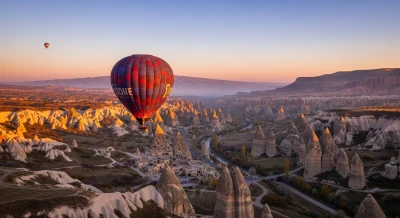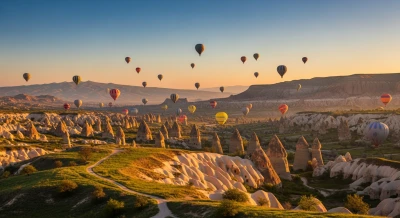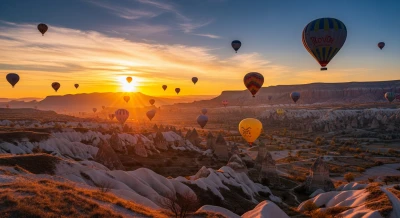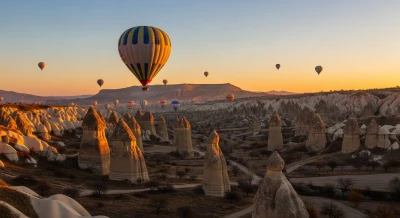
Pamukkale Sunrise Balloon Tour: Glide Above Cotton Castle Pools and Ruins
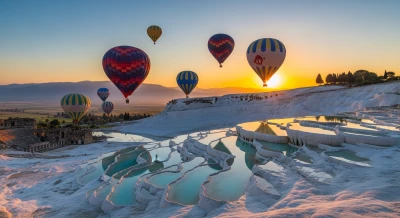
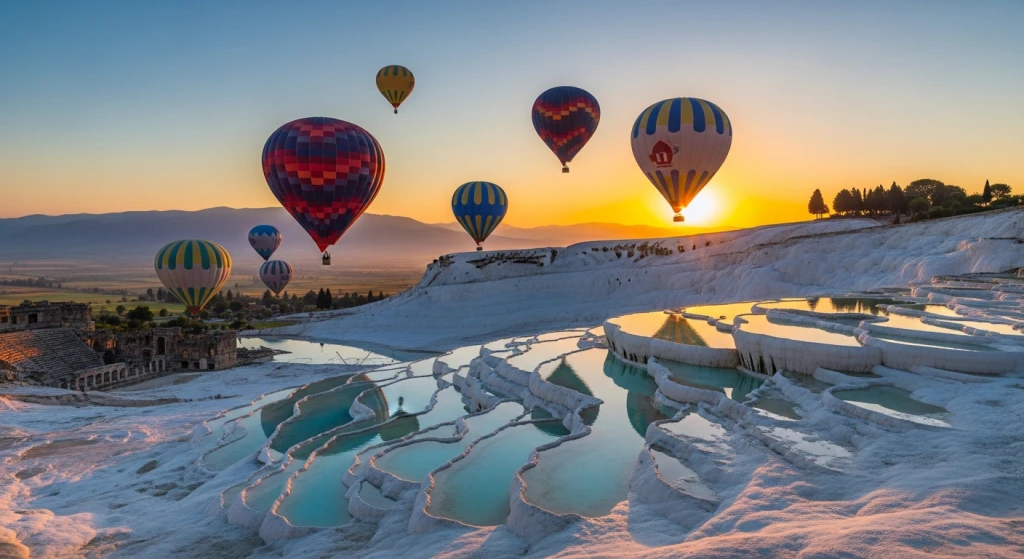
From ground level, Pamukkale is already otherworldly – a terraced slope of blinding white “cotton” and turquoise pools spilling down the hillside. From a hot air balloon at sunrise, it feels like flying over another planet. The Pamukkale Sunrise Balloon Tour is one of Turkey’s most surreal experiences, blending natural wonder, ancient ruins, and soft early-morning light into a single flight.
If you’ve already bookmarked Cappadocia for its fairy‑chimney balloons, consider Pamukkale its lesser‑known but equally magical cousin – especially if you love history and geology as much as sunrise views.
Why Pamukkale Is So Spectacular from the Sky
“Pamukkale” means “Cotton Castle,” and from the basket the name finally makes sense. The white travertine terraces form a cascading fortress, with mineral-rich water caught in shell‑like pools that reflect the sky. At sunrise, the scene changes minute by minute:
First, the limestone glows pale blue in the pre‑dawn haze. As the sun edges up, the terraces turn rose‑gold, then bright white. The thermal pools shift from milky turquoise to glassy mirrors, catching the sun as balloons drift silently overhead.
Most visitors only see Pamukkale from the walking paths, hemmed in by fences and crowds. A balloon flight pulls you back to see the full picture: the sweep of the Cotton Castle, the grid of the modern town below, and the ruins of Hierapolis stretching over the plateau above.
What the Pamukkale Sunrise Balloon Tour Really Looks Like
Pre‑Dawn Hotel Pick‑Up and Briefing
Your morning starts before sunrise, when a minibus collects you from your Pamukkale or Karahayit hotel. Balloon operators rise early to catch the calmest winds, so expect a wake‑up somewhere between 4:30 and 6:00 a.m., depending on the season.
At the launch site, you’ll sip a light tea or coffee as the crew inflates the balloon. Watching the burners flare to life and the envelope slowly stand upright is part of the ritual – and a great chance for photos before you step into the basket.
Take‑Off: Climbing Over the Cotton Castle
Once aboard, your pilot gives a safety briefing and then increases the burner flame. The ground falls away more gently than you’d expect; there’s no jolt, just the soft realization that the noise of the crowd is fading.
The first minutes are usually the most dramatic: the balloon rises over the travertine terraces as the horizon brightens. Below you, you’ll see:
- The stepped pools of Pamukkale, some filled, some dry, like a frozen white waterfall
- The curved outline of the ancient theater of Hierapolis on the plateau above
- Steam rising from hot springs and thermal hotels in the valley
Some flights drift low, giving you the sensation of skimming the terraces; others ride higher, offering sweeping panoramas of the Menderes (Meander) River valley and distant mountains. The pilot uses wind layers to adjust altitude, so each day’s path is slightly different.
The Hierapolis View: Ruins from a Bird’s‑Eye Perspective
One of the unique aspects of the Pamukkale Sunrise Balloon Tour is how clearly it reveals the layout of ancient Hierapolis. From above, the ruins tell a story that’s harder to grasp from ground level:
- The straight line of the main colonnaded street, running like a spine through the city
- The semicircle of the Roman theater, perfectly proportioned when seen from the air
- The necropolis (city of the dead) spreading out on the slopes, with tombs dotting the landscape
It’s a striking contrast: the pure white terraces where people bathe today, and the ruins of a spa city that thrived here almost two thousand years ago.
Landing and Post‑Flight Traditions
Most Pamukkale flights last around 45–60 minutes, depending on wind and conditions. Landings are usually soft, onto open fields or flat ground. After the crew secures the basket, there’s often a small ceremony: sparkling drink or juice, a symbolic certificate, and time to chat with the pilot and fellow passengers.
By the time you’re dropped back at your hotel or near the entrance to the travertines, it’s still early morning – leaving you an entire day to explore Pamukkale and Hierapolis on foot.
Combining Balloon Flight with a Day in Pamukkale
One of the best ways to structure your day is:
- Sunrise balloon flight over the terraces and ruins
- Breakfast at your hotel or a local café back in town
- Late-morning visit to the travertine pools, walking barefoot on the warm calcium deposits
- Hierapolis exploration: the theater, necropolis, and city gates
- Optional swim in the Antique Pool (Cleopatra’s Pool), floating among ancient marble columns
Seeing Pamukkale from above first gives you a mental map. When you later walk the ruins, you can recognize landmarks you saw from the balloon, turning the whole day into a connected story rather than separate activities.
Practical Tips for Your Pamukkale Balloon Experience
Best Time of Year
Pamukkale flights operate much of the year, but conditions vary:
- April–June & September–October: Mild temperatures, clear light, generally stable weather.
- July–August: Hot days, but dawn flights are still pleasantly cool.
- Winter: Fewer crowds, atmospheric mists in the valley; some days may be cancelled due to weather.
As with Cappadocia, balloon operations anywhere in Turkey are weather‑dependent. Wind, rain, or low visibility can mean cancellations. Booking the flight for your first available morning gives you buffer days if you need to reschedule.
What to Wear
Dress for standing outdoors just before sunrise:
- Layers (light fleece or jacket over a t‑shirt in warmer months)
- Comfortable closed shoes (no flip‑flops – the basket floor can be uneven)
- A hat or cap if you’re sensitive to heat from the burners
Temperatures rise quickly once the sun is up, so layers you can peel off are ideal.
Is It Safe?
Turkey’s balloon flights are regulated, and reputable operators meet stringent safety standards. Licensed pilots, regular maintenance, and weather checks are all key parts of a professional outfit. Listen carefully to the briefing, follow instructions for landing position, and you’ll be able to relax and enjoy the ride.
Pairing Pamukkale with Cappadocia’s Balloon Scene
Many travelers combine Pamukkale with Cappadocia on the same trip. If you fall in love with the aerial perspective over Pamukkale, you might want to continue the balloon theme further east.
For a more intimate, small‑group experience above fairy chimneys and volcanic valleys, you could look at flights like the Comfort Balloon Flight – Cappadocia Premium Sunrise Experience or go all‑in on exclusivity with a Private Hot Air Balloon Flight – Cappadocia. The landscapes and flight styles are different enough that doing both Pamukkale and Cappadocia never feels repetitive – one focuses on travertine and Roman ruins, the other on surreal rock formations and cave dwellings.
Who Will Love the Pamukkale Sunrise Balloon Tour?
This tour is especially rewarding if you:
- Are fascinated by geology and natural wonders
- Enjoy ancient history and want a fresh viewpoint on ruins
- Prefer quieter balloon skies than the famously busy Cappadocia horizon
- Are traveling across western Turkey (Ephesus–Pamukkale–Antalya routes)
With its combination of cotton‑white terraces, turquoise pools, and an ancient spa city, Pamukkale is one of the only places in the world where a balloon flight connects such dramatic natural and archaeological landscapes in one view.
If you’re planning a Turkey itinerary that goes beyond the obvious, reserving a spot on the Pamukkale Sunrise Balloon Tour might be the most memorable decision you make – a sunrise you’ll measure all others against for years.