Photographing Cappadocia’s Dawn: Capture Göreme’s Balloons Like a Pro
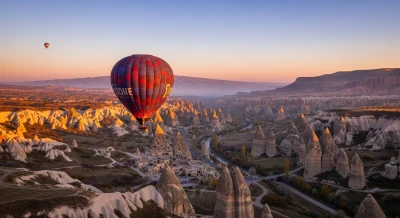
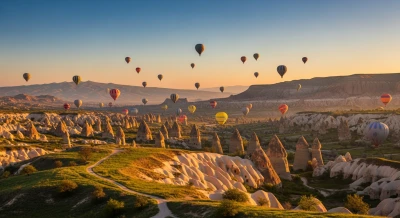
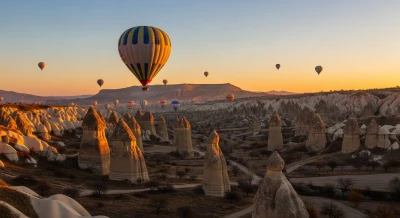
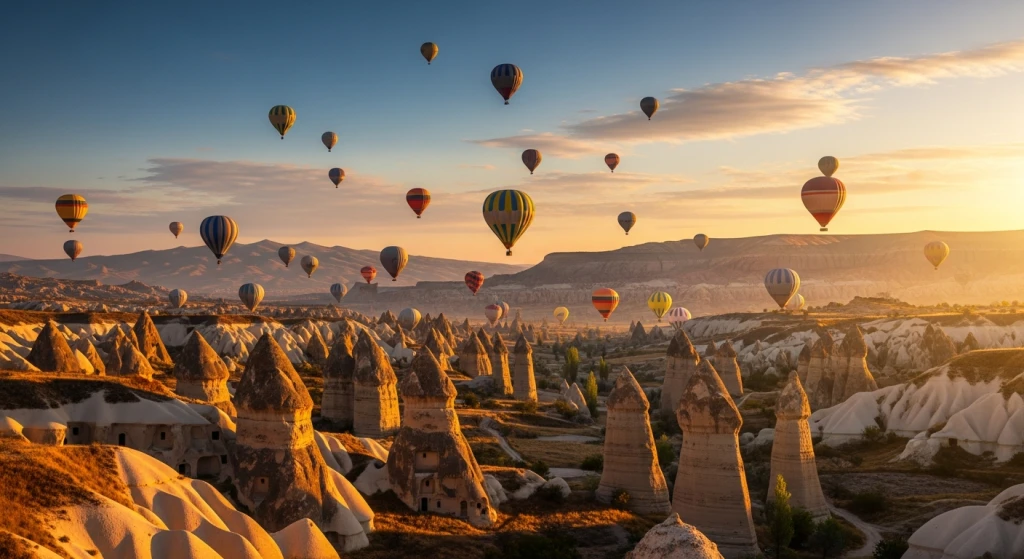
When the first blush of light hits Cappadocia’s honeycombed cliffs, hundreds of hot air balloons lift silently above the valleys. It’s one of the most photographed sunrises on earth – and also one of the easiest to get wrong. Harsh contrasts, fast-changing light, and crowded viewpoints can turn magical scenes into flat, overexposed snapshots.
This guide is all about helping you photograph Göreme’s dawn like a pro, using a real flight – the Standard Hot Air Balloon Flight | Göreme Valley, Cappadocia Sunrise – as your moving photo studio. Rather than just telling you where to stand, we’ll focus on how to work with the unique light, colors, and movement that make Cappadocia a dream for photographers.
Why Shooting From the Basket Beats Shooting From the Ground
Most iconic Cappadocia photos are taken from hilltops and hotel terraces – beautiful, yes, but also familiar. Photographing from inside the balloon basket gives you something rarer: a constantly shifting 360° view of fairy chimneys, the red ridges of Göreme Valley, and a sky crowded with color.
On the Standard Hot Air Balloon Flight | Göreme Valley, Cappadocia Sunrise, you’ll take off in the blue hour, just before sunrise. That timing is crucial for photographers – the light is soft and pastel, perfect for balancing the glowing balloon envelopes against the still-sleepy landscape below.
The Photographer’s Advantage in the Air
From the basket you can:
- Change your angle constantly as the balloon drifts, instead of being stuck with a single ground viewpoint.
- Shoot both wide landscapes and intimate details like other baskets silhouetted against the sun.
- Capture leading lines of valleys, vineyards, and dirt roads from directly above.
Think of the flight as a one-hour photo walk in the sky – the scenery moves for you.
Essential Camera Settings for Balloon Photography
Dialing in for Pre-Dawn and Sunrise
Light changes quickly in Cappadocia’s dawn. Use these as starting points and adjust on the fly:
- Blue hour (before sunrise): Aperture f/2.8–f/4, ISO 1600–3200, shutter 1/125–1/250s. Prioritize keeping the shutter fast enough to avoid motion blur from the gently moving basket.
- Just after sunrise: Aperture f/5.6–f/8, ISO 400–800, shutter 1/250–1/500s. This is your sweet spot for sharp landscapes and floating balloons.
- Mid-flight (sun fully up): Aperture f/8–f/11, ISO 100–400, shutter 1/500s or higher. The sky can be bright – underexpose slightly (–0.3 to –1 EV) to preserve highlight detail in the clouds and balloon fabric.
Enable burst mode for sequences when other balloons cross the sun or line up perfectly with the horizon. You’ll often only have a second or two to nail the frame.
RAW vs. JPEG
If your camera allows it, shoot RAW. Cappadocia’s dawn colors are delicate: RAW files give you more flexibility to pull back blown highlights and reveal subtle pinks and oranges in the sky and rocks. If you must shoot JPEG, choose a “Neutral” or “Standard” profile to avoid oversaturated skies that look unnatural.
Composing Images That Go Beyond Postcard-Pretty
Use Layers: Foreground, Midground, Background
Professional-looking balloon images often succeed because they’re layered. Instead of just pointing at the sky, think in three planes:
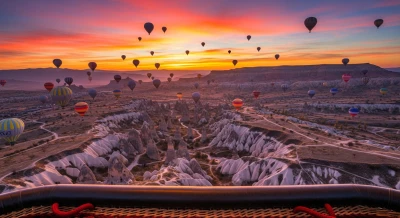
- Foreground: Basket ropes, a corner of the basket, or a fellow passenger’s silhouette add human context.
- Midground: A cluster of balloons at varying heights.
- Background: The eroded cliffs and fairy chimneys of Göreme Valley, or distant mountains bathed in mist.
From the basket, try positioning a neighboring balloon in the midground, with patterns of vineyards and stone houses in the background. This tells a story of both the sky and the land.
Play With Scale
Cappadocia’s landscape can feel almost unreal in photos – scale is what makes it believable. Include tiny details like winding paths, minarets, or walnut trees beneath the balloons to hint at their massive size. When you tilt the camera slightly downward, the patchwork of fields and villages beneath becomes a textured canvas for the balloons to hover over.
Silhouettes vs. Color
Decide what you want as the hero of the shot:
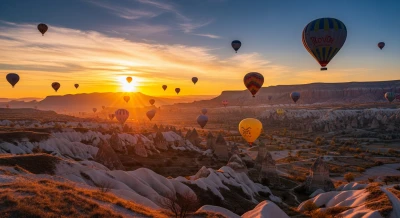
- For silhouettes: Place balloons between you and the rising sun, expose for the sky, and let the envelopes go dark. The result can be graphic, almost minimalist.
- For color: Keep the sun behind your back or to your side, so the balloons are lit from the front. This brings out reds, yellows, and blues against softer pastel skies.
On the standard sunrise route, you’ll usually have both options during the same flight as the balloon rotates and the sun climbs.
Gear Tips: What Actually Helps in the Basket
You don’t need a studio’s worth of equipment to capture Göreme’s balloons beautifully. But a few choices make a big difference.
- Zoom lens (24–70mm or similar): Wide enough for landscapes, tight enough for isolating other balloons.
- Lightweight camera strap or wrist strap: To prevent accidental drops over the side of the basket.
- Lens cloth: Dawn can be humid; quickly wipe away any mist or dust.
- Spare battery: Long exposure times and cold morning air drain power faster than you expect.
For phones, turn off “Live” and beauty filters, and use the manual or “Pro” mode if available. Tap to focus on the balloons, then slide exposure down slightly to avoid blown-out skies.
Catching the Spirit of Cappadocia, Not Just the Scenery
Technically perfect images can still feel empty if they don’t show the human side of the experience. Göreme’s dawn isn’t only about balloons; it’s about anticipation at the launch site, local crews working in the half-dark, and the quiet hush as burners ignite.
During your Göreme Valley sunrise flight, look for:
- Hands gripping the basket edge as the ground drops away.
- Reflections of balloons in sunglasses or camera lenses.
- Pilots checking wind direction, framed by billowing fabric overhead.
Ask your fellow passengers if they’re comfortable being in your photos, especially for close-ups. A single candid smile against a backdrop of glowing balloons can be more memorable than any wide-angle landscape.
Planning Your Flight with Photography in Mind
Good planning is half the shot. Booking through a trusted source like the Cappadocia Balloon Tickets category gives you an overview of sunrise options, but if your priority is photography, note a few specifics when you choose your date and flight:
- Season: Spring and autumn often bring softer light and a bit of morning haze, which looks fantastic in photos and adds depth to the valleys.
- Wind and direction: Ask your operator about typical flight paths for your dates; flights that traverse Göreme and nearby valleys give more varied compositions.
- Position in the basket: Corners are gold for photographers, offering more room to turn and lean for clean angles.
Arrive at the launch site early. Some of the most atmospheric shots happen before you ever leave the ground – partially inflated envelopes glowing in the dark, burners firing like giant lanterns, crews hauling ropes and calling out in Turkish across the fields.
Bringing Göreme’s Dawn Home
When you review your images after the flight, resist the urge to over-edit. Cappadocia’s magic lies in its subtle gradients: the shift from cool blue to warm gold, the soft shadows in rock formations, the deep but not neon colors of the balloons. Aim for gentle contrast and natural saturation so your photos feel like the morning you lived, not just a filter you used.
With a bit of planning, the right settings, and a creative eye, your time on a Standard Hot Air Balloon Flight over Göreme Valley can yield a portfolio’s worth of images – not just another sunrise, but a story of Cappadocia’s sky, land, and people woven together in the first light of day.