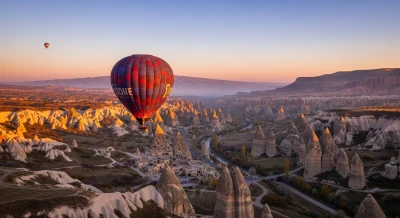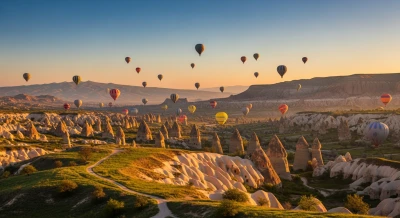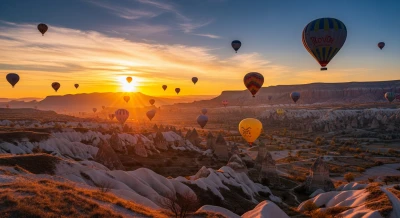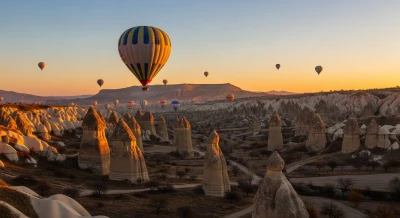
January in Cappadocia is one of those months that divides travelers into two camps: those who think it's too cold and risky for balloon flights, and those who know it offers some of the most breathtaking hot air balloon experiences you'll ever have. After organizing hundreds of Cappadocia balloon January flights over the years, I can tell you the truth falls somewhere in between—but leans heavily toward magical.
If you're considering a January balloon flight Cappadocia, you're probably wondering about the weather, cancellation rates, prices, and whether it's worth the risk. Let me walk you through everything you need to know about flying over snow-covered fairy chimneys at sunrise in the dead of winter.
January Weather in Cappadocia
Temperature & Climate
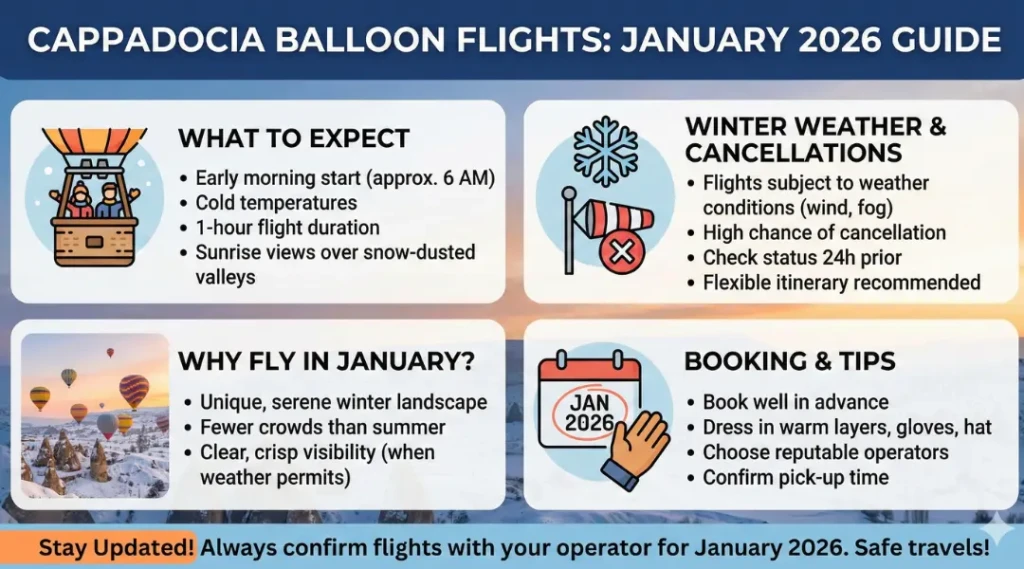
Let's not sugarcoat it: January is cold in Cappadocia. We're talking proper winter cold, not "oh, I'll just throw on a light jacket" cold. Ground temperatures typically hover between -5°C to 5°C (23-41°F) during the day, but early morning launch times—usually around 5:00-6:00 AM—can see temperatures plummet to -10°C (14°F) or below.
But here's what most people don't realize: once you're up in the balloon basket, it's actually not as freezing as you'd expect. The burners above you generate significant heat, and you're sheltered from ground-level wind chill. I've seen guests show up dressed like they're climbing Everest, then start peeling off layers mid-flight because the burner warmth is intense.
That said, the Cappadocia weather January conditions are highly variable. You might get crisp, clear mornings with perfect blue skies—ideal for flying. Or you might wake up to heavy snow, freezing fog, or strong winds that ground all flights. January sits firmly in Cappadocia's winter season, which means weather patterns shift quickly and unpredictably.
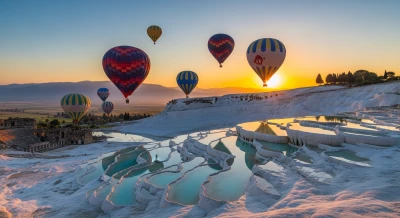
The landscape, though? Absolutely stunning. When snow blankets the valleys and dusts the fairy chimneys, Cappadocia transforms into something out of a fantasy novel. The contrast between white snow, golden sunrise light, and dark volcanic rock creates photo opportunities you simply cannot get during warmer months.
Flight Success Rate
This is the big question everyone asks: what are the chances my balloon flight Cappadocia January will actually happen?
Statistically, January sees a flight success rate of approximately 40-50%. That's notably lower than summer months (which run 80-90%) but still means you have decent odds, especially if you build flexibility into your schedule. Compare January with the best months for balloon flights like April, May, September, and October, and you'll see the difference—but you'll also pay significantly more during those peak periods.
Weather-related cancellations happen for several reasons in January:
Strong winds: The primary culprit. Cappadocia's valleys create wind tunnels, and January brings stronger average winds than other months. If sustained winds exceed 10-12 km/h at ground level, or if upper-level winds are too strong, flights get cancelled for safety.
Freezing fog: Occasionally, dense fog settles over the valleys overnight and doesn't clear by launch time. Pilots need clear visibility for safe takeoffs and landings.
Heavy snow: Active snowfall during launch windows grounds flights. However, snow that fell the night before and stopped by morning typically doesn't prevent flights—in fact, fresh snow creates the most spectacular landscapes.
Extreme cold: Very rarely, temperatures drop so low that equipment functioning becomes questionable, or passenger safety concerns arise.
The Turkish Civil Aviation Authority and local balloon companies take safety extremely seriously. If there's any doubt about conditions, flights don't happen. This is good news for your safety but can be frustrating when you've traveled all this way.
My advice? Book at least three nights in Cappadocia during January. This gives you three potential flight mornings. With a 40-50% daily success rate, your cumulative odds of flying at least once across three mornings jump to about 85-90%. Most guests who stay three nights get their flight.
Snow and Frost Conditions
January brings regular snowfall to Cappadocia—usually light to moderate amounts rather than massive dumps. The region averages 5-8 snowy days per month, though this varies year to year. Some Januarys see heavy snow multiple times; others stay relatively dry with just frost and cold.
Frost is almost guaranteed on clear nights, creating spectacular ice formations on the rock formations. These frosty mornings often correlate with stable weather—meaning excellent flying conditions. When you see heavy frost coating everything at 5:00 AM, there's a good chance you'll be flying soon.
Snow-covered Cappadocia from a hot air balloon is genuinely breathtaking. The valleys look pristine, untouched except for occasional animal tracks. Other balloons drifting through this white landscape create an almost surreal scene. The photos you'll take on a snowy January morning will look completely different from typical Cappadocia balloon pictures—and that uniqueness has real value.
January Balloon Flight Prices
Here's some good news: Cappadocia balloon prices January are significantly lower than peak season rates. You're looking at roughly 30-40% savings compared to spring and fall.
Standard flight prices in January 2026:
- Standard flights (20-28 passengers): €150-€180 per person
- Small group flights (12-16 passengers): €180-€220 per person
- Deluxe/private flights (8-12 passengers): €220-€280 per person
Compare this to April or October when standard flights run €220-€250, and you're saving €70-€100 per person. For a couple, that's €140-€200 in savings—enough to cover a nice dinner or an extra day of accommodations.
Why the discount? Simple supply and demand. Fewer tourists visit Cappadocia in January, and companies want to fill their balloons. Lower success rates mean companies need to price competitively to attract bookings despite cancellation risks.
Understand different flight types and prices available before booking. Standard flights with 20-28 passengers offer the best value. Deluxe flights with 8-12 passengers provide more space and often slightly longer flight times (70-90 minutes versus 60 minutes), but you'll pay 40-50% more. For January specifically, I usually recommend standard flights unless you have specific reasons for wanting smaller groups—the experience is nearly identical, and winter means fewer tourists anyway, so even standard flights feel less crowded.
Pros and Cons of January Flights
Let me break down the reality of January hot air balloon Cappadocia experiences:
Pros:
Dramatically lower prices: As mentioned, you'll save 30-40% compared to peak months. For budget-conscious travelers, this alone justifies winter timing.
Stunning winter landscapes: Snow-covered fairy chimneys and white valleys create unique photo opportunities unavailable in other seasons. The contrast and beauty are genuinely special.
Fewer tourists overall: Even on days when multiple balloons fly, there are fewer total balloons in the air compared to peak season. You're not sharing the sky with 100+ balloons—maybe 30-50 at most. This creates a more intimate, less commercialized experience.
Magical atmosphere: There's something about floating silently over a frozen, snow-dusted landscape at sunrise that feels more magical than summer flights. The cold, crisp air, the steam from hot springs visible from above, the frosted rock formations—it all combines into something extraordinary.
Authentic experience: You're visiting during low season when Cappadocia belongs more to locals than tourists. The whole trip feels more genuine.
Cons:
Higher cancellation rates: That 40-50% success rate is real. You might not fly despite careful planning. Read our guide on weather-related cancellations to understand what triggers these decisions and how companies handle them.
Requires schedule flexibility: You really need 2-3 nights minimum, ideally 3-4, to have good odds of getting your flight. This might not work for tight itineraries.
Very cold early mornings: Those 5:00 AM pickups at -10°C are brutal. You'll need proper winter gear. Don't forget to check what to wear in winter flights before your trip—inadequate clothing will ruin the experience.
Limited daylight hours: Winter's short days mean less time for other activities if your flight cancels and you're stuck waiting for the next morning.
Potential weather disruption: Heavy snow can occasionally impact road conditions, making it difficult to reach launch sites or causing transportation delays.
What Makes January Special
Despite the challenges, Cappadocia January balloon flights offer something you literally cannot experience any other time of year. I've flown in every season, and January flights rank among my absolute favorites.
The light quality in winter is different. The low angle of the sunrise creates longer, more dramatic shadows across the valleys. Colors are softer, more muted—golds and blues and whites instead of harsh summer brightness. Photographers especially appreciate this.
Snow transforms familiar landscapes into new territory. I've had guests who visited Cappadocia multiple times tell me their winter flight felt like discovering a completely different place. The Rose Valley, Love Valley, and Pigeon Valley all become unrecognizable under snow cover.
The cold adds an element of adventure that summer flights lack. There's a pioneering feeling to bundling up at 5:00 AM, watching your breath freeze in the air, then lifting off into freezing darkness to catch the sunrise. It feels more real, less touristy.
And honestly, there's bragging rights. When you tell people you flew in a hot air balloon over Cappadocia in January, they're impressed. It sounds more adventurous than "I took a balloon ride during peak season with perfect weather."
Booking Tips for January
Smart booking strategies make all the difference for January balloon rides Cappadocia:
Book directly with reputable companies: Use established operators with good safety records. Check recent reviews specifically mentioning January flights and cancellation policies. Ready to fly? Book your January flight through trusted operators who handle weather cancellations professionally.
Understand cancellation policies: Reputable companies refund or reschedule weather-cancelled flights. Read the fine print. Some offer full refunds, others only reschedule. Know what you're signing up for before paying.
Stay flexible with dates: As emphasized, book 3+ nights in Cappadocia. Arrive with no fixed expectations about which morning you'll fly. The company will slot you into the first available flight during your stay.
Book in advance but not too far: January isn't as competitive as summer, but good companies still fill up, especially around holidays. Book 2-4 weeks ahead. Last-minute bookings sometimes work—check last-minute availability if you're already in Turkey—but advance booking ensures you're prioritized.
Consider standard flights: The deluxe experience isn't dramatically different in January when crowds are already smaller. Save your money for other experiences unless you specifically want the smaller basket.
Ask about consecutive cancellations: Some companies offer discounts if your flight cancels multiple days in a row. It's worth asking about their policies.
Pack appropriately: Cannot stress this enough. Proper winter clothing makes or breaks the experience. Layers, waterproof boots, thick gloves, warm hat. You'll be standing still in a basket for an hour at freezing temperatures.
Communicate your schedule: Let the company know all your available mornings immediately. The more flexibility you show, the better they can work you into successful flights.
January Flight Schedule
Typical January balloon flight Cappadocia schedule:
4:30-5:00 AM: Hotel pickup. Yes, it's brutal, but sunrise flights require pre-dawn launches. You'll be picked up in darkness and driven to the launch site.
5:00-5:30 AM: Light breakfast at the company office. Usually pastries, fruit, tea, and coffee. Use the restrooms here—there are none at launch sites.
5:30-6:00 AM: Transport to launch fields. Location varies based on daily wind conditions. Pilots choose launch sites morning-of based on weather data.
6:00-6:30 AM: Balloon inflation and boarding. This is fascinating to watch—massive balloons lying flat, then slowly inflating with burner blasts until they're upright and ready.
6:30-7:30 AM: Flight time. Actual duration varies (usually 60-75 minutes for standard flights), depending on wind conditions and pilot decisions. You'll fly over multiple valleys, ascending and descending to navigate terrain and wind currents.
7:30-8:00 AM: Landing and celebration. Landings can be bumpy—pilots aim for soft touchdowns, but wind sometimes makes them rough. After landing, there's a traditional champagne celebration and certificate ceremony.
8:00-9:00 AM: Return to hotels. You'll be back well before 9:00 AM most days, leaving the entire day free for other activities.
The schedule shifts slightly throughout January as sunrise times change, but the basic pattern remains constant. Read our complete winter season guide for Dec-Feb to understand how schedules evolve across the full winter period.
Is January Worth It?
So, are balloon flights cancelled in January Cappadocia frequently enough to skip the month entirely? My honest answer: if you're willing to stay 3+ nights and embrace uncertainty, absolutely not—January is worth considering.
The lower prices, unique scenery, and reduced crowds create genuine advantages. Yes, you're gambling a bit on weather, but the payoff for successful flights is extraordinary. Most guests who fly in January tell me it exceeded expectations despite initial concerns.
However, if you have a tight schedule, can only spend one or two nights in Cappadocia, or really can't handle the possibility of disappointment, choose a higher-success-rate month. April, May, September, and October offer 80-90% success rates, though you'll pay significantly more and share the sky with many more balloons.
For adventurous travelers who value unique experiences over guaranteed outcomes, January delivers something special. The cold, the snow, the crystalline air, the empty valleys—it all combines into a flight you'll remember forever.
Just pack warm clothes, stay flexible, and prepare mentally for possible cancellations. If you approach January with the right mindset, you'll likely look back on it as a highlight of your Turkey trip, successful flight or not. The atmosphere, the landscape, the whole winter Cappadocia experience is magical.
Ready to take the chance? Book your January flight now and prepare for an adventure that stands apart from typical tourist experiences. And if you need more flexibility, you can always check last-minute availability once you arrive in Cappadocia to see if conditions look favorable for next-day flights.
Frequently Asked Questions
Do balloon flights operate in January in Cappadocia?
Yes, balloon flights operate throughout January in Cappadocia. Companies run daily flights weather permitting, maintaining full operations during winter months. However, January has a lower flight success rate (40-50%) compared to peak season (80-90%) due to winter weather conditions including stronger winds, occasional snow, and freezing fog. Flights operate on the same schedule as other months with pre-dawn launches, but more days see cancellations. Reputable operators fly whenever conditions meet safety standards set by the Turkish Civil Aviation Authority.
What is the cancellation rate for Cappadocia balloon flights in January?
January balloon flights in Cappadocia have approximately a 50-60% cancellation rate, meaning flights proceed on roughly 40-50% of days. This is significantly higher than summer's 10-20% cancellation rate but doesn't mean you won't fly. The key is building flexibility into your schedule. Staying three nights in Cappadocia gives you three potential flight mornings, which increases your cumulative chances of flying at least once to approximately 85-90%. Cancellations are entirely weather-dependent and made for safety reasons—strong winds, heavy snow, or freezing fog are the main culprits.
How cold is it in the balloon basket during January flights?
Ground temperatures at launch time (5:00-6:00 AM) range from -5°C to -10°C (14-23°F) in January. However, inside the balloon basket, it's warmer than you'd expect. The burners generate significant heat that radiates down into the basket, and you're protected from ground-level wind chill once airborne. Most passengers find the temperature comfortable with proper layering. That said, you're standing relatively still for 60-75 minutes, so dress warmly. Thermal layers, waterproof outer jacket, thick gloves, warm hat, and insulated boots are essential. The burner warmth is most noticeable near the center of the basket.
Should I book Cappadocia balloon flights in advance for January?
Yes, book 2-4 weeks in advance for January flights. While January isn't as crowded as peak season, reputable companies still fill their limited balloon capacity, especially around New Year's and holiday periods. Advance booking ensures you're prioritized for available flights during your stay. However, don't book too far ahead (3+ months) as you lose flexibility with schedule changes. Some travelers successfully book last-minute, but this risks missing out if popular companies are full. When booking, communicate all your available mornings so companies can slot you into the first successful flight during your visit.
What happens if my January balloon flight gets cancelled?
Reputable Cappadocia balloon companies offer full refunds or rescheduling for weather-cancelled flights. Most operators will automatically try to reschedule you for the next available morning during your stay. If no flights succeed during your visit, you'll receive a full refund (processing times vary). Some companies offer partial refunds if you prefer leaving after one cancellation rather than waiting. Always confirm the cancellation policy before booking. Weather cancellations are announced the evening before or early morning of your scheduled flight—you'll receive notification by phone or WhatsApp, so keep communication channels open.
Is January a good month for first-time balloon riders in Cappadocia?
January can be excellent for first-timers if you understand the tradeoffs. You'll save 30-40% on costs and experience stunning snowy landscapes unavailable other months. However, the 50-60% cancellation rate requires flexibility and at least three nights in Cappadocia. If this is your only chance to ever balloon in Cappadocia and you can't handle potential disappointment, choose a higher-success-rate month (April, May, September, October). But if you're flexible, adventurous, and value unique experiences over guaranteed outcomes, January offers something special. The dramatic winter scenery and reduced crowds create a more intimate, memorable experience than crowded summer flights.
What should I wear for a January balloon flight in Cappadocia?
Dress in warm layers for January balloon flights: thermal base layers (top and bottom), fleece or wool mid-layer, waterproof insulated jacket, thick winter gloves, warm hat covering ears, thick socks, and waterproof winter boots with good grip. Avoid cotton—it retains moisture and loses insulation when damp. Synthetic or wool materials work better. Don't overdress; the burner generates heat, so many passengers remove outer layers mid-flight. Bring a small backpack for shed layers. Scarves can be hazardous near burners—opt for a neck gaiter instead. Good footwear is critical; landings can be bumpy and fields muddy or snowy.
Can I get travel insurance to cover cancelled balloon flights in January?
Standard travel insurance typically doesn't cover weather-related activity cancellations since reputable operators already provide full refunds or rescheduling. However, travel insurance can cover your overall trip if you need to cancel or interrupt your Cappadocia visit due to covered reasons (illness, emergency, etc.). Some adventure travel insurance policies cover non-refundable pre-paid activities, though weather cancellations usually don't qualify since you receive refunds. Read policy details carefully. The main insurance concern isn't the balloon flight itself—it's protecting your overall trip investment if something prevents you from traveling to Cappadocia at all.
How do January balloon flight prices compare to other months?
January offers the lowest balloon flight prices of the year, typically 30-40% cheaper than peak season. Standard flights cost €150-€180 in January versus €220-€250 in April/May/September/October. Small group flights run €180-€220 (versus €260-€300 peak season), while deluxe flights cost €220-€280 (versus €300-€400 peak). December and February have similar pricing to January. Summer months (June-August) fall in the middle. The discount reflects lower demand and higher cancellation rates. Companies need to attract bookings despite weather uncertainty, creating genuine savings for flexible travelers willing to accept cancellation risks.
What's the best strategy for booking January balloon flights in Cappadocia?
The optimal strategy: book standard flights with a reputable operator 2-4 weeks ahead, plan for 3-4 nights in Cappadocia, and maintain flexible expectations. Communicate all your available mornings when booking so the company can prioritize you across multiple days. Avoid booking your flight for your first morning—give yourself backup options. Choose operators with clear cancellation policies and strong safety records. Read recent reviews specifically mentioning January experiences. Consider booking accommodations with free cancellation in case weather is so poor you decide to leave early. Pack proper winter clothing. Mentally prepare for possible cancellations while hoping for success. This balanced approach maximizes your chances of flying while minimizing disappointment if weather doesn't cooperate.