How Cappadocia Balloon Pilots Get Licensed: Complete Training & Certification Guide
Flying a hot air balloon over Cappadocia's fairy chimneys requires more than passion for adventure—it demands rigorous training, certification, and unwavering commitment to safety. If you've wondered about the balloon pilot license Turkey requirements or how your pilot earned their wings, this guide reveals everything about becoming a licensed Cappadocia balloon pilot.
Understanding Turkey's Aviation Authority: SHGM
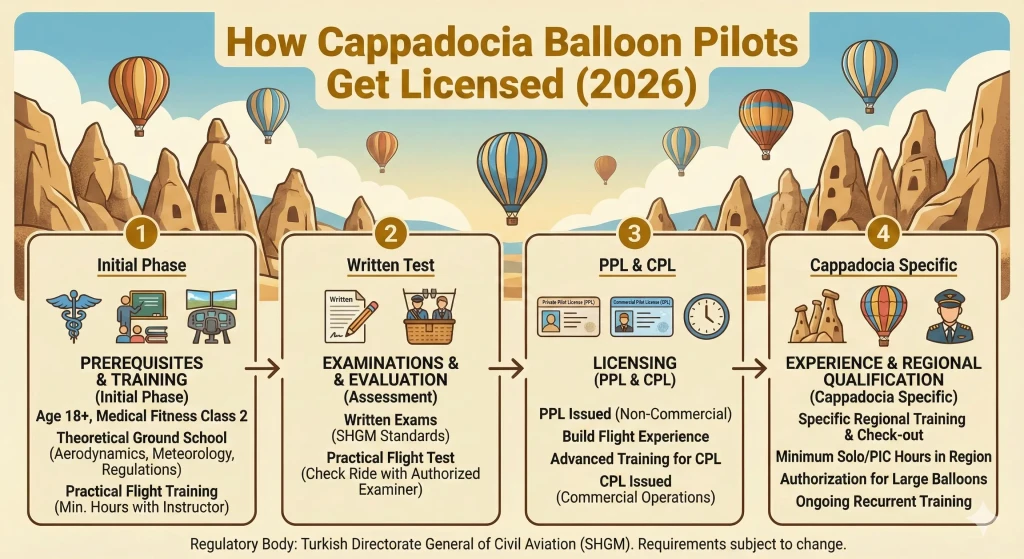
The Directorate General of Civil Aviation (SHGM) serves as Turkey's official aviation regulatory body, equivalent to the FAA in the United States or EASA in Europe. Every commercial balloon pilot in Cappadocia must hold a valid SHGM-issued license to legally carry passengers.
SHGM oversees all aspects of balloon operations including pilot certification standards, aircraft registration, flight operation approvals, safety enforcement, and training school accreditation. This comprehensive oversight ensures that when you book a balloon ride in Cappadocia, you're flying with properly trained professionals who meet international aviation standards.
The authority maintains strict control through regular inspections, incident investigations, and continuous monitoring of all balloon operations across Turkey. This systematic approach has established Cappadocia as one of the world's safest ballooning destinations.
Basic Requirements for Balloon Pilot License Turkey
Age and Educational Prerequisites
Candidates must be at least 18 years old to begin training for their balloon pilot license. While no university degree is required, aspiring pilots need strong understanding of physics and mathematics, ability to comprehend technical materials, basic English proficiency for aviation terminology, and excellent communication skills for passenger briefings.
Physical fitness is essential as balloon piloting requires handling heavy equipment, standing for extended periods during flights, quick reactions in emergencies, and ability to work in varying weather conditions.
Medical Certification Standards
Every balloon pilot must maintain a valid Class 2 Medical Certificate issued by an SHGM-approved Aviation Medical Examiner. This comprehensive examination includes cardiovascular health assessment, vision and hearing tests, neurological examination, and overall physical fitness evaluation.
Medical disqualifiers include epilepsy or seizure disorders, severe heart conditions, conditions causing sudden incapacitation, drug or alcohol dependency, and certain psychological conditions. The medical certificate must be renewed every 24 months for pilots under 40, and annually for pilots aged 40 and above.
The 50-Hour Flight Training Requirement
Earning a balloon pilot license Turkey requires extensive hands-on experience. SHGM mandates a minimum of 50 flight hours before qualifying for commercial certification, though most candidates complete 60-80 hours before feeling fully prepared.
Training Hour Breakdown
Dual Instruction (35 hours minimum): Students fly under direct supervision of certified instructors, learning basic balloon control, maneuvering techniques, takeoff and landing procedures, fuel management, emergency protocols, and passenger safety procedures.
Solo Flight Time (10 hours minimum): Independent flights without instructor supervision allow students to demonstrate competency in various conditions, build confidence and decision-making skills, and prove their ability to handle unexpected situations.
Cross-Country Experience (5 hours minimum): These flights develop navigation skills over extended distances, landing in unfamiliar terrain, route planning and fuel calculations, and communication with ground crew in various locations.
Why Cappadocia Provides Ideal Training
Most balloon pilot training in Turkey occurs in Cappadocia itself, offering unique advantages. The challenging terrain with valleys, fairy chimneys, and variable winds provides excellent training conditions. The high-traffic environment with dozens of balloons launching daily during peak season teaches proper spacing, communication, and traffic pattern procedures essential for commercial operations.
Cappadocia's variable weather patterns—from calm summer mornings to tricky spring winds—expose trainees to diverse flying conditions they'll encounter throughout their careers. The region also hosts Turkey's most experienced balloon instructors, many with thousands of flight hours specifically in Cappadocia's unique conditions.
Ground School: Mastering Theoretical Knowledge
Flight training represents only half the equation for becoming a licensed pilot. Comprehensive ground school education covers essential theoretical knowledge across multiple subjects.
Core Curriculum Topics
Balloon Systems and Equipment (40 hours): Students learn envelope construction and materials, burner systems and fuel management, basket design and passenger capacity, instrument operation and maintenance, pre-flight inspection procedures, and equipment emergency protocols.
Aerodynamics and Flight Theory (30 hours): This covers how hot air balloons achieve lift, controlling ascent and descent rates, understanding wind gradients and layers, maneuvering techniques and limitations, weight and balance calculations, and performance factors affecting flight.
Meteorology: The Most Critical Skill
Meteorology training (50 hours) represents the most extensive and critical subject for Cappadocia balloon pilots. Understanding weather isn't just academic—it's the difference between magical flights and dangerous situations.
Pilots learn wind analysis including surface winds, wind layers at different altitudes, speed and direction changes, and how Cappadocia's valleys create unique wind patterns. Weather pattern recognition involves reading forecasts, identifying suitable flying conditions, recognizing dangerous developments, and understanding seasonal patterns.
Local meteorological conditions specific to Cappadocia include microclimate effects, valley winds and thermal activity, morning temperature inversions, and weather station data interpretation. Most importantly, pilots develop conservative decision-making skills about when to fly versus when to cancel for passenger safety.
Additional Ground School Subjects
Aviation Regulations (25 hours): Students master SHGM regulations, airspace classifications, flight planning requirements, passenger briefing protocols, incident reporting procedures, and insurance requirements.
Navigation and Communication (20 hours): Training covers map reading and terrain recognition, GPS usage, radio communication procedures, emergency protocols, ground crew coordination, and landing site selection.
Human Factors and Safety (15 hours): This critical subject addresses crew resource management, stress and fatigue management, decision-making under pressure, passenger psychology, emergency leadership, and safety culture best practices.
Comprehensive Written Examination
After completing ground school, candidates must pass a rigorous written exam administered by SHGM. The exam consists of 100 multiple-choice questions with a 3-hour time limit, requiring a 70% passing score.
Exam Subject Distribution
Questions cover meteorology (25-30 questions), balloon systems and equipment (20-25 questions), aviation regulations (15-20 questions), aerodynamics and flight theory (15-20 questions), navigation and communication (10-15 questions), and safety and emergency procedures (10-15 questions).
Most candidates spend 2-3 months preparing through studying ground school materials, taking practice tests, reviewing SHGM regulations, joining study groups, and consulting with experienced pilots. Training schools report 75-85% first-time pass rates, with nearly all candidates passing within two attempts.
The written exam ensures pilots understand the "why" behind every procedure and decision, enabling sound judgment in unexpected situations, clear understanding of safety margins, ability to continue learning throughout their career, and professional credibility with passengers.
Practical Flight Test: Final Evaluation
The practical examination represents the final hurdle before earning a balloon pilot license. This comprehensive test evaluates flying skills, decision-making abilities, and professional conduct.
Pre-Flight Assessment
Testing begins before leaving the ground with documentation review, weather assessment, thorough pre-flight inspection, and complete flight planning. Examiners verify medical certificate validity, training logbook completeness, required flight hours, and instructor endorsements.
Candidates must analyze current weather conditions, review forecasts, make go/no-go decisions with clear explanations, and identify any concerns. The pre-flight inspection demonstrates thorough balloon examination including envelope condition, burner systems, fuel verification, basket inspection, instrument checks, and safety equipment inventory.
In-Flight Evaluation
During flight, examiners assess basic balloon control including smooth burner operation, precise altitude maintenance, controlled climb and descent rates, efficient fuel management, and continuous instrument monitoring.
Navigation and maneuvering skills are evaluated through using wind layers for directional control, maintaining safe distance from terrain, positioning for designated landing areas, obstacle avoidance, and maintaining situational awareness.
Examiners may simulate emergency scenarios including burner failures, unexpected weather changes, fuel system problems, passenger medical issues, and communication failures. Candidates must respond correctly, calmly, and safely to each situation while maintaining professional conduct.
Landing Assessment
The landing phase receives critical evaluation. Candidates must demonstrate proper site selection considering wind conditions, terrain suitability, ground crew accessibility, obstacles and hazards, and permission requirements. The approach must show proper descent rate, wind alignment, final maneuvering, passenger preparation, and smooth touchdown technique.
Approximately 70% of candidates pass on first attempt, with most others succeeding on their second try after addressing specific deficiencies with their instructor.
License Renewal and Ongoing Requirements
A balloon pilot license isn't permanent—SHGM requires ongoing renewal to ensure pilots maintain currency and competency throughout their careers.
Renewal Timeline and Requirements
Balloon pilot licenses remain valid for 5 years from issue date. Before expiration, pilots must complete minimum flight hours, pass recurrent training, maintain valid medical certificates, demonstrate continued competency, and pay renewal fees.
To maintain license validity, pilots must log at least 35 flight hours annually including 25 hours as pilot in command and 10 hours in their geographic region. Within the preceding 90 days before carrying passengers, pilots need minimum 3 takeoffs and landings, at least 2 hours flight time, and currency in current weather conditions.
Recurrent Training
Every 2 years, pilots complete mandatory recurrent training including 8-hour ground refresher covering regulation updates, weather pattern analysis, new equipment or technology, safety incident reviews, and emergency procedure review. A 2-hour flight proficiency check demonstrates current flying skills, emergency procedures, landing precision, and communication protocols.
Professional pilots typically exceed minimum requirements through attending safety seminars, pursuing advanced training and ratings, participating in professional associations, and mentoring new pilots. This commitment to ongoing education maintains the high safety standards Cappadocia is known for worldwide.
Why Licensing Standards Matter
The rigorous licensing process isn't bureaucratic red tape—it's the foundation of Cappadocia's reputation as one of the world's safest and most professional ballooning destinations.
Safety Statistics Demonstrate Success
Despite 500,000+ passenger flights annually, 80-100 balloons airborne simultaneously during peak season, complex terrain and challenging conditions, serious incidents remain extremely rare. This exceptional safety record directly results from professional licensed pilots making conservative decisions based on their extensive training.
Locations without strict licensing requirements often experience higher accident rates, inconsistent pilot quality, operational shortcuts, and passenger safety compromises. Turkey's SHGM licensing system elevates Cappadocia above these concerns.
Professional Standards Benefit Everyone
Licensing creates clear professional standards benefiting passengers through confidence in pilot competency, consistent safety standards across companies, clear accountability, valid insurance coverage, and professional conduct expectations.
Pilots benefit from clear career pathways, professional recognition and respect, ongoing education opportunities, peer accountability, and industry credibility. Balloon companies gain ability to demonstrate quality, meet insurance requirements, reduce liability exposure, access quality pilot pools, and differentiate based on safety.
The tourism industry as a whole benefits from Cappadocia's reputation as a world-class destination, sustained tourist confidence, continued growth, and economic benefits for the entire region.
Verifying Your Pilot's Qualifications
As a passenger, you have the right to verify that your Cappadocia balloon pilot holds proper licensing and qualifications.
Before Booking
Check that operators display official SHGM operating permits, company registration documentation, insurance certificates, and safety accreditations. Research company reputation through safety records, customer reviews mentioning pilot professionalism, operational history, advertised pilot experience levels, and industry recognition.
Questions to Ask
When booking, ask: "Are all your pilots fully SHGM licensed?" "How many years of experience does my pilot have?" "How many flights has my pilot completed in Cappadocia?" and "What weather minimums do you follow?" Reputable companies answer these questions readily and enthusiastically.
On Flight Day
Your pilot should introduce themselves, mention their experience, explain their qualifications, and answer credential questions. Observe thorough pre-flight inspection, clear safety briefing, professional communication with crew, calm confident demeanor, and appropriate attire. Licensed pilots have no problem showing credentials when politely asked.
Conclusion: Excellence Through Rigorous Standards
The path to becoming a licensed Cappadocia balloon pilot is demanding and time-consuming, but every requirement exists for passenger safety. From minimum 50 flight hours to comprehensive exams, medical certifications to ongoing renewals, the balloon pilot license Turkey system ensures only qualified professionals pilot commercial passenger flights.
Your pilot has invested 4-6 months minimum in intensive training, mastered complex meteorology and balloon systems, passed rigorous examinations, proven physical and mental fitness, demonstrated sound judgment, committed to ongoing education, and submitted to regular oversight and accountability.
This isn't casual tourism—it's professional aviation held to high international standards. Thanks to SHGM's rigorous standards and the professionalism of Cappadocia's balloon pilot community, you can trust your safety to these highly trained professionals while experiencing one of the world's most magical aviation adventures over the fairy chimneys at sunrise.