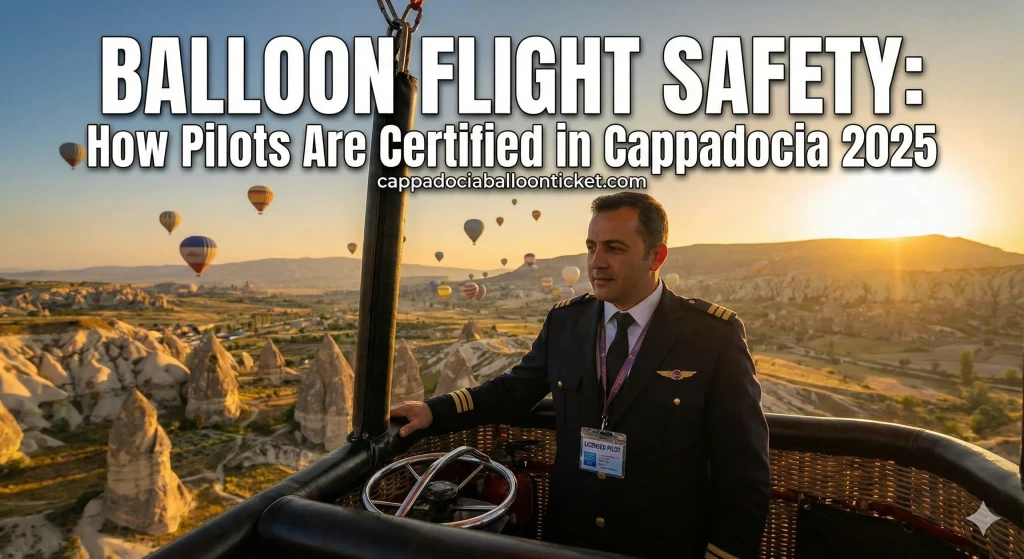
Balloon Flight Safety: How Pilots Are Certified in Cappadocia 2025
Complete Guide to Pilot Training, Certification Requirements, Safety Standards & Regulations
📅 Published: December 10, 2025 | Updated Quarterly
Before you climb into a hot air balloon basket 1,000 meters above Cappadocia's fairy chimneys, there's one critical question: Is my pilot qualified? With your safety literally in their hands, understanding how balloon pilots are trained, tested, and certified isn't just interesting—it's essential.
This comprehensive guide reveals everything about hot air balloon pilot certification in Turkey and internationally. You'll discover the rigorous training process pilots undergo, the strict licensing requirements they must meet, ongoing safety standards they maintain, and exactly what qualifications to look for when choosing a balloon operator. By the end, you'll know more about balloon pilot certification than 99% of passengers—and you'll fly with complete confidence.
📋 What You'll Learn
- ✈️ Complete Pilot Certification Process
- 📚 Training Requirements & Flight Hours
- 🎓 License Types & Qualifications
- 🔒 Safety Standards & Regulations
- ✅ How to Verify Your Pilot's Credentials
- ❓ Safety FAQs Answered
⚡ Quick Safety Facts
Minimum Training Hours: 35+ hours flight time before license
Written Exams: Aviation theory + balloon-specific knowledge
Practical Tests: Multiple check rides with examiners
Medical Requirements: Class 2 aviation medical certificate
License Validity: Renewed every 2-5 years with proficiency checks
🎈 Hot Air Balloon Pilot Licensing: The Global Framework
Hot air balloon pilots don't just "learn to fly" and start taking passengers. They undergo rigorous, standardized training governed by international aviation authorities. Understanding this framework helps you appreciate the professionalism behind your flight.
International Governing Bodies:
🌍 ICAO (International Civil Aviation Organization)
The United Nations agency that sets global aviation standards. ICAO establishes minimum requirements for pilot licensing that member countries (including Turkey) must meet or exceed.
Key ICAO Standards for Balloon Pilots:
- Minimum age: 18 years for commercial license
- Medical fitness requirements
- Theoretical knowledge standards
- Flight experience minimums
- Language proficiency (aviation English)
🇹🇷 SHGM (Turkish Civil Aviation Authority)
Turkey's Directorate General of Civil Aviation (SHGM - Sivil Havacılık Genel Müdürlüğü) regulates all aviation in Turkey, including hot air balloons. They enforce ICAO standards plus additional Turkish requirements.
SHGM Specific Regulations:
- Turkish aviation law compliance
- Cappadocia-specific operating rules
- Operator certification requirements
- Annual safety audits and inspections
- Incident reporting and investigation
💡 Why This Matters: When you fly in Cappadocia, you're protected by both international (ICAO) and national (SHGM) safety standards. Pilots must satisfy both sets of requirements. This dual oversight ensures consistent, high safety standards comparable to anywhere in the world.
📚 The Complete Pilot Certification Process
Becoming a licensed hot air balloon pilot is a serious undertaking requiring months of training, significant financial investment, and dedication. Here's the complete journey from beginner to certified commercial pilot:
Phase 1: Prerequisites & Ground School
1Minimum Requirements to Start Training:
- Age: Minimum 16 years to begin training (18 for commercial license)
- Education: High school diploma or equivalent
- Medical Certificate: Pass Class 2 aviation medical examination
- Language: Proficiency in Turkish and English (aviation terminology)
- Background Check: No criminal record affecting aviation safety
2Ground School Training (80-120 hours):
Subjects Covered:
- Aviation Theory: Principles of flight, aerodynamics specific to balloons
- Meteorology: Weather patterns, wind analysis, thermal behavior
- Navigation: Map reading, GPS usage, landmark identification
- Air Law: Aviation regulations, airspace rules, legal requirements
- Balloon Systems: Envelope construction, burner operation, fuel systems
- Human Performance: Decision-making, stress management, crew resource management
- Safety Procedures: Emergency protocols, accident prevention, risk assessment
Assessment: Written examinations covering all subjects (minimum 75% pass rate)
Phase 2: Flight Training
3Dual Flight Training (Minimum 16 hours):
Student pilots fly with a certified flight instructor (CFI) who teaches hands-on balloon operation.
Training Includes:
- Pre-flight Procedures: Balloon inspection, weather assessment, equipment check
- Inflation & Setup: Proper inflation techniques, crew coordination
- Launch Operations: Passenger briefings, safe launch procedures
- In-Flight Operations: Altitude control, directional control using wind layers, fuel management
- Landing Techniques: Approach planning, landing site selection, touchdown procedures
- Post-flight: Deflation, packing, equipment securing
- Emergency Procedures: Burner failure, rapid descent, power line avoidance
Minimum Required: 16 hours dual instruction including at least 10 flights
4Solo Flight Training (Minimum 8 hours):
After demonstrating competency, students fly alone under instructor supervision from the ground.
Solo Requirements:
- Minimum 8 hours solo flight time
- At least 6 solo flights
- Demonstrate ability to handle various wind conditions
- Complete flights in different weather scenarios
- Practice emergency procedures independently
5Cross-Country & Advanced Training (Minimum 11 hours):
Advanced training prepares pilots for commercial operations and challenging conditions.
Advanced Skills:
- Cross-Country Navigation: Flights exceeding 50 km from departure point
- Passenger Management: Handling groups, safety briefings, customer service
- Complex Weather: Flying in variable winds, gusty conditions
- High-Altitude Operations: Flying at different elevations (Cappadocia's 1,000m+)
- Night Tethering: Tethered operations in low-light conditions
Total Training Hours
35+ hours
Minimum Flights
20+ flights
Training Duration
4-12 months
Average Cost
€8,000-€15,000
Phase 3: Licensing Examinations
6Written Examinations:
Comprehensive tests covering all ground school subjects.
- Aviation Theory Exam: 100+ questions on principles of flight, aerodynamics
- Meteorology Exam: Weather interpretation, forecasting, wind patterns
- Air Law Exam: Turkish and international aviation regulations
- Navigation Exam: Map reading, flight planning, GPS systems
- Balloon Technical Exam: Balloon systems, maintenance, troubleshooting
Pass Requirement: Minimum 75% on each exam
Validity: Exams must be passed within 24 months
7Practical Flight Test (Check Ride):
A designated examiner from SHGM evaluates the pilot's flying skills in real conditions.
Test Components:
- Oral Examination: 2-3 hours discussing procedures, regulations, decision-making
- Pre-flight Planning: Weather assessment, route planning, risk evaluation
- Practical Flight: Demonstrate all required maneuvers and procedures
- Emergency Scenarios: Handle simulated emergencies (verbal scenarios)
- Post-flight Procedures: Proper deflation, packing, documentation
Flight Test Standards:
- Precise altitude control (±50 feet)
- Safe landing site selection and execution
- Proper crew coordination and communication
- Adherence to all safety protocols
- Professional decision-making under pressure
🎓 License Issued: Private Pilot License (Balloons) - PPL(B)
Upon successfully completing all requirements, pilots receive their Private Pilot License for Balloons.
PPL(B) Privileges:
- Fly hot air balloons for personal/recreational purposes
- Carry passengers (not for hire)
- Build experience toward commercial license
Limitations:
- Cannot accept payment for flights
- Cannot carry passengers for commercial operations
- Must log additional hours before commercial certification
Phase 4: Commercial Pilot License
8Commercial Pilot License Requirements (CPL):
To fly passengers for hire (like Cappadocia tours), pilots must obtain a Commercial Pilot License.
Additional Requirements Beyond PPL:
- Minimum Age: 18 years
- Total Flight Time: 50+ hours as pilot-in-command
- Experience Requirements:
- 25+ hours post-PPL flight time
- 10+ hours as pilot-in-command of balloons
- 5+ cross-country flights
- Multiple flights in varying conditions
- Advanced Training: Commercial operations procedures, passenger management, advanced meteorology
- Commercial Flight Test: More rigorous check ride with higher standards
- Operator Approval: Must be employed by or operating under a certified AOC (Air Operator Certificate)
🏆 Commercial Pilot License (Balloons) - CPL(B)
CPL(B) Privileges:
- Fly passengers for hire (commercial operations)
- Act as pilot-in-command for tour operations
- Supervise balloon operations
- Train toward flight instructor rating
Validity: 2-5 years depending on jurisdiction, requires renewal with proficiency checks
🔒 Safety Standards & Ongoing Requirements
Certification isn't the end—it's the beginning of a pilot's commitment to safety. Licensed pilots must maintain proficiency and stay current with regulations through ongoing requirements.
Medical Certification
✚ Class 2 Aviation Medical Certificate
All balloon pilots must maintain a valid Class 2 medical certificate issued by an Aviation Medical Examiner (AME).
Medical Requirements:
- Vision: 20/40 or better (corrective lenses allowed)
- Hearing: Able to hear conversational voice at 6 feet
- Cardiovascular: No disqualifying heart conditions
- Mental Health: No conditions affecting judgment or decision-making
- Substance Screening: No drug or alcohol dependency
- General Fitness: Capable of performing pilot duties without limitation
Renewal Schedule:
- Under 40 years: Every 5 years
- 40-50 years: Every 2 years
- Over 50 years: Every 12 months
Disqualifying Conditions: Heart disease, epilepsy, mental disorders, substance abuse, certain medications
Recurrent Training & Proficiency Checks
📋 Currency Requirements
Pilots must demonstrate ongoing proficiency to maintain their license validity.
Flight Currency:
- Minimum Flight Hours: Must log flights regularly (varies by regulation)
- Passenger Currency: Minimum 3 flights in past 90 days to carry passengers
- Annual Minimums: Must complete minimum flight hours per year
- Diverse Conditions: Must fly in various weather and wind scenarios
Proficiency Checks:
- Biennial Flight Review: Flight with instructor or examiner every 2 years
- Emergency Procedures: Annual review of emergency protocols
- Regulatory Updates: Training on new regulations and procedures
- Operator Check Rides: Company-specific proficiency evaluations
Additional Ratings & Qualifications
Advanced Certifications:
1. Flight Instructor Rating (FI)
- Allows pilots to train and certify other pilots
- Requires: 250+ hours pilot-in-command time
- Additional training in instructional techniques
- Separate examinations and check rides
2. Examiner Authorization
- Designated Examiners can conduct check rides
- Requires: 500+ hours, exemplary safety record
- Appointed by aviation authority (SHGM)
- Rigorous training and ongoing oversight
3. Type Ratings (Large Balloons)
- Required for balloons exceeding certain sizes
- Additional training for larger passenger capacities
- Special procedures for heavy balloons
4. Special Operation Endorsements
- Night operations (tethered flights)
- High-altitude operations
- Mountainous terrain operations
- Special events (festivals, competitions)
✈️ Cappadocia-Specific Certification Requirements
Flying in Cappadocia isn't just about having a balloon license—pilots need specific qualifications for this unique and challenging environment.
🏔️ Cappadocia Regional Authorization
Cappadocia's unique geography (fairy chimneys, valleys, high elevation, specific wind patterns) requires special authorization from SHGM.
Additional Requirements:
- Local Area Familiarization: Supervised flights in Cappadocia region
- Terrain Knowledge: Understanding of local landmarks, valleys, landing sites
- Wind Pattern Training: Cappadocia-specific meteorology and wind behavior
- Emergency Procedures: Landing site alternatives, local rescue protocols
- Coordination Training: Working within Cappadocia's high-density balloon operations
Operator-Specific Training:
Each balloon company in Cappadocia has additional internal training:
- Company Procedures: Standard operating procedures (SOPs) for that operator
- Equipment Familiarization: Specific balloon models and equipment used
- Route Training: Approved flight paths and landing zones
- Passenger Management: Customer service, briefings, multilingual communication
- Local Regulations: Municipal rules, environmental protections, no-fly zones
Licensed Pilots in Cappadocia
200+
Average Experience
5-15 years
Total Flight Hours (Senior Pilots)
1,000-5,000+
Daily Flights Per Pilot
1-2 max
🔍 How to Verify Your Pilot's Credentials
As a passenger, you have the right to know your pilot's qualifications. Here's how to verify credentials and ensure you're flying with a properly certified pilot:
✅ Pre-Booking Verification Checklist:
✓ Ask for Pilot Information: Request pilot name and license number before booking
✓ Verify Operator License: Ensure company holds valid AOC (Air Operator Certificate) from SHGM
✓ Check Online Reviews: Look for mentions of pilot professionalism and safety
✓ Confirm Insurance: Verify operator carries passenger liability insurance
✓ Ask About Experience: Inquire about pilot's total flight hours and years flying
✅ On Flight Day Verification:
✓ Pilot Introduction: Pilots should introduce themselves and state their qualifications
✓ License Display: Many pilots carry license cards or display certificates
✓ Safety Briefing: Proper pre-flight briefing indicates professional training
✓ Weather Discussion: Professional pilots explain weather conditions and flight plan
✓ Crew Coordination: Observe how pilot manages ground crew (indicates experience)
💡 What to Ask Your Pilot:
- "How long have you been flying balloons?"
- "How many total flight hours do you have?"
- "How long have you been flying in Cappadocia?"
- "What type of license do you hold?"
- "When was your last proficiency check?"
Reputable pilots will answer these questions proudly and transparently.
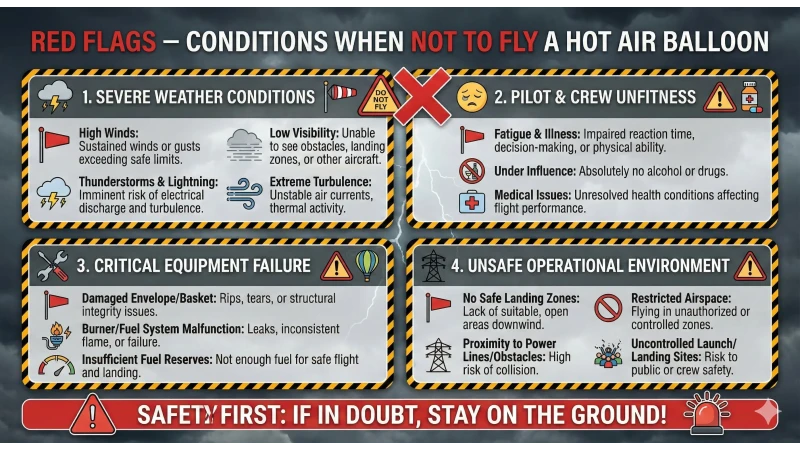
🚨 Red Flags - When NOT to Fly:
- ❌ Operator refuses to provide pilot credentials
- ❌ No safety briefing before flight
- ❌ Pilot appears rushed or distracted
- ❌ Equipment looks damaged or poorly maintained
- ❌ Pilot dismisses weather concerns
- ❌ No visible license or company identification
- ❌ Operator not listed with SHGM
- ❌ Prices significantly below market rate (€100-120 range)
- ❌ Poor or no communication before flight day
If you observe any of these red flags, do not fly. Request a refund and choose a different operator.
🎓 What Makes a Great Balloon Pilot?
Certification is the baseline—but what separates good pilots from truly exceptional ones?
Technical Skills:
- Precise Altitude Control: Maintaining exact altitudes within feet, not meters
- Fuel Management: Efficient burner use for smooth, comfortable flight
- Landing Accuracy: Consistently hitting intended landing zones
- Weather Reading: Interpreting subtle wind changes and atmospheric conditions
- Navigation Mastery: Using wind layers strategically for directional control
Soft Skills:
- Clear Communication: Explaining procedures in multiple languages
- Passenger Management: Making nervous flyers comfortable
- Decision-Making: Knowing when to fly and when to cancel
- Crew Leadership: Coordinating ground crew effectively
- Educational Engagement: Sharing knowledge about Cappadocia's geology and history
Experience Indicators:
Junior Pilot
50-500 hours
Competent and safe, building experience
Experienced Pilot
500-2,000 hours
Skilled in various conditions
Senior Pilot
2,000-5,000+ hours
Master of the craft
Chief Pilot
5,000+ hours
Industry leader, mentor
💡 Experience Context: A pilot with 500 hours has flown approximately 500-1,000 flights (1-2 hours each). That's 1-3 years of daily flying. A 2,000-hour pilot has 5-10 years of regular experience. Both are highly qualified—the difference is in subtle handling and accumulated wisdom.
📊 Balloon Safety Statistics
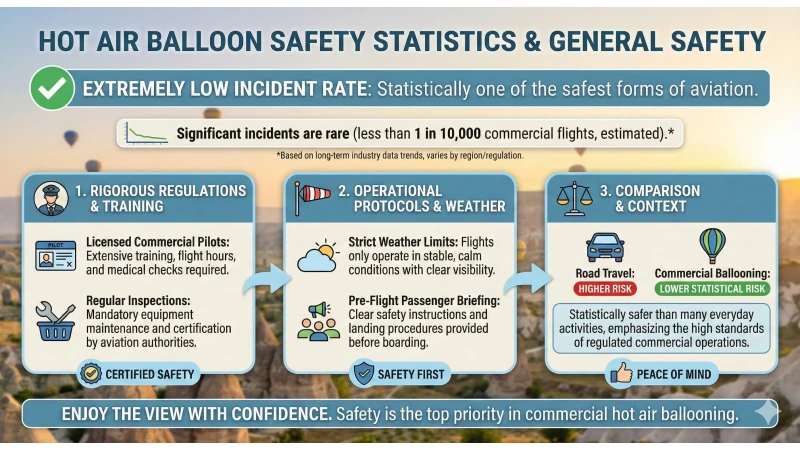
Understanding the actual safety record of hot air ballooning helps put risks in perspective:
Global Safety Statistics:
- Accident Rate: Approximately 1 accident per 300,000 flights worldwide
- Fatal Accident Rate: Less than 1 per million passengers
- Comparison to Driving: Hot air ballooning is statistically safer than automobile travel
- Primary Risk Factors: 90%+ of accidents involve pilot error, weather misjudgment, or equipment failure
- Injury Rate: Most injuries are minor (bruises, sprains) from landing impacts
Cappadocia Specific Safety Record:
- Annual Flights: 300,000+ balloon flights per year
- Passengers Carried: 400,000+ passengers annually
- Safety Record: Excellent overall safety record with rigorous oversight
- Incident Rate: Very low compared to global averages
- Regulatory Oversight: SHGM conducts regular safety audits and inspections
Why Hot Air Ballooning is Safe:
- Simple Design: Fewer moving parts than airplanes or helicopters
- Low Speed: Typically 10-20 km/h—slower than many road vehicles
- Gentle Flight: No sudden movements or forces
- Rigorous Pilot Training: Extensive certification requirements
- Conservative Operations: Flights cancelled if conditions aren't ideal
- Regular Maintenance: Balloons inspected before every flight
- Weather Dependency: Flights only in safe conditions
❓ Frequently Asked Questions About Pilot Certification
How long does it take to become a licensed balloon pilot?
From beginning training to obtaining a Commercial Pilot License (CPL) typically takes 4-18 months. This includes 35+ hours of flight training, ground school, passing written exams, and practical tests. The timeline varies based on weather (can't fly in bad conditions), student availability, and learning pace. Most dedicated students complete training in 6-12 months.
Can anyone become a balloon pilot?
Most people can, but there are requirements: Minimum age 18 (for commercial license), pass a Class 2 aviation medical exam, no disqualifying medical conditions, sufficient financial resources (€8,000-€15,000 training cost), time commitment (4-12 months), and dedication to rigorous study and practice. Physical strength is helpful but not prohibitive—pilots use crew assistance.
Do balloon pilots need to renew their licenses?
Yes. Licenses must be renewed every 2-5 years depending on jurisdiction and pilot age. Renewal requires current medical certificate, minimum flight hours logged, biennial flight review with instructor or examiner, and completion of recurrent training on regulations and procedures. Pilots who don't maintain currency must undergo retraining and reexamination.
What happens if a pilot fails the test?
If a pilot fails the written exams, they can retake them after additional study (usually 30-day waiting period). If they fail the practical flight test, they receive additional training to address deficiencies and can retest when ready (no specific waiting period, but must demonstrate improvement). Multiple failures may require comprehensive retraining. There's no limit on attempts, but repeated failures are rare among serious students.
Are Cappadocia pilots more experienced than elsewhere?
Generally yes. Cappadocia is one of the world's busiest balloon destinations with year-round operations. Pilots accumulate flight hours much faster than in seasonal locations. A Cappadocia pilot flying daily can log 300-600 hours per year vs. 50-100 hours in seasonal regions. Additionally, Cappadocia's terrain and high-density operations provide challenging conditions that develop advanced skills quickly.
Do pilots from other countries need Turkish certification?
It depends. ICAO member countries have reciprocal agreements allowing foreign pilots to fly in Turkey with proper validation. However, they must: Hold equivalent license from their home country, obtain SHGM validation/conversion, complete Cappadocia-specific training, demonstrate proficiency in Turkish aviation procedures, and be employed by or operating under a Turkish AOC holder. Most foreign pilots find it easier to obtain full Turkish certification.
What medical conditions disqualify pilots?
Disqualifying conditions include: Cardiovascular disease (heart attack, severe arrhythmia), neurological disorders (epilepsy, seizures, certain migraines), mental health conditions (schizophrenia, bipolar disorder, severe depression), substance abuse (drugs or alcohol dependency), diabetes requiring insulin (case-by-case), visual impairment not correctable to 20/40, and certain medications affecting judgment or performance. Conditions are evaluated individually—many can be managed with proper treatment and medical oversight.
Can pilots fly if they're sick or tired?
No. Pilots are prohibited from flying if they're experiencing illness, fatigue, medication effects, emotional distress, or anything affecting their performance. This is both a legal requirement and ethical responsibility. The acronym IMSAFE helps pilots self-assess: Illness, Medication, Stress, Alcohol (none within 12-24 hours), Fatigue, Eating/Emotion. Reputable operators have standby pilots for situations when primary pilots are unavailable.
Do pilots carry identification during flights?
Yes. Pilots must carry their pilot license, medical certificate, and identification at all times while acting as pilot-in-command. Many also carry operator identification and insurance documentation. Passengers have the right to ask to see these credentials. In Cappadocia, pilots also carry communication devices and GPS units for coordination and emergency purposes.
What's the retirement age for balloon pilots?
There's no mandatory retirement age for balloon pilots in most jurisdictions, including Turkey. However, medical certificate requirements become stricter after age 50 (annual renewals vs. 2-5 years for younger pilots). Pilots can fly as long as they maintain medical certification, proficiency, and physical capability. Many experienced pilots fly into their 60s and 70s, though they may reduce their flight frequency.
Are there female balloon pilots in Cappadocia?
Yes, though they're a minority. Balloon piloting traditionally male-dominated, but increasing numbers of women are entering the profession globally and in Turkey. Female pilots undergo identical training, testing, and certification as male pilots—there are no different standards. Physical requirements (managing equipment, crew coordination) are identical. Several Cappadocia operators employ female pilots who are highly respected for their skills.
How do pilots learn to fly in Cappadocia's unique terrain?
Through a supervised familiarization process: First, they fly as observers with experienced Cappadocia pilots (5-10 flights), then they fly with an instructor familiar with the region (10-20 supervised flights), gradually progressing to more challenging conditions and routes. They study local wind patterns, landing sites, and landmarks extensively. Finally, they receive a Cappadocia authorization after demonstrating competency. This process typically takes 2-3 months even for experienced pilots new to the region.
🎈 Fly with Certified, Experienced Pilots
Now that you understand pilot certification, book your Cappadocia balloon flight with confidence. CappadociaBalloonTicket.com partners exclusively with fully licensed operators employing certified, experienced pilots who meet or exceed all safety standards.
✅ Licensed Pilots Only | ✅ Safety Verified | ✅ Experienced Operators | ✅ Full Insurance
Book your safe, professional balloon flight today! 🌅
🎯 Final Thoughts on Pilot Certification & Safety
Understanding pilot certification demystifies hot air ballooning and builds confidence in the safety of your flight. When you fly in Cappadocia with a licensed operator, you're trusting your safety to pilots who have:
- Completed 35+ hours of intensive flight training
- Passed multiple written examinations on aviation theory, meteorology, navigation, and regulations
- Demonstrated proficiency in practical flight tests with designated examiners
- Maintained current medical certification proving fitness to fly
- Undergone Cappadocia-specific training for the region's unique conditions
- Accumulated hundreds or thousands of flight hours through regular operations
- Committed to ongoing training, proficiency checks, and regulatory compliance
This isn't a hobby or casual pursuit—it's a highly regulated profession requiring dedication, skill, and ongoing commitment to safety.
Key Takeaways:
- Licensing is Rigorous: Hot air balloon pilots undergo extensive training comparable to other aviation professionals
- International Standards: Turkey follows ICAO guidelines ensuring consistent, high safety standards
- Ongoing Requirements: Certification isn't one-time—pilots must maintain currency and proficiency
- Cappadocia Expertise: Flying here requires additional regional training beyond basic license
- You Can Verify: Don't hesitate to ask about your pilot's credentials—professional pilots welcome the questions
- Safety First: The aviation industry's culture prioritizes safety above convenience or profit
💡 Before Your Flight:
- Book with established, reputable operators (check reviews and certifications)
- Ask about your pilot's experience—thousands of hours is typical in Cappadocia
- Attend the pre-flight safety briefing carefully
- Follow all pilot instructions during the flight
- Trust your pilot's decisions—they prioritize your safety above all
- If something feels wrong, speak up—good pilots welcome safety concerns
Hot air ballooning in Cappadocia is remarkably safe when you fly with properly certified pilots operating under licensed companies. The combination of rigorous training, strict regulations, ongoing proficiency requirements, and accumulated experience creates an environment where safety is paramount.
Your pilot didn't just learn to fly—they earned the privilege through months of training, demonstrated competency through rigorous testing, and committed to a career of ongoing learning and safety focus. You're in very good hands.
Enjoy your flight with confidence! 🎈
About This Guide: Information compiled from ICAO standards, Turkish SHGM regulations, balloon operator training programs, and interviews with certified balloon pilots. Reflects current certification requirements as of December 2025.
Last Updated: December 10, 2025
Sources: ICAO Annex 1 (Personnel Licensing), Turkish SHGM SHT-BL (Balloon Regulations), European Aviation Safety Agency (EASA), Federal Aviation Administration (FAA) Part 61
© 2025 CappadociaBalloonTicket.com | Your Complete Balloon Safety Resource