7 Best Valleys to See from Cappadocia Hot Air Balloon 2026 Guide
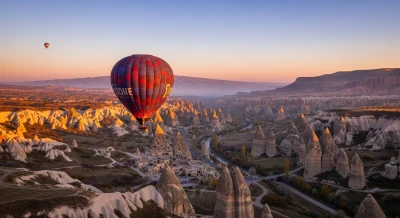
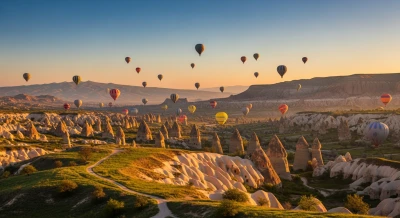
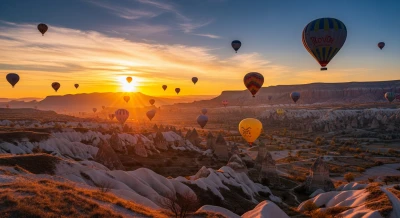
Floating above Cappadocia in a hot air balloon offers one of the world's most breathtaking travel experiences. As the sun rises over central Anatolia, you'll drift silently above a landscape that seems plucked from a fairy tale—ancient valleys carved by millions of years of erosion, punctuated by towering rock formations that local people call "fairy chimneys." Understanding which cappadocia balloon valleys you'll encounter during your flight helps you appreciate the geological wonders unfolding beneath your basket and ensures you capture the perfect photographs of this UNESCO World Heritage landscape.
Cappadocia's valleys aren't just beautiful—they're windows into human history spanning millennia. Early Christians carved churches, monasteries, and entire underground cities into the soft volcanic rock. Byzantine frescoes still adorn cave walls. Pigeon houses dot cliffsides where farmers once collected droppings for fertilizer. Each valley tells a different story, and seeing them from above provides perspective impossible to achieve from the ground.
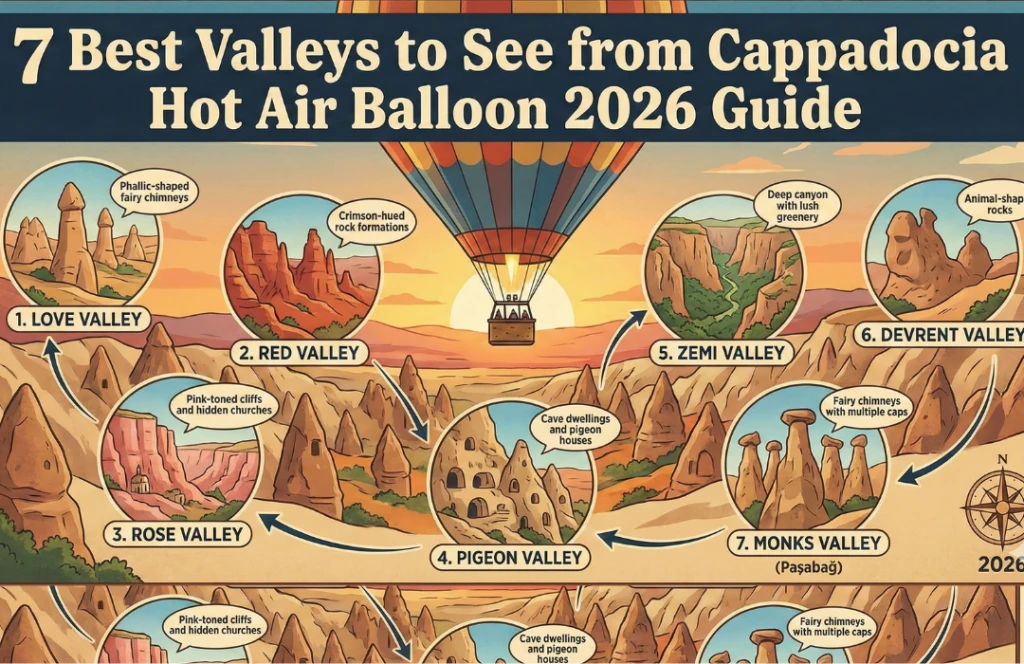
This comprehensive guide explores the seven most spectacular valleys you'll see during your balloon flight, explaining what makes each unique, when to spot them, and how to photograph them from your aerial vantage point. Whether you're planning to book your balloon flight for the first time or you're a returning visitor seeking deeper knowledge of these formations, this guide will enhance your appreciation of Cappadocia's extraordinary landscape.
Most balloon flights follow similar routes over the same valleys, though exact paths vary based on wind conditions. Pilots from reputable balloon companies expertly navigate wind currents at different altitudes to provide optimal valley viewing while maintaining strict safety standards and regulations. Your flight will likely include several of these valleys, creating memories that last a lifetime.
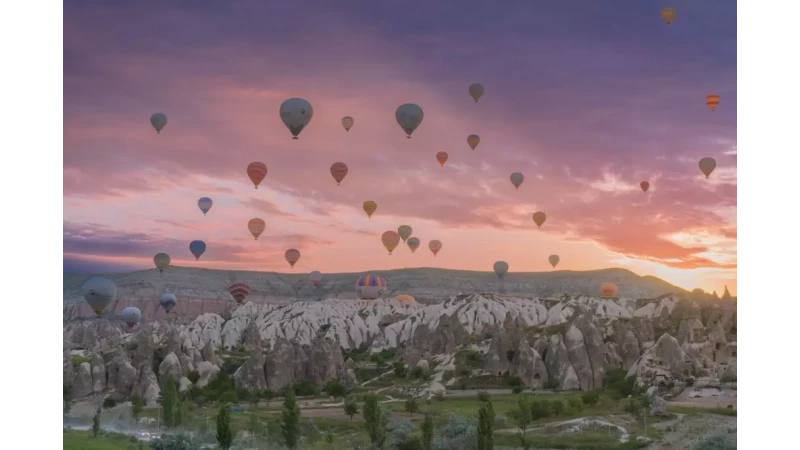
1. Love Valley – Iconic Fairy Chimneys
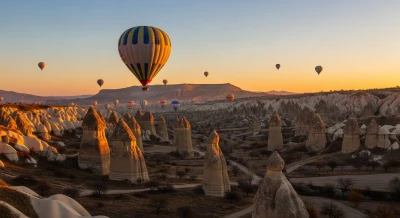
Love Valley ranks among Cappadocia's most photographed and instantly recognizable landscapes. From a hot air balloon, the valley's distinctive phallic-shaped rock formations—some reaching heights of 40 meters—create a surreal, almost otherworldly scene that defines the region's unique geology.
What Makes Love Valley Special
The fairy chimneys of Love Valley formed through millions of years of erosion acting on layers of volcanic tuff and basalt. The harder basalt caps protect the softer tuff underneath, creating these towering mushroom-shaped formations. From ground level, these formations are impressive; from a balloon floating 300-500 meters above, they're absolutely spectacular. The valley spreads out like a geological museum, with hundreds of these pinnacles creating a forest of stone.
The valley gets its name from the suggestive shapes of its rock formations—though locals sometimes call it by more subtle names. Regardless of what you call it, the formations are genuinely remarkable examples of differential erosion. Early morning light, which you'll experience during your balloon flight, casts long shadows between the formations, emphasizing their three-dimensional shapes and creating dramatic photographic opportunities.
Love Valley sits between Göreme and Çavuşin, making it a centerpiece of most balloon flight routes. As your balloon drifts overhead, you'll notice hiking trails winding between the formations—these are popular walking routes that allow visitors to explore the valley on foot later in the day. From above, you can appreciate the valley's full scale and understand how these formations cluster in certain areas based on the underlying rock structure.
Best Viewing Times from the Balloon
The golden hour immediately after sunrise provides the most dramatic lighting for Love Valley. When booking with experienced pilots, your balloon will typically be positioned over or near Love Valley within the first 30-45 minutes of flight, coinciding with perfect light. The low sun angle creates long shadows that emphasize the texture and height of each formation.
During winter months (December-February), morning mist sometimes fills the valley floor while the fairy chimney tops poke through like islands in a cloud sea. This ethereal effect lasts only 15-20 minutes as the rising sun burns off the mist, so timing is crucial. Spring and fall offer the clearest air for sharp photographs, while summer's harsher light can wash out details—though the vivid green vegetation provides beautiful color contrast.
Photography Tips for Love Valley
From your balloon basket, Love Valley offers endless composition possibilities. Wide-angle shots capture the forest of formations spreading toward the horizon, while telephoto lenses isolate individual chimneys with other balloons for scale. The key is anticipating your position—balloons don't hover in place, so you'll have limited time at the perfect angle.
Composition Strategies:
- Include other balloons in your frame for scale and color contrast against the tan rock
- Shoot when the sun is behind you for front-lit formations with rich colors
- Capture the shadows between formations to emphasize three-dimensional depth
- Look for patterns—groups of similar-height chimneys create visual rhythm
- Don't forget vertical shots; the formations' height demands portrait orientation
Technical Settings: Most balloon flights occur in excellent light, allowing fast shutter speeds (1/500s or faster) to eliminate motion blur from basket movement. Use aperture priority mode (f/8-f/11) for good depth of field, keeping both near and distant formations sharp. ISO 200-400 typically provides clean images in early morning light.
The balloon's movement means you can't use a tripod, so steady your camera against the basket edge or use your body as a stabilizer. Take bursts of 3-5 shots of the same scene—at least one will be perfectly sharp. Remember that you're shooting through clear air from elevation, so contrast can be high; consider slight underexposure (-0.3 to -0.7 EV) to preserve highlight detail in the rock faces.
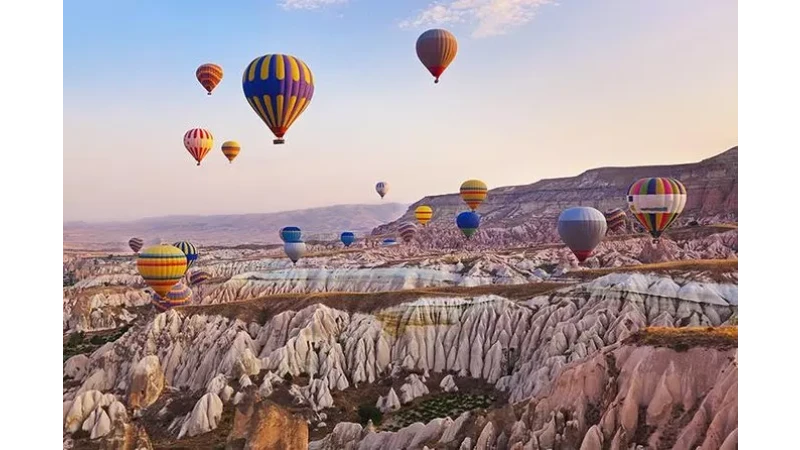
2. Red Valley – Sunrise Views
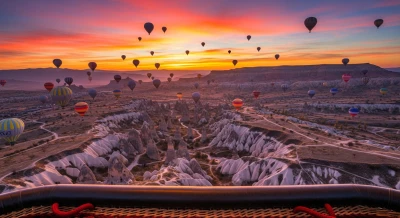
Red Valley earns its name from the iron oxide-rich volcanic rock that glows with warm ochre, rust, and crimson tones, especially during the golden hours around sunrise. From a balloon, this valley presents one of Cappadocia's most colorful and photogenic landscapes, with its distinctive red-pink hues providing stark contrast to the surrounding beige formations.
Geological and Historical Significance
The valley's red coloration comes from iron-rich volcanic deposits that oxidized over millions of years. Different mineral concentrations create subtle color variations—some areas glow deep rust, others soft rose, still others burnt orange. This rainbow of warm tones becomes especially vivid in early morning light, when the low sun angle emphasizes the rock's texture and color saturation.
Red Valley holds particular historical importance as a center of early Christian monasticism. The soft volcanic rock allowed hermit monks to carve churches, chapels, and living quarters directly into the valley walls. From your balloon, you can spot dozens of these cave openings dotting the cliffsides—dark rectangular holes that were once active religious sites. Several contain Byzantine frescoes dating from the 9th-11th centuries, remarkably preserved by the dry climate and protected location.
The valley stretches between Göreme and Çavuşin, running roughly parallel to Rose Valley (its neighbor to the south). From ground level, hikers follow trails through the valley floor, passing ancient churches and enjoying close-up views of the colorful rock layers. From a balloon 200-400 meters above, you gain perspective on how the valley system interconnects and how erosion has shaped the landscape over time.
Why Sunrise Makes Red Valley Spectacular
Red Valley truly lives up to its name during the first hour after sunrise. The warm light of early morning intensifies the rock's natural red-orange tones, creating a display of color that peaks for about 20-30 minutes. This is why all Cappadocia balloon flights launch at dawn—the lighting during this brief window is simply magical.
As your balloon drifts over Red Valley during sunrise, watch how the light transforms the landscape minute by minute. The valley walls facing east catch the first rays, glowing bright crimson while the western faces remain in shadow. As the sun rises higher, more of the valley illuminates, and the color temperature shifts from deep orange to lighter pink-gold tones.
The contrast between sunlit and shadowed areas adds drama to the scene. Shadows are deep purple-blue while lit areas glow warm amber—this complementary color scheme creates visually striking images. Within 60-90 minutes of sunrise, the light becomes less directional and the valley's colors less saturated, demonstrating why timing is everything in Cappadocia balloon photography.
Cave Churches Visible from Above
Even from balloon height, you can identify major cave church complexes in Red Valley. The most prominent include Haçlı Kilise (Church with the Cross) and Üzümlü Kilise (Grape Church), named for the fruit depicted in their frescoes. These aren't random caves—they're carefully carved structures with architectural details like columns, arches, and domed ceilings.
From above, the churches appear as dark openings, but their locations tell a story. Monks chose sites with specific orientations (often east-facing for morning light), protection from elements, and relative accessibility. Some churches cluster together in monastic complexes, while others sit isolated on cliff faces accessible only by carved steps or tunnels.
Your balloon pilot will typically point out major historical sites as you pass, providing context that enhances your appreciation of the landscape. The combination of natural beauty and human history makes Red Valley one of the most meaningful stops on any balloon route—you're not just seeing pretty rocks, you're witnessing a landscape shaped by both geological forces and human faith.
Composition and Color in Photography
Red Valley's vibrant colors demand attention in photographs, but capturing them accurately requires understanding light and white balance. The warm early morning light can fool your camera's auto white balance, potentially oversaturating or undersaturating the red tones. Consider these approaches:
Color Management:
- Shoot RAW format for maximum post-processing flexibility with color
- Try "Cloudy" white balance preset to enhance warm tones slightly
- Avoid "Auto" white balance, which may neutralize the beautiful color cast
- Include color reference points (other balloons, sky, green vegetation) for context
Composition Ideas:
- Frame the valley's curves leading toward the horizon as leading lines
- Position balloons against the red cliff faces for color and scale contrast
- Include both sunlit and shadowed areas to show the dramatic tonal range
- Capture the mosaic of colors where different mineral deposits meet
- Look for cave church openings to add historical interest to your images
The key to successful Red Valley photography is balancing the dramatic color with compositional structure. While the vibrant hues grab attention, strong composition—leading lines, rule of thirds, foreground interest—turns a colorful snapshot into a compelling photograph.
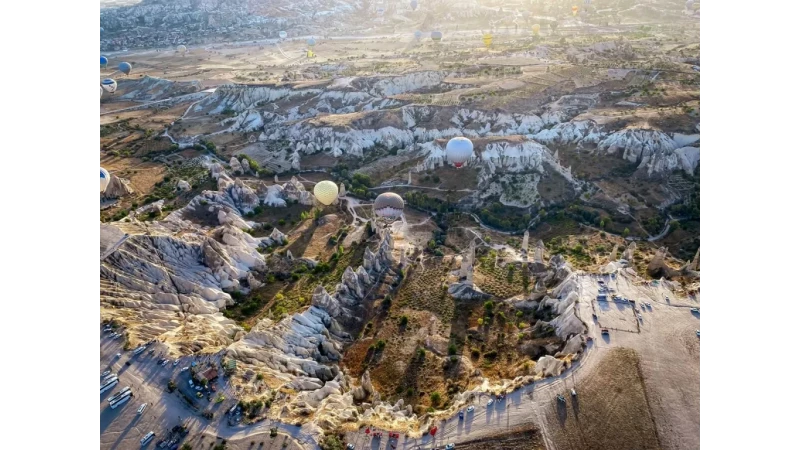
3. Pigeon Valley – Historic Dovecotes
Pigeon Valley offers a fascinating combination of natural beauty and agricultural history. From your balloon, you'll see thousands of small caves and carved holes dotting the valley walls—these aren't natural formations but rather pigeon houses (dovecotes) carved by generations of farmers. This valley provides unique insight into how Cappadocians adapted to their environment and created sustainable agricultural practices.
The Pigeon House Tradition
For centuries, Cappadocian farmers raised pigeons not for meat but for their droppings. Pigeon guano is rich in nitrogen and phosphorus, making it excellent fertilizer for the region's vineyards and orchards. In a landscape with poor natural soil, this organic fertilizer was invaluable. Farmers carved elaborate pigeon houses into the soft volcanic rock, creating comfortable nesting sites that attracted large flocks.
From ground level, you might see a few dozen pigeon holes. From a balloon several hundred meters up, the true scale becomes apparent—thousands upon thousands of small square and rectangular openings perforate the cliff faces like honeycomb. Some sections of valley wall are so densely carved they look like apartment buildings for birds. This pattern creates a distinctive texture visible from balloon height, making Pigeon Valley instantly recognizable.
The dovecote tradition dates back at least to Byzantine times and continued into the mid-20th century. While few farmers still maintain pigeon houses today (chemical fertilizers have replaced guano), the carved holes remain as testament to centuries of agricultural ingenuity. UNESCO's designation of the Göreme National Park as a World Heritage Site helps protect these cultural artifacts.
Valley Layout and Location
Pigeon Valley runs between Göreme and Uçhisar, making it a standard feature of most balloon routes. The valley is relatively shallow compared to some others, with gentle slopes rather than steep cliffs. This accessibility explains why farmers could reach and maintain so many pigeon houses—they didn't need climbing equipment or complex access routes.
From your balloon, you'll notice how the pigeon houses cluster in certain areas. Farmers carved them in rock faces with specific characteristics: soft enough to excavate easily, stable enough not to collapse, and oriented to provide protection from prevailing winds while offering good sun exposure. The houses often appear in regular patterns—rows and columns that show systematic planning rather than random placement.
The valley floor features hiking trails popular with tourists, and you may spot people walking below during your flight. The trails connect Göreme to Uçhisar Castle, the prominent rock outcropping visible from most balloon routes. This castle—actually a natural formation carved into a fortress—serves as a landmark helping you orient your position over Pigeon Valley.
What You'll See from the Balloon
At typical balloon cruising altitude (200-500 meters), Pigeon Valley's dovecotes create distinctive patterns. The small square and rectangular openings appear as dark spots against the lighter rock face, creating a pointillist effect. In areas with particularly dense pigeon house concentrations, the pattern becomes almost abstract—less like individual holes and more like textured fabric.
Key Visual Elements:
- Geometric patterns of carved pigeon holes covering cliff faces
- Contrast between carved sections and natural rock
- Hiking trails winding through the valley floor
- Uçhisar Castle rising at the valley's western end
- Vineyard terraces and orchards in protected areas
- Modern houses and cave hotels built into valley walls
The morning light casting shadows into each pigeon hole creates depth and texture invisible in flat noon light. This shadowing effect makes the patterns more visible and photogenic. As the sun angle changes during your flight, watch how the appearance of the pigeon house patterns shifts—they're most dramatic when the sun hits the cliff face at an angle rather than straight on.
Cultural Context and Photography
Pigeon Valley photographs are more meaningful when you understand the cultural story behind those thousands of holes. These aren't mere decoration—they represent an agricultural practice spanning centuries, showing how people adapted to Cappadocia's challenging environment. Including this context in your captions or travel stories transforms a pretty picture into a window onto local history and traditional knowledge.
Photographic Approach:
- Use telephoto lenses (70-200mm) to compress the patterns and emphasize density
- Capture wide shots showing the valley's full extent with multiple carved sections
- Include scale references—other balloons, hikers on trails, houses
- Shoot when side lighting emphasizes the three-dimensional nature of the holes
- Look for particularly dense concentrations of pigeon houses for abstract patterns
Many photographers focus on fairy chimneys and colorful rock formations while overlooking Pigeon Valley's subtler beauty. Don't make this mistake. The dovecotes represent human interaction with the landscape—a cultural layer that enriches your understanding of Cappadocia beyond its geological wonders.
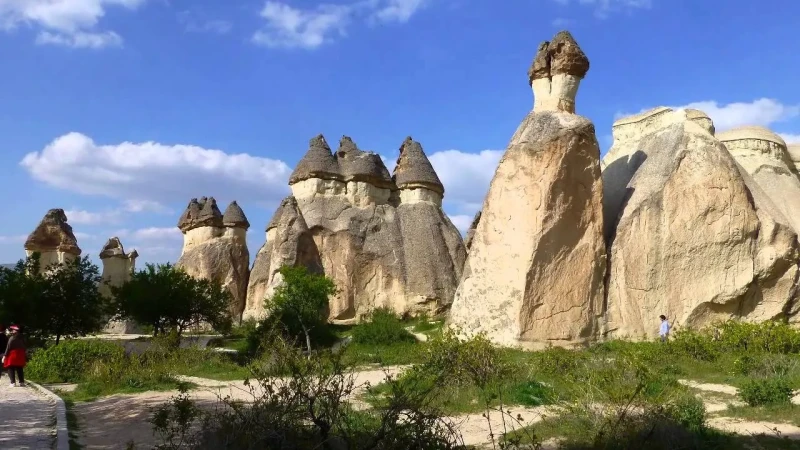
4. Monks Valley (Paşabağı) – Extraordinary Formations
Monks Valley, locally called Paşabağı (meaning "Pasha's Vineyard"), features some of Cappadocia's most unusual and photogenic fairy chimneys. These aren't the simple conical formations found elsewhere—many Paşabağı chimneys have multiple caps stacked like mushrooms, creating structures that seem to defy gravity. From a balloon, this valley looks like a sculptor's fantasy made real in stone.
Triple-Capped Fairy Chimneys
What makes Monks Valley exceptional is the frequency of multi-capped fairy chimneys. Geological conditions here created formations where three or even four layers of hard basalt cap columns of softer tuff. As erosion carved away surrounding material, these protected columns remained, each basalt layer forming a mushroom-like cap. The result: fairy chimneys that look like they're wearing stacked hats.
From your balloon vantage point, these formations create a landscape unlike anywhere else in Cappadocia. While other valleys have impressive fairy chimneys, Paşabağı's triple-capped versions stand apart. Some reach 20 meters tall with proportions that seem impossible—narrow stems supporting broad caps that look top-heavy yet have stood for millennia.
The name "Monks Valley" comes from the hermit monks who carved cells and chapels into many of these formations. Some of the larger fairy chimneys contain multiple levels of carved rooms accessed by internal staircases carved directly into the rock. From above, you can sometimes spot the dark openings where monks created their isolated retreats.
Geological Formation Process
Understanding how these unusual formations developed enhances appreciation of what you're seeing. The story begins with volcanic eruptions millions of years ago that deposited layers of ash and lava. The ash compacted into soft tuff, while lava flows created harder basalt layers. Crucially, Paşabağı has multiple distinct basalt layers separated by tuff.
As erosion began—driven by rain, snow melt, freeze-thaw cycles, and wind—the softer tuff eroded faster than the hard basalt. Water running down the surface created vertical channels between areas protected by basalt caps. Over hundreds of thousands of years, these channels deepened, carving away material and isolating protected columns. Each basalt layer became a cap, and areas with multiple basalt layers developed the distinctive stacked appearance.
This process continues today at a geological pace. Each winter's freeze-thaw cycle, each rainstorm, each windy day removes microscopic amounts of material. In a million years, today's fairy chimneys will be gone, replaced by new formations carved from currently solid rock. You're witnessing a specific moment in an ongoing geological process.
What Makes It Photogenic from Above
Monks Valley photographs beautifully from balloon height because the unusual formations create visual interest without needing exotic lighting or special effects. The shapes themselves are extraordinary enough. The multi-capped chimneys look almost artificial—like theme park recreations rather than natural formations—yet they're entirely real.
From 300-400 meters altitude, you can see how the formations cluster and relate to each other. Some stand isolated, others group in collections of 3-5 similar-height chimneys. The valley floor between formations is relatively flat, covered with vineyards and a few walking paths. This contrast between the vertical fairy chimneys and horizontal valley floor emphasizes the formations' height and improbable shapes.
Photographic Considerations:
- The three-dimensional complexity of stacked caps shows best with side or backlighting
- Include multiple formations in frame to show the pattern across the valley
- Shoot when other balloons drift near formations for dramatic scale comparison
- Use moderate telephoto lenses (70-135mm) to isolate individual chimneys
- Morning shadows between caps create depth and emphasize the stacked structure
The challenge with Monks Valley photography is that the formations are so unusual they can look fake or manipulated in photos. Consider including elements that establish reality—other tourists on ground trails, nearby houses, vineyard rows—anything that provides context and confirms these formations are genuine geological features.
Hermit Monk History
The name Monks Valley isn't just colorful terminology—it reflects actual historical use. Byzantine-era hermit monks sought isolated locations for spiritual contemplation, and Paşabağı's tall, isolated fairy chimneys provided perfect retreats. A monk could carve a small chapel and living cell high in a formation, accessible only by removable ladder, creating complete solitude.
One particularly famous formation in Paşabağı—visible from balloons when flight paths pass close—contains the Chapel of St. Simeon, named after the 5th-century Syrian monk Simeon Stylites who lived atop a pillar for 37 years. While the Cappadocian St. Simeon wasn't quite as extreme, his carved chapel sits high in a triple-capped formation, requiring visitors to climb internal stairs carved through the rock.
From your balloon, you might spot tourists exploring the valley floor, tiny figures dwarfed by the towering formations. This ground-level access allows you to return later and examine details invisible from above—the carved rooms, internal staircases, remains of frescoes, and architectural details that transform simple rock formations into historical monuments.
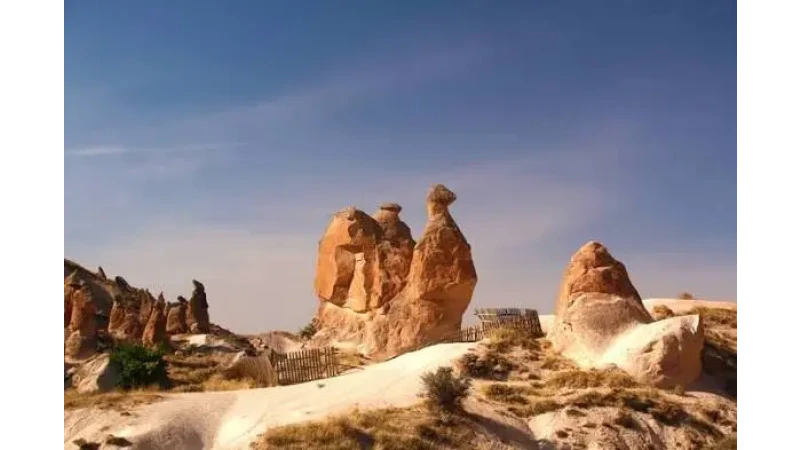
5. Devrent Valley – Lunar Landscape
Devrent Valley offers a completely different aesthetic from Cappadocia's other famous valleys. Instead of towering fairy chimneys with protective caps, Devrent features lower, more organic formations that resemble sculptures. From a balloon, this valley looks like an alien planet or an art gallery where nature is the sculptor—formations suggest animals, faces, and abstract shapes that engage the imagination.
No Fairy Chimneys—Different Geology
What makes Devrent unique is the absence of the hard basalt caps that create classic fairy chimneys. The valley formed primarily from volcanic tuff without those protective layers. Without caps to shield them, erosion worked more uniformly, creating rounded, flowing shapes rather than the vertical pinnacles seen elsewhere.
The formations range from waist-height to about 10 meters tall—modest compared to the 40-meter giants of Love Valley or Monks Valley. But what they lack in height they compensate with variety of form. Water and wind erosion carved these rocks into shapes that human minds can't help but interpret as familiar objects. This psychological phenomenon—pareidolia, our tendency to see patterns in random data—makes Devrent Valley particularly engaging.
From your balloon, Devrent appears as a moonscape, with gentle hills studded with countless small formations. The overall impression is softer, more flowing than the dramatic verticality of other valleys. Earth tones dominate—tans, grays, soft pinks—giving the valley a monochromatic quality that emphasizes form over color.
The Camel Rock and Imaginative Formations
Devrent's most famous formation is "The Camel"—a rock that, when viewed from a specific angle, remarkably resembles a resting camel complete with humps and head. From your balloon, you might not have the ground-level perspective to see the camel shape clearly, but you'll see dozens of other formations that suggest different interpretations.
Common Interpretations:
- Animal shapes: seals, dolphins, snakes, birds
- Human profiles and faces
- Mushrooms and toadstools
- Abstract sculptures
- Stacked stones and balanced rocks
The fun of Devrent Valley lies in finding your own interpretations. What one person sees as a seal, another sees as a submarine. This imaginative engagement makes the valley especially popular with families—children delight in spotting animal shapes—but adults find it engaging too. It's geological Rorschach testing, where the formations reflect your own associations and experiences.
Photography from the Balloon
Devrent Valley presents photographic challenges different from other Cappadocian valleys. Without dramatic height or vivid color, photographs can look flat and uninteresting if you don't approach them thoughtfully. The key is emphasizing the shapes and patterns rather than relying on inherent drama.
Successful Approaches:
- Convert to black and white to emphasize form over color
- Look for patterns—groups of similar formations creating rhythm
- Use shadows to create depth in the monochromatic landscape
- Include your balloon's shadow on the valley floor for scale and interest
- Capture when other balloons are low, showing their relationship to the formations
- Shoot during brief moments when the sun emerges from clouds (if present) creating spotlighting effects
Devrent benefits from slightly overcast conditions that soften light and reduce harsh shadows. While most Cappadocia valleys look best in brilliant sun, Devrent's subtle forms show well in gentle, even lighting. If your balloon flight occurs on a slightly hazy morning, Devrent photographs might be your best work of the day.
The valley's location north of Göreme means it's not always included in every balloon route. Wind conditions determine exact flight paths, and some days most balloons drift south toward Red and Rose valleys while bypassing Devrent. If your route includes Devrent, consider it a bonus—a chance to photograph something different from the standard Cappadocia imagery.
Why Devrent Feels Like Another Planet
The combination of small-scale formations, rounded shapes, monochromatic colors, and surreal suggested images creates an otherworldly atmosphere. Devrent doesn't look like any other landscape on Earth—it looks like concept art for a science fiction film. This alien quality makes it a favorite among photographers seeking something different from typical Cappadocia imagery.
From 200-300 meters altitude in your balloon, Devrent spreads out like a miniature model—a tabletop diorama of an imaginary world. The lack of vegetation in many sections enhances this impression. It's easy to imagine you're hovering over Mars or some distant planet rather than central Turkey.
This otherworldly quality serves as reminder of Cappadocia's unique geology. These valleys don't look like anywhere else because their formation process—specific types of volcanic deposits eroded by specific climate conditions over millions of years—created conditions that exist nowhere else on Earth. Each valley interprets this process differently based on slight variations in rock composition and erosion patterns.
6. Zelve Valley – Ancient Settlements
Zelve Valley stands apart from other cappadocia balloon valleys as a major center of human habitation spanning centuries. From your balloon, you won't just see beautiful geological formations—you'll see an entire village carved into rock, with hundreds of cave homes, churches, monasteries, and even a mosque clustered in three interconnected valleys. This is Cappadocia's most complete example of cave-dwelling culture visible from the air.
Three Valleys in One
Zelve actually consists of three parallel valleys—Zelve 1, Zelve 2, and Zelve 3 in the numbering system used by archaeologists and tourism officials. From balloon height, this tri-valley structure becomes clear: three gorges carved into volcanic tuff, separated by narrow ridges of rock, creating a natural community layout where ancient residents could access different sections while maintaining distinct neighborhoods.
The valleys run roughly northeast to southwest, with steep walls on both sides rising 30-50 meters from the valley floors. Every meter of cliff face shows signs of human modification—carved windows, door openings, internal rooms, connecting tunnels, staircases, and decorative facades. The density of carving far exceeds other valleys; Zelve was a thriving population center, not just a collection of isolated hermitages.
From your balloon perspective, you'll notice how the three valleys converge at their southern end while spreading apart to the north, creating a Y-shape. This layout provided natural wind protection while allowing multiple access routes—practical considerations that influenced where people chose to build their carved settlements.
Historical Significance and Abandonment
Zelve's history as a settlement dates back to the Byzantine period (5th-6th centuries CE), though the area saw human use much earlier. The valley complex grew into a significant monastic center, with multiple churches decorated with frescoes and carved architectural details imitating built stone architecture. Unlike simple cave shelters, Zelve's structures show architectural sophistication.
The settlement continued growing through the Seljuk period (11th-13th centuries), when a mosque was added—one of the few examples of a carved rock mosque in Cappadocia. The community persisted into the 20th century, with families still living in Zelve's cave homes until 1952, when the Turkish government evacuated the valley due to rockfall danger. The soft rock that made carving easy also meant eventual structural instability.
This 1952 evacuation preserved Zelve as a time capsule. Unlike Göreme, where cave hotels and restaurants now occupy ancient structures, Zelve remains largely as residents left it 70+ years ago. From your balloon, you're seeing an authentic abandoned cave village—windows and doors opening onto empty rooms, carved chambers that once held families, churches silent after centuries of worship.
What You Can Spot from Above
At balloon altitude, Zelve's three valleys create a maze-like pattern of carved rock. The challenge is identifying specific structures from above—everything blends into a honeycomb of openings. However, certain features stand out:
Identifiable Features:
- The large church with distinctive carved dome (Üzümlü Kilise)
- The mosque minaret (actually carved from rock)
- Multi-story facades with regular window patterns
- Tunnel systems connecting different levels (appearing as dark channels)
- The millstone shop (where carved grinding stones litter the ground)
- Modern walkways and staircases installed for tourism (metal and concrete)
Your balloon pilot will typically provide context as you pass Zelve, pointing out major structures and explaining the valley's history. This narration transforms what might otherwise look like random holes in rock into a meaningful historical landscape.
Open-Air Museum Status
Zelve Open-Air Museum operates as one of Cappadocia's major historical sites, though it's less visited than Göreme Open-Air Museum. From your balloon early in the morning, you might be the only people viewing Zelve—the museum doesn't open until hours after balloon flights conclude. This means you're seeing the valleys in their most pristine, undisturbed state, without crowds of tourists exploring the caves.
The museum status provides protection for Zelve's structures and limits further deterioration. Conservationists work to stabilize dangerous sections while maintaining the site's authentic abandoned character. Some areas remain closed due to rockfall risk, but most valleys are accessible via marked trails and modern staircases.
From above, you can appreciate Zelve's full scale in a way ground-level visitors cannot. Walking through the valleys, you experience the maze-like complexity but lose the overall pattern. From your balloon, the tri-valley structure, the density of carving, and the relationship between different sections become clear—a holistic view impossible to achieve from inside the valleys.
Photography Challenges and Solutions
Zelve presents unique photographic challenges from a balloon. The valleys are narrow and deep, creating high contrast between sunlit areas and deep shadows. The carved structures are relatively small from balloon height, requiring telephoto lenses to show detail. And the abandoned, monochromatic nature of the site lacks the obvious visual drama of more colorful valleys.
Strategies for Success:
- Use telephoto zoom (70-200mm or longer) to isolate interesting carved sections
- Shoot when the sun angle creates strong side lighting emphasizing the carved details
- Include the valley's overall structure showing all three valleys in one frame
- Capture when other balloons drift low into or near the valleys for scale
- Look for patterns in the carved windows and doors across the cliff faces
- Convert to black and white to emphasize texture and architectural detail over color
Zelve photographs work best when you emphasize the human story—these aren't just pretty rocks, they're abandoned homes, churches, and workplaces. If you can convey that narrative in your images through careful composition and caption writing, Zelve photos become some of your trip's most meaningful documentation.
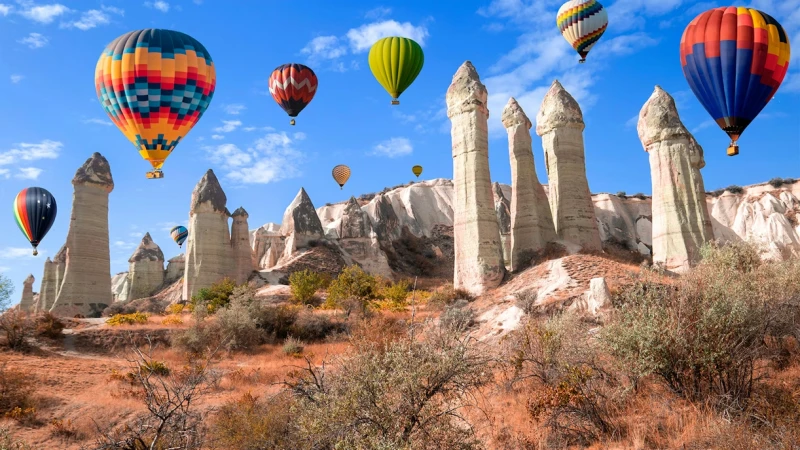
7. Rose Valley – Pink Rock Wonderland
Rose Valley completes our survey of cappadocia balloon valleys with one of the region's most delicate and romantic landscapes. Named for its soft pink-rose colored rock formations, this valley offers a gentler aesthetic than the dramatic reds of Red Valley or the stark whites of Devrent. From a balloon drifting overhead, Rose Valley looks like a pastel painting brought to life in stone.
Distinctive Pink Coloration
Rose Valley's coloration comes from specific mineral content in the volcanic tuff combined with particular oxidation patterns. The iron oxides that create dramatic red elsewhere appear in lower concentrations here, producing softer pink, peach, and rose tones. In certain lighting—especially the soft illumination of early morning—these colors become almost luminescent, glowing with an inner warmth.
The valley runs roughly parallel to Red Valley, separated by a narrow ridge. Both valleys share similar geological origins but differ in mineral composition, creating their distinct color palettes. From balloon height, you can often see both valleys in a single view, appreciating how slight variations in rock chemistry translate into dramatically different appearances.
The pink tones vary throughout the valley—some sections glow deep rose, others pale blush, still others peachy coral. This variation creates a watercolor effect, as if someone painted the landscape with washes of different pink shades. The irregular patterns of color follow the underlying geological structures, creating organic, flowing designs visible from above.
Cave Churches and Hiking Trails
Like most Cappadocian valleys, Rose Valley served as a center for Byzantine-era monasticism. The valley contains several important cave churches with well-preserved frescoes, including Haçlı Kilise (Church with the Cross) and Kolonlu Kilise (Church with Columns). These churches feature carved architectural elements—columns, arches, domes—that imitate built stone structures despite being carved entirely from solid rock.
From your balloon, you can spot these church openings as dark rectangles in the valley walls. What you can't see from above are the stunning frescoes inside—vibrant blues, reds, and golds depicting biblical scenes. These artworks survived centuries because the dry climate and protected cave locations prevented deterioration that destroyed similar artwork elsewhere in the Byzantine world.
Rose Valley is one of Cappadocia's most popular hiking routes, with well-maintained trails following the valley floor from Göreme to Çavuşin. From balloon height in early morning, you might see a few hardy hikers already on the trail—tiny figures dwarfed by the towering pink cliffs. This human scale element can add context and interest to your photographs.
Best Times for Rose Valley Views
Rose Valley's colors reach peak intensity during golden hour—the first hour after sunrise. The warm, low-angle sunlight enhances the rock's natural pink tones, creating the rosy glow that gives the valley its name. This is exactly when your balloon will be aloft, providing optimal conditions for appreciating and photographing the valley's beauty.
As the sun rises higher and the light becomes more neutral, Rose Valley's colors become less saturated. The rock still appears pink, but without the magical quality of early morning. This demonstrates why Cappadocia balloon flights don't operate at midday or afternoon—the lighting simply doesn't showcase the landscape's colors effectively.
Seasonal Variations:
- Spring: Vegetation adds green contrast to pink rock; wildflowers dot the valley floor
- Summer: Harsher light washes out colors somewhat; best early in the morning
- Fall: Clearest air for sharp images; autumn foliage adds gold and rust tones
- Winter: Snow occasionally dusts the valley, creating pink-and-white color scheme
Weather conditions also affect Rose Valley's appearance. Slight overcast can actually enhance the pink tones by providing even, soft light without harsh shadows. Completely overcast days mute colors, while brilliant sun can create too much contrast. The ideal conditions are the clear skies with gentle morning light typical of Cappadocia springs and falls.
Photography: Capturing the Pink Tones
Rose Valley's subtle colors challenge photographers. The pink tones are delicate—too much saturation in post-processing looks artificial, too little and the valley appears beige. The goal is capturing the true appearance: noticeably pink but naturally so, not candy-colored.
Technical Approach:
- Shoot RAW for maximum color adjustment flexibility
- Use custom white balance or "Cloudy" preset to maintain warm tones
- Avoid auto white balance, which may neutralize the pink cast
- Slight underexposure (-0.3 to -0.7 EV) prevents blown highlights in light-colored rock
- Increase vibrance (not saturation) in post-processing to enhance natural colors
- Include color reference points—green vegetation, blue sky, colorful balloons
Compositional Ideas:
- Frame the valley's curves as leading lines drawing the eye through the image
- Include both Rose and Red valleys in wide shots showing color variation
- Position balloons against the pink cliffs for color contrast and scale
- Capture the texture of eroded rock faces showing layers and patterns
- Use shadows in the valley's folds to create depth and three-dimensionality
The key to successful Rose Valley photography is subtlety. This isn't a valley that screams for attention with dramatic colors or forms—it whispers with gentle beauty. Your photographs should reflect this character: romantic, soft, and naturally elegant rather than bold and dramatic.
Rose Valley and Red Valley Together
Many balloon routes position you where both Rose and Red valleys are visible simultaneously. This provides excellent opportunities for comparison photographs showing how similar geological processes created different aesthetic results based on mineral variations. The contrast between Red Valley's bold rust tones and Rose Valley's soft pink creates visual interest and tells a geological story.
From 400-500 meters altitude, you can often capture both valleys in a single frame, creating compositions that show the landscape's diversity. These comparative shots work especially well as educational images—they clearly demonstrate how slight chemical differences create major visual variations in Cappadocia's rocks.
Best Time to See These Valleys
Understanding timing helps you maximize your balloon experience and photograph the cappadocia balloon valleys at their absolute best. While all balloon flights occur around sunrise, subtle timing variations significantly affect what you see and how it looks.
Seasonal Considerations
Spring (April-May): The optimal season for Cappadocia balloon flights. Weather is stable with minimal wind, giving flights a 90-95% success rate. Temperatures are comfortable (15-25°C), and the landscape awakens with greenery and wildflowers. Valley floors show lush vegetation contrasting beautifully with stone formations. Morning light is crisp and clear, perfect for photography. Book well in advance—this is peak season.
Summer (June-August): Hot but popular. Early morning launch times (often 4:30-5:00 AM) beat the heat, and you'll land before temperatures soar. The landscape is drier, more golden-brown than spring's green. Harsher light can wash out valley colors by late morning. Flight success rate remains high (85-90%), though occasional summer storms cause cancellations. Advantage: long daylight hours give you full days to explore valleys on foot after flying over them.
Fall (September-November): Rival to spring for ideal conditions. September maintains summer warmth with better air quality. October-November bring cooler temperatures and beautiful autumn colors in valleys with deciduous trees. Morning mist sometimes fills valley floors, creating ethereal scenes. Flight success rate stays high (85-90%). This is smart travelers' secret season—spring-quality conditions with fewer crowds.
Winter (December-February): The wild card season. Cold mornings (often below freezing at launch) require warm clothing in the balloon basket. However, snow-dusted valleys create magical scenes impossible other times of year. Flight success rate drops (50-60%) due to weather cancellations, so book multiple days if possible. When flights do operate, you'll see Cappadocia in its most dramatic, least-crowded state. Budget benefits: significant off-season discounts.
Daily Timing and Light
All Cappadocia balloon flights launch around sunrise, but exact timing varies by season and company. Companies stagger launches slightly to avoid basket collisions in the air—some launch 15-20 minutes before sunrise, others right at sunrise, a few slightly after. This timing affects what you see:
Pre-Sunrise Launches: You'll ascend in twilight, watching the sky brighten from deep blue to pink-orange. Your first valley views occur in soft, pre-dawn light—subtle colors, gentle contrasts, romantic atmosphere. As the sun breaks the horizon during your flight, you experience the landscape transforming from shadowed to illuminated. This transition period offers unique photographic opportunities but requires understanding changing exposure needs.
Sunrise-Timing Launches: You launch as the sun appears, meaning you're gaining altitude while golden hour begins. Your optimal viewing altitude coincides with peak light quality. Most valleys you see will be beautifully lit with that magical early morning glow. This timing is most common and generally produces the best overall photography conditions.
Post-Sunrise Launches: Rare but occasionally necessary due to wind conditions or company scheduling. You miss the drama of sunrise itself but enjoy strong, clear light throughout your flight. Colors are vivid, shadows well-defined. Less romantic than pre-dawn launches but potentially easier for photography due to abundant light.
Weather Impacts on Valley Viewing
Clear Skies: The standard condition, offering excellent visibility extending 30-50 kilometers. You can see from one end of Cappadocia to the other, identifying distant landmarks and understanding the full geological context. Colors appear true and saturated. Photography is straightforward—abundant light, good contrast, vivid tones.
Partial Clouds: Often create the most dramatic conditions. Clouds act as natural diffusers, softening harsh light. "God rays" streaming through cloud breaks create spectacular effects. Clouds moving across the landscape create constantly changing light patterns—sections of valley illuminating and shadowing as clouds pass. This dynamism makes exciting photographs but requires quick reactions and exposure adjustments.
Overcast: Less common but not necessarily bad. Valley colors appear muted but textures become more visible without harsh shadows. The soft, even light flatters some valleys (particularly Devrent) while making others (Red Valley) less impressive. Overcast conditions often presage cancellation weather, so flights operating in overcast typically happen when conditions are marginal but acceptable.
Mist and Fog: Magical when it occurs. Valley floors fill with mist while formations rise above like islands in a white sea. This typically lasts only 15-30 minutes after sunrise as warming air burns off the fog. Timing is everything—early launches see fog, later ones miss it. This condition is most common in fall and spring during temperature transitions.
Photo Tips from the Balloon
Capturing stunning photographs of cappadocia balloon valleys requires understanding the unique challenges and opportunities of aerial photography from a moving platform. These strategies will help you return home with images worthy of your extraordinary experience.
Equipment Recommendations
Camera and Lenses: You don't need professional equipment, but certain gear choices help. A camera with manual controls (DSLR, mirrorless, or advanced compact) provides flexibility as light changes. Zoom lenses are ideal—you can't move closer or farther from subjects, so zoom flexibility matters. A 24-70mm or 24-105mm covers most situations, while a 70-200mm lets you isolate distant details.
Smartphone cameras work surprisingly well in good light. Modern phones have excellent computational photography that handles dynamic range and color effectively. The limitations appear in lower light or when you want to isolate distant subjects with telephoto reach. If smartphone is your only option, use it confidently—composition matters more than gear.
What NOT to Bring: Tripods are useless (no stable mounting point) and bulky. Large lens collections force difficult choices about what to use while missing moments changing lenses. Filters (polarizers, ND filters) rarely help in early morning light. Keep gear minimal—you'll be juggling camera, excitement, and balloon basket safety simultaneously.
Technical Settings for Success
Exposure Strategy: Morning balloon flights occur in beautiful but challenging light. The sun is low, creating high contrast between bright sky and shadowed valleys. Use these approaches:
- Aperture Priority Mode (A/Av): Set f/8 for good depth of field keeping both near and far formations sharp. Let the camera adjust shutter speed. This works in most situations and lets you focus on composition rather than constantly adjusting settings.
- Shutter Speed Priority: If you want control over motion blur, ensure shutter speeds stay above 1/500s to freeze basket movement and eliminate blur. Early morning often provides enough light for 1/500-1/1000s even at moderate ISOs.
- ISO Management: Start at ISO 400-800 in early twilight, dropping to ISO 200-400 as the sun rises. Modern cameras handle these ISOs cleanly. Don't be afraid of ISO 800 if it means sharp images—slight noise beats blur every time.
Exposure Compensation: The bright sky often fools cameras into underexposing the landscape. Check your first images and apply +0.3 to +0.7 EV compensation if valley details look too dark. Conversely, if you're shooting sun-facing directions with bright rock faces, slight underexposure (-0.3 to -0.7 EV) preserves highlight detail.
Composition Techniques
Rule of Thirds: Position key elements (prominent formations, other balloons, horizon) along thirds lines rather than centering everything. This creates more dynamic compositions than bulls-eye framing.
Leading Lines: Valley curves, rock formations aligned in rows, shadows stretching across the landscape—use these natural lines to guide viewers' eyes through your images.
Foreground Interest: Include the balloon basket edge or fellow passengers in your frame occasionally. This adds depth and human context showing the experience, not just the landscape.
Scale References: Other balloons are your best friends in composition. They provide scale showing just how massive these formations are, add color contrast against tan/pink rock, and create visual interest. Position balloons thoughtfully—not centered, following rule of thirds, at varying distances to show depth.
Vary Your Angles: Shoot horizontally (landscapes), vertically (tall formations), looking straight down (patterns on valley floors), and up at other balloons against the sky. This variety creates a more complete photo essay of your experience.
Dealing with Movement
Balloon baskets sway and rotate, making photography challenging. You can't use slow shutter speeds, and you need to stay balanced while shooting. These strategies help:
Stabilization Techniques:
- Brace camera against the basket edge (pad it with your hand to prevent bumps)
- Use your body as a stabilizer, standing with feet apart and elbows tucked
- Shoot in bursts of 3-5 frames—at least one will be perfectly sharp
- Time shots between basket movements rather than during them
- Accept that some blur happens; it's part of the authentic experience
Anticipation: The balloon doesn't hover—you're constantly moving relative to the landscape. Identify a formation or scene you want to photograph before you're in perfect position. Get ready (check settings, compose), then shoot as you approach the ideal angle. You'll have a brief window (often just 10-30 seconds) when everything aligns, then you're past it.
Common Mistakes to Avoid
Shooting Too Much: The temptation is snapping hundreds of images, but this actually results in fewer good ones. Be selective. Observe, compose thoughtfully, shoot a few frames, then put the camera down and experience the flight. Quality beats quantity.
Ignoring the Experience: Don't view the entire flight through your viewfinder. Take breaks from photography to simply be present—feel the burner's heat, smell the air, hear the silence between burner blasts, watch the landscape drift beneath you. These sensory memories matter as much as photographs.
Wrong Expectations: Instagram/Pinterest show perfect images from perfect moments. Your flight might have different weather, different route, different balloons in frame. Don't chase someone else's photo—capture your authentic experience.
Battery/Storage Neglect: Charge batteries fully the night before (cold morning air drains them faster). Bring spare batteries and empty memory cards. Nothing's more frustrating than missing shots because you weren't prepared.
Forgetting Video: A few short video clips (15-30 seconds) capture the motion, sound, and atmosphere that stills can't convey. The burner's roar, basket's gentle sway, other balloons drifting silently—these elements make powerful memories when revisited later.
Post-Processing Recommendations
Even excellent photographs benefit from basic post-processing. Consider these adjustments:
Essential Edits:
- Straighten horizons (balloon movement causes tilted horizons)
- Adjust exposure if valleys are too dark or sky too bright
- Enhance vibrance (not saturation) to boost natural colors
- Add slight clarity to emphasize rock textures
- Remove distracting elements (sensor spots, small basket intrusions)
Color Work: Cappadocia's colors are naturally beautiful but can look flat in raw images. Gentle enhancement brings them to life:
- Warm the color temperature slightly (move toward orange/yellow)
- Boost oranges/reds for Red/Rose valleys specifically
- Enhance blue sky saturation without making it electric
- Ensure skin tones (if people are in frame) remain natural
Don't Overdo It: The landscape is extraordinary on its own. Heavy-handed editing (extreme saturation, contrast, HDR effects) makes images look fake. Aim for "better than what I saw" not "unrecognizable from reality."
Note about sunrise vs. sunset balloon flights: While most Cappadocia balloon flights operate at sunrise due to optimal wind conditions and lighting, some companies occasionally offer sunset flights during specific seasons. Sunrise flights generally provide better conditions—calmer winds, more reliable weather, and superior light for photographing the valleys. Sunset can create beautiful warm light but often brings increased winds that may limit flight operations. When booking, prioritize sunrise flights unless you have specific reasons to prefer evening experiences.
By following these tips and understanding the unique characteristics of each valley, you'll return from your balloon flight with images that do justice to one of the world's most spectacular landscapes. The cappadocia balloon valleys offer photographic opportunities unlike anywhere else on Earth—make the most of them by combining preparation, technique, and presence in the moment.
Ready to experience these incredible valleys from a hot air balloon? Book your balloon flight with experienced pilots who know these valleys intimately and prioritize your safety and experience equally.